
Table of Contents
Historical figures aren’t just names in textbooks. They’re the reason our roads bend around certain mountains, why we vote in certain ways, and why some families still pass down heirlooms with complicated histories. We argue about their choices centuries later, and that unbroken relevance is what separates a historical footnote from a true historical figure.
But what makes someone endure in that way? It’s a combination of timing, temperament, and specific decisions that echo forward. Let’s explore those patterns through a handful of famous historical figures and the lessons they leave for modern readers.
The Making of a Historical Figure
Character Over Circumstance
The most compelling historical figures rarely had easy paths. Abraham Lincoln lost more elections than he won before becoming president. Winston Churchill spent the 1930s politically isolated, yet his willingness to warn about Nazi Germany when no one wanted to hear it made him the right leader in 1940. Their early failures aren’t footnotes—they’re central to their appeal.
Enduring historical figures tend to share a few habits:

- They made a decision when others hesitated.
- They understood how to communicate their vision.
- They adapted when the original plan failed.
- They built networks of loyal, capable people around them.
The Advantage of Being Written About
It’s also worth remembering that history is a story told by writers. Julius Caesar wrote his own war commentaries to shape public opinion. Cleopatra had her enemies’ propaganda to overcome and still managed to become a romantic legend. The historical figures we know best are often the ones who controlled their own narratives.
Leadership Lessons from Historical Figures We Still Use
Studying historical figures is practically a prerequisite for modern leadership. Business schools run case studies on Alexander the Great’s supply lines, and military academies still debate Napoleon’s logistics. The patterns hold because human nature hasn’t changed that much.
One of the less talked about lessons is that great leaders see where the world is headed before it arrives. They were the ones creating leaders the world wasn’t ready for. Indeed, as Nicholas Lawless notes when discussing the challenge of forming leaders ahead of their time, this forward-looking quality is rare and expensive to cultivate. You can read his perspective on creating leaders the world wasn’t ready for to see how that principle applies outside politics.
Historical Figures Who Understood Money and Power
Power and money have always been intertwined. Some historical figures treated money as a tool for conquest; others as a game of accumulation. Marcus Licinius Crassus, for example, built one of Rome’s largest fortunes by buying properties during fires and using his personal slave force of over 500 construction workers to rebuild them. It was aggressive flipping, and he backed a lot of it with political muscle.
But the wealth that lasted wasn’t built on quick turns. The great banking dynasties of Europe—the Fuggers, the Medicis, the Rothschilds—grew their capital across generations. That’s a philosophy closer to long-term investments to build wealth over time, which need patient growth rather than spectacle. If you want to build wealth in a similar way, that guide is a surprisingly useful modern companion to these old lessons.
And then there’s what these historical figures did with their gains. Louis XIV didn’t need another palace for practicality; he needed a statement of absolute power. His transformation of Versailles is mirrored by ultra-rich buyers who purchase sprawling estates for status rather than use. The reasons are rarely about the building itself, which is perhaps why such properties remain empty. If that dynamic interests you, you might find it illuminating to understand why the rich justify buying $9+ million homes they barely use.
The Places that Keep Historical Figures Alive
No matter how many biographies you read, nothing compares to standing where a historical figure stood. The stones in Rome still bear the marks of chariots, and the Forum retains a kind of quiet gravity even with crowds. For anyone chasing the footsteps of emperors, a well-paced itinerary matters hugely. The 3-day Rome itinerary highlighting historical places you can’t miss is a good starting point—it puts you in the same physical spaces where Caesar and Augustus made their decisions.
Passing the Torch in the Digital Age
One concern about history is that it will become inaccessible as school budgets shrink and attention spans shrink with them. But technology is actually pulling historical figures back into view. Young people can now interrogate primary sources in a way that used to require a university library. AI tools can help students compare speeches, spot biases in ancient writers, and generate questions to ask about a historical period.
For students in particular, having a digital assistant makes the process less intimidating. Microsoft has made Microsoft 365 Copilot available for students, giving them a guided way to explore topics like history without jumping straight into academic jargon. It’s not a replacement for a teacher, but it can spark curiosity that leads to deeper study.
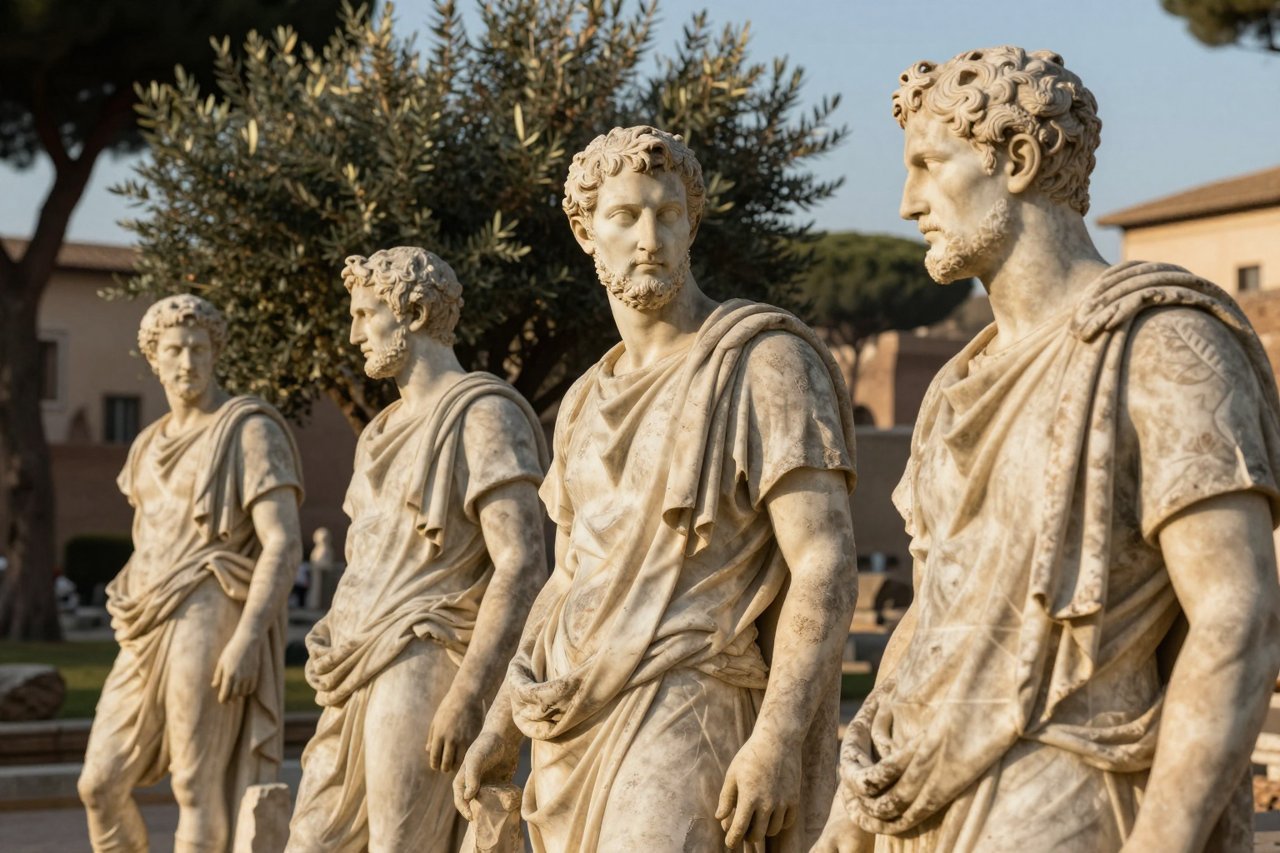
So the next time you hear a name like Joan of Arc or Marcus Aurelius, remember that these weren’t statues. They were people making choices under extreme pressure, often with incomplete information. And the fact that we still study them says something reassuring: human beings don’t change as radically as we fear. We just face new versions of old problems. That means there are future historical figures being formed right now, in classrooms, in boardrooms, on battlefields, solving the same problems with tools that haven’t been invented yet.


