
Table of Contents
Every week, someone asks me to put together a neat list of anti-inflammatory foods. Usually they’ve just learned that chronic inflammation is behind their aching knees, stubborn fatigue, or increasing blood pressure, and they want a numbered chart they can stick to.
Lists feel safe. But they don’t change how you cook or what you actually assemble at dinner time. The foods you eat are only anti-inflammatory if you know how to get them onto your plate consistently. That’s why this is a process, not a poster.
In this guide, I’ll walk through a five-step method I use with clients. It starts with how to structure any plate, moves through targeted swaps, and includes a full sample day. If you haven’t read the science behind why food matters, digest the complete anti-inflammatory diet guide first, then come back to put it into practice.
Step 1: Put the plate rule first
The easiest anti-inflammatory foods are the ones you already eat. Yes, really. You don’t have to buy obscure berries or drink strange teas.

Just hold a single ratio in your head for every main meal:
- Half the plate colorful vegetables and fruit;
- A quarter quality protein;
- A quarter starchy plant food (whole grains or legumes).
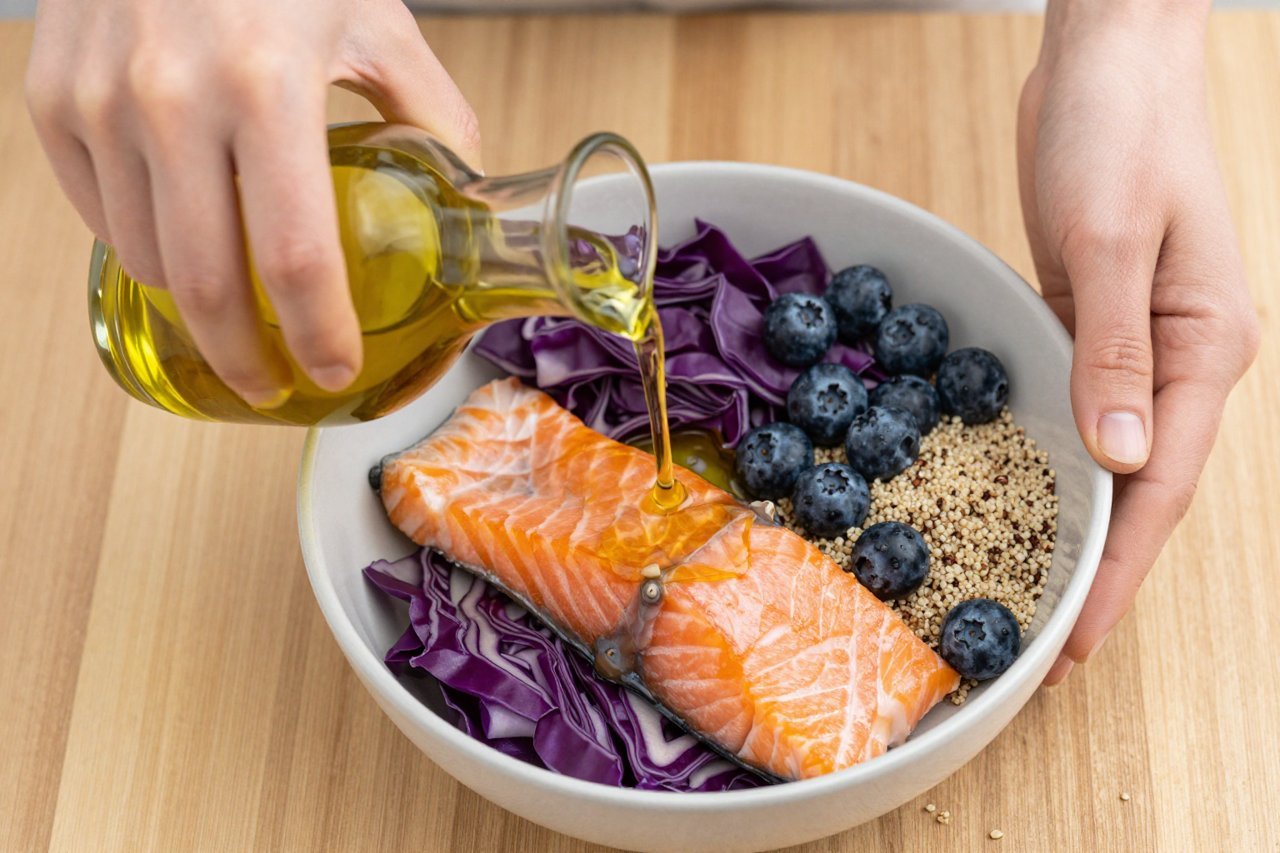
Then add a fat source: a tablespoon of extra-virgin olive oil, one quarter of an avocado, or a small handful of almonds.
Here’s a before-and-after example. Before: a grilled chicken breast (8 oz), a generous pile of mashed potatoes, and a modest mound of steamed broccoli. After: 4 oz of chicken, 3/4 cup cooked quinoa, two cups of roasted broccoli plus cherry tomatoes, and a drizzle of olive oil. You’ve cut the meat portion in half but filled the gap with more colors and fiber—without feeling deprived.
The ratio is flexible. If you’re having fish tacos, fill the tortillas with pieces of fish, add a cabbage slaw instead of cheese, and use a brown rice tortilla. You can make this work with almost any cuisine.
Step 2: Make two substitution habits stick
Searching for all-new anti-inflammatory recipes for every meal is unsustainable. Instead, find three substitutions you can repeat several times a week:
- Swap half the minced beef in bolognese for brown lentils or chopped mushrooms.
- Replace butter on morning toast with half an avocado and a pinch of chilli flakes.
- Use a 50/50 mix of whole wheat flour and ground flaxseed when baking (flax adds ALA and fiber).
- Turn your evening snack of crackers and cheese into sliced cucumber with hummus.
- Substitute Greek yogurt for sour cream in dips and dressings.
Each time you choose one of those alternatives, you’re adding measurable amounts of polyphenols and fiber to your day while cutting the foods that drive inflammation. That’s the way to make this last.
If you want a conveniently short list of the ingredients with the strongest evidence, base your choices on these six proven staples that help calm chronic inflammation.
Step 3: Batch-cook a flexible anti-inflammatory base
A single weekend session in the kitchen can guarantee you anti-inflammatory food all week, no matter how busy you are. The aim is to prepare building blocks you can combine without thinking.
Try this: preheat the oven to 200°C/400°F. Roast three cups of broccoli, two cups of cauliflower, and two sliced red onions on a sheet pan with olive oil and smoked paprika for 35 minutes until the edges char. While that’s cooking, simmer a cup of quinoa in vegetable broth, then cook a pot of lentils with crushed garlic and ginger.
When everything has cooled, store it in glass containers in the fridge for up to four days. Want to take it further? Canned sardines in olive oil, boiled eggs, or shredded rotisserie chicken will provide the protein portion.
Those combination-ready ingredients are what make anti-inflammatory eating a habit rather than a special treat.
Step 4: See the method in a single day of eating
Here’s a meal plan that follows the same framework. Aim to cook the veggies for dinner while you prep enough for lunch the following day.
Breakfast
250 g full-fat Greek yogurt, 75 g blueberries, 1 tablespoon ground flaxseed, and half a teaspoon of cinnamon. This combines protein, probiotics, and anthocyanins—plus a little heat to keep blood-sugar steady.
Lunch
150 g cooked quinoa, 100 g sliced roast turkey or chicken, a large handful of baby spinach. Toss with olive oil, lemon juice, and chopped parsley. Have half an avocado on the side.
Snack
One small apple and approximately 20 almonds or a handful of walnuts. If you like something savory, add five carrot sticks with two tablespoons of hummus.
Dinner
150 g baked salmon or mackerel, grilled asparagus with garlic, and about half a cup of cooked wild rice. Rub the fish with a little turmeric before baking if you want extra polyphenols.
Not every meal needs to match that template perfectly. If you find yourself at a roadside diner, pick the grilled chicken salad rather than the burger—then make the next meal count.
Step 5: Let your body tell you what’s working
You don’t need a compliance app. Instead, check how you feel after two weeks:
- Is the mid-afternoon brain fog still there?
- Do your joints feel less crunchy when you first stand up?
- Has that puffiness under your eyes gone away?
Subtle but meaningful changes are usually visible before any lab result. Keep the same timeline for another two weeks and then adjust if you’re not noticing a difference.
A word about shortcuts: don’t jump on the supplement train just because it sounds convenient. Research is increasingly complex, and even omega-3 fats, which are known for calming inflammation, have shown unexpected links to raised inflammatory markers in certain healthy groups. Whole-food choices—walnuts, salmon, chia seeds—will always be more reliable than isolated capsules.
The same goes for the long game. A leaky gut, poor sleep and stress can all keep inflammation switched on. If you want inspiration, note that one writer improved his metabolic markers so thoroughly that he brought his biological age down to 21 even though he was 38. That’s not a fair comparison for everyone, but it’s proof that small, persistent anti-inflammatory habits compound.
If you only take one idea from this article, let it be the plate ratio. Use it tonight on one dinner, and again tomorrow on lunch. When that feels normal, introduce a second swap from step two and let the process grow.


