
Table of Contents
Your dog lifts one paw at the back door, gives you a look, and turns around. That’s the moment you realise the winter walk plan needs a rethink — and so does the whole house, if your dog sleeps on cold tile and shivers on the couch by 8pm.
Keeping a dog warm through winter isn’t complicated, but it is specific. Fur is not a magic blanket, and a coat you bought because it looked adorable in the shop may be doing nothing at all. Here’s what actually works.
Start With Your Dog, Not the Thermometer
A husky sprawled in a snowdrift and a greyhound hunched on a 40°F pavement are living in two different winters. Coat type, body fat, size, age and health all change the maths.
As a rough guide, many vets use these thresholds: below 45°F (7°C), small dogs, lean dogs and short-coated breeds start to feel the cold. Below 32°F (0°C), most dogs are uncomfortable on a long walk. Below 20°F (-7°C), nearly every dog is at risk, and toy breeds shouldn’t be out for more than a few minutes.

Dogs that hit those limits faster than you’d expect: puppies under six months, seniors, dogs with arthritis or heart conditions, and any dog carrying a bit less weight than it should. Giant breeds can struggle too — their joints ache in cold weather and their coats are often thinner than their size suggests. Some of the biggest dog breeds in the world are surprisingly poor winter dogs.
Learn to Read the Signals
Dogs rarely complain loudly about cold. They get subtle, then they get quiet.
- Lifting a paw, then alternating — a sign the pads are stinging
- Shivering that continues when they’re standing still, not just at the door before a walk
- Tail tucked hard against the belly, back arched
- Slowing down, stopping, or refusing to move on a route they normally love
- Whining, or pulling towards home and the front door
- Curling into a ball in a corner instead of stretching out
Shivering on its own can just be excitement. Shivering plus a hunched posture plus a tucked tail means the walk is over. Head home.
Pick a Coat That Fits, Not Just One That’s Cute
Two measurements decide whether a coat works: chest girth (around the widest part, just behind the front legs) and back length (base of the neck to the base of the tail). A coat that’s snug at the chest and short at the back leaves the kidneys and hindquarters exposed, which is where a lot of heat is lost.
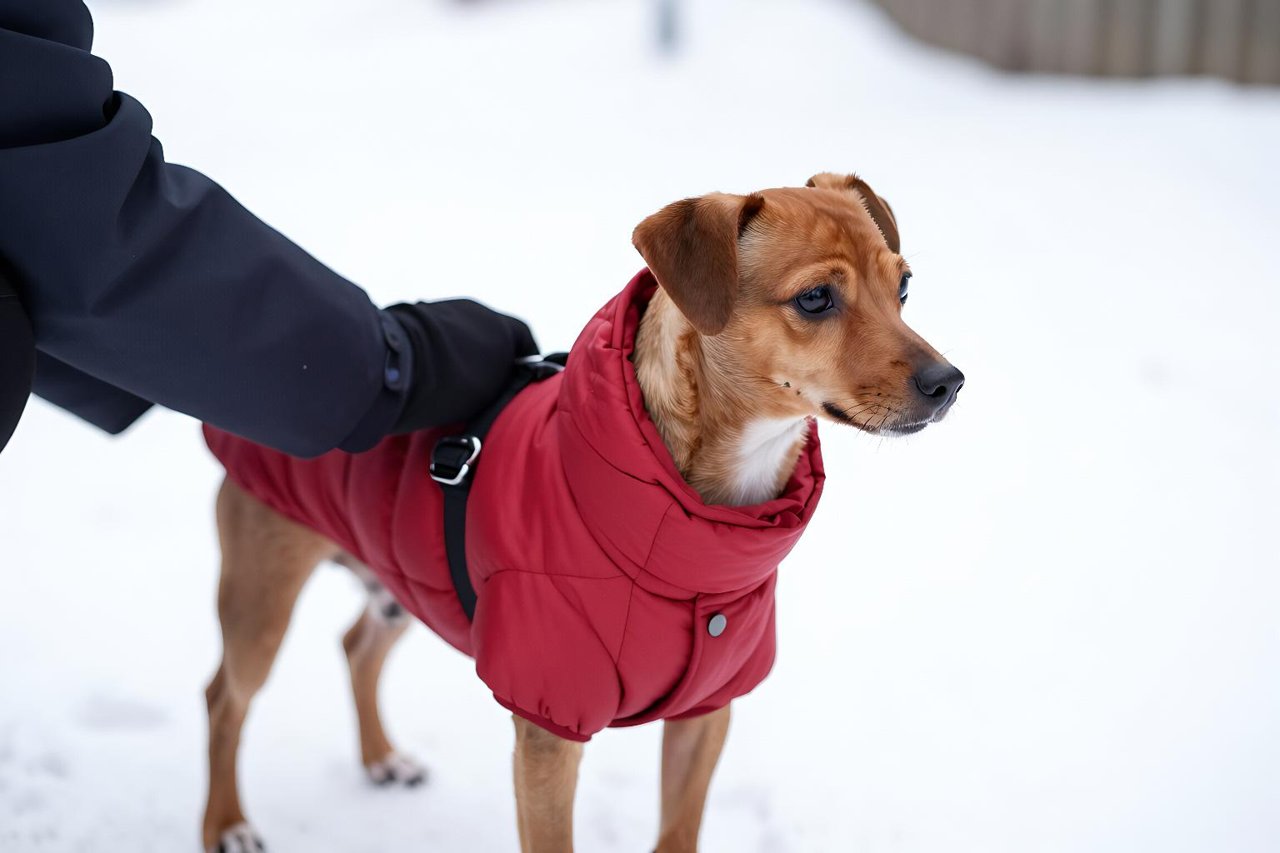
Fit matters more than fabric claims. You should be able to slide two fingers under every strap, and the dog should be able to walk, squat and turn without the coat sliding sideways. Look for coverage that wraps under the belly rather than stopping at the ribcage.
For dry, bitter cold, a fleece or quilted layer does the job. For wet snow and slush, you want a water-resistant shell — a soaked coat is worse than no coat, because wet fabric pulls heat out fast. Take it off once you’re back inside. A dog left in a coat indoors can overheat within half an hour.
Keep the Warmth Where Your Dog Actually Sleeps
Most heat is lost through the belly and paws, which is why a dog on a bare floor is cold even in a warm room. Cold air pools at floor level, and tile, laminate and concrete suck warmth straight out of a resting dog.
Move the bed out of doorways and away from windows that whistle. Add a blanket they can burrow under — most dogs will arrange it themselves if given the option. For older dogs with stiff hips, a supportive bed makes a real difference; here’s what orthopedic memory foam actually does for a dog’s joints, and why a cheap foam pad isn’t the same thing.
Heated beds and self-warming mats are fine if your dog doesn’t chew cables. Check the cord weekly, and give the dog the choice — put the warm bed next to a normal one and see which they pick.
Protect the Paws
Rock salt and chemical de-icers burn paw pads. So does the refreeze, when melted slush hardens into sharp ridges. Ice balls forming between the toes are another common winter problem, especially on dogs with fluffy feet.
Trim the fur between the pads so snow has less to grip. Rub a paw balm in before walks to create a barrier, and wipe paws with a warm damp cloth afterwards — that also stops your dog licking salt off later. Boots work brilliantly for some dogs and get dramatically rejected by others, so try them indoors first, one paw at a time, with treats.
Adjust Food, Water and Walk Timing
A dog that spends six hours a day outside in winter burns noticeably more calories. A dog that walks 20 minutes and sleeps on the sofa burns fewer. Neither is a problem, but feeding both the same amount is.
Water is the one people forget. Dogs drink less in cold weather, and dehydration doesn’t announce itself. Add warm water to kibble, or swap one bowl for a slightly warmed one. Snow is not a substitute for drinking water.
Walk in the middle of the day when you can, when the sun is highest and pavements have had a chance to thaw. Two shorter walks beat one long one in genuinely cold weather.
Skip the Winter Haircut
That thick double coat traps a layer of warm air against the skin. Shaving it off in November removes the insulation your dog was born with — and it does not grow back thicker or faster. Keep brushing instead, because matted fur clumps together and stops insulating properly, and damp mats against the skin are a fast route to trouble.
If brushing has become a battle, this guide to grooming a dog at home without a wrestling match is worth ten minutes of your evening. And if you’re finding hair on every surface, there’s a right and a wrong way to deal with excessive shedding without shaving your dog.
Five Cold-Weather Habits to Break Today
Never leave a dog in a parked car in winter. A metal box loses heat fast, and a short errand can turn dangerous well before you’d expect.
Keep antifreeze locked away. It tastes sweet, a few tablespoons can be fatal, and it drips onto driveways in exactly the places dogs sniff. Clean up spills immediately and rinse the area.
Don’t park a space heater where a dog can knock it or lie against it. Burns and house fires both happen this way.
Don’t assume a dog will self-regulate. Dogs left outside in cold weather will often stay out far too long, especially if there’s something interesting to investigate.
And don’t skip the evening walk because it’s dark and grim. A bored dog in a warm house chews furniture, paces, and keeps you awake. A head torch, a reflective lead and a shorter route solve most of it — and both of you will sleep better for it.


