
Table of Contents
Since the dawn of consciousness, humans have gazed at the night sky and wondered what lies beyond. The universe, vast and mostly invisible, holds secrets that challenge our understanding of reality. Every answer we uncover seems to spawn a dozen new questions, from the nature of dark matter to the possibility of parallel universes. Here are some of the most profound secrets of the universe—and how we’re trying to crack them.
The Dark Side of the Cosmos
Everything we see—every star, planet, and galaxy—accounts for only about 4% of the total mass-energy of the universe. The rest is hidden: 26% dark matter and 69% dark energy. These are placeholder names for phenomena we know exist but can’t directly observe.
Dark Matter: The Invisible Glue
Dark matter doesn’t emit, absorb, or reflect light, but its gravitational pull is unmistakable. It holds galaxies together, preventing them from flying apart. Without it, the Milky Way would barely exist. Scientists have proposed particles like WIMPs and axions as candidates, but decades of experiments have yet to detect them directly. The latest astronomy news in 2025 includes new efforts to map dark matter through gravitational lensing, revealing its clumpy distribution across the cosmos.
Dark Energy: The Accelerating Force
In the late 1990s, astronomers discovered that the universe’s expansion isn’t slowing down—it’s speeding up. This repulsive force, dubbed dark energy, seems to be a property of empty space itself. The leading theory is the cosmological constant, but its value is 10120 times smaller than predicted—one of the biggest discrepancies in physics. Understanding dark energy is crucial to predicting the ultimate fate of the universe.

The Cosmic Microwave Background: Echo of the Big Bang
About 380,000 years after the Big Bang, the universe cooled enough for neutral atoms to form. The light from that moment still bathes the sky as the cosmic microwave background (CMB). This ancient radiation is a fossil that carries imprints of the universe’s infancy. Satellites like Planck have mapped its temperature fluctuations with exquisite precision, confirming that the universe is flat and composed of the dark matter and dark energy mentioned earlier. The CMB also hints at a period of rapid expansion called cosmic inflation, which we’ve only begun to understand.
Inflation and the Multiverse Hypothesis
Inflation theory proposes that the universe expanded exponentially in the first fraction of a second. This explains why the cosmos is so homogeneous and why distant regions have the same temperature. But inflation also predicts that once it starts, it never stops everywhere—leading to a “multiverse” of bubble universes, each with its own physical laws. While controversial, the multiverse is a natural consequence of many inflationary models. If true, our universe is just one among countless others, and the secrets we seek here may be unique to our bubble.
These ideas push the boundaries of testability, but they also inspire new ways to look for evidence. For instance, collisions between bubble universes might leave imprints in the CMB. No such signals have been found, but the search continues.
Are We Alone? The Search for Extraterrestrial Life
Perhaps the most compelling secret of all is whether life exists beyond Earth. With over a trillion planets in the Milky Way alone, the odds seem favorable. NASA’s Mars rovers have found evidence of ancient water and organic molecules, while the Mars missions past, present, and future are focused on finding signs of past life. Meanwhile, the moons of Jupiter and Saturn—Europa, Enceladus, Titan—harbor subsurface oceans that could host microbial life.
Closer to home, the search for technosignatures—like radio signals—continues with projects like Breakthrough Listen. No verified alien signal has been detected, but the sheer volume of stars suggests that if intelligent life is common, we should hear something soon. Or maybe we’re alone, which would make our civilization an extraordinary rarity.
The Role of Telescopes: Peering Deeper
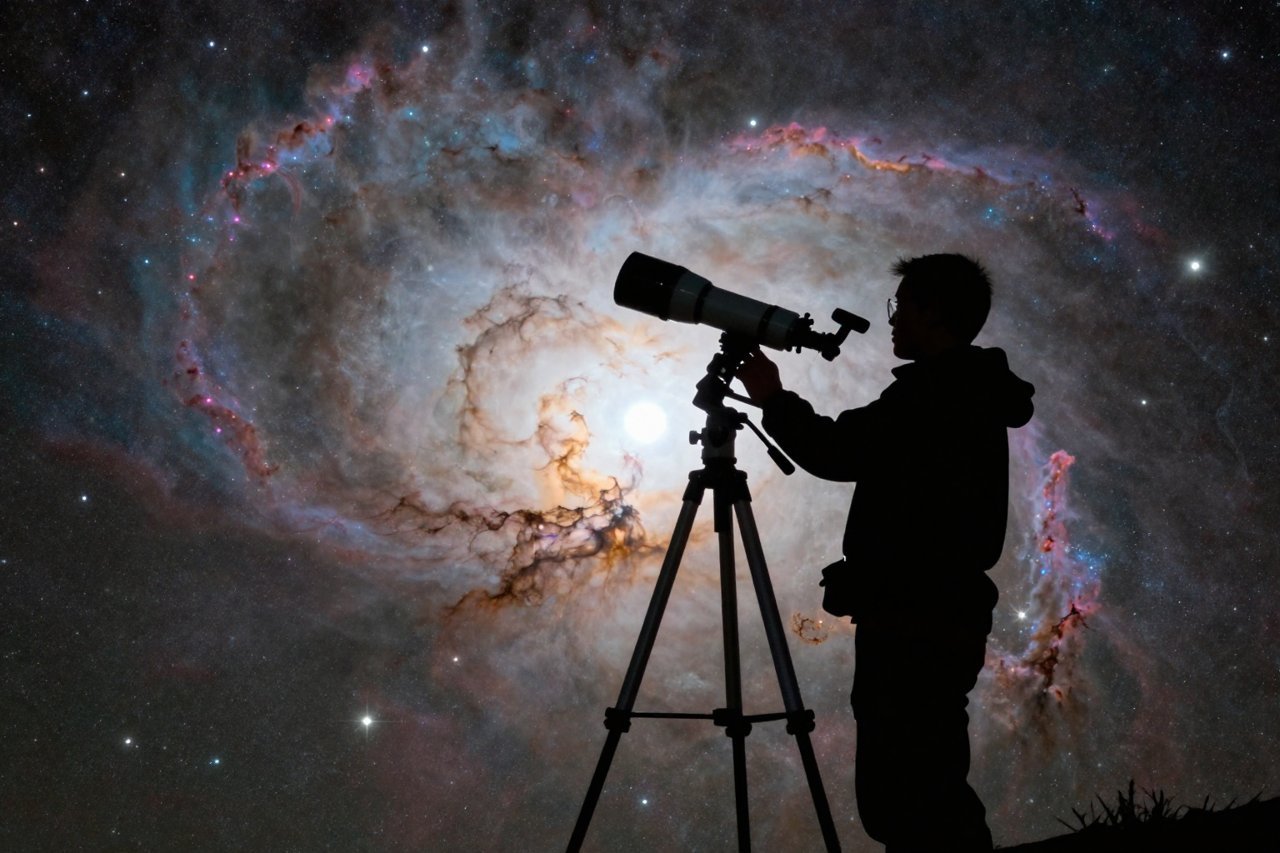
Our ability to uncover the secrets of the universe hinges on ever more powerful telescopes. The James Webb Space Telescope, launched in 2021, has already revealed galaxies from just 300 million years after the Big Bang. Its infrared vision peers through cosmic dust to see stars forming and to analyze exoplanet atmospheres for potential biosignatures. Next-generation observatories like the Vera Rubin Observatory and the Nancy Grace Roman Telescope will map the entire sky in unprecedented detail, catching supernovae, tracking dark matter, and revealing the dynamic universe.
These instruments are not just cameras; they are time machines. Looking farther away means looking further back in time, allowing us to witness the universe’s evolution directly. Each new image brings us closer to answering fundamental questions about our cosmic origin.
What We Still Don’t Know
For all our progress, some secrets remain stubbornly hidden. The nature of quantum gravity, the reason for the arrow of time, the origin of matter itself—these are puzzles that may require a revolution in thinking. Just as ancient mysteries baffle us on Earth, cosmic enigmas persist in the heavens. The universe’s grandest secrets—whether we live in a simulation, whether our reality is just one of many, and whether consciousness plays a role in quantum mechanics—lie beyond our current reach. But every generation builds on the last, and the path forward is lit by curiosity, humility, and the relentless drive to understand. What we learn tomorrow may rewrite everything we think we know today.


