
Table of Contents
Creatine has more research behind it than almost anything else on the shelf, and yet the aisle is still full of people buying the wrong tub. The product itself is rarely the problem. The mistakes happen before and after the purchase: in the assumptions you carry to the shelf, the label details you skip, and the habits you pick up in the first few weeks.
Here are the ones that quietly cost money, results, or both.
Mistake #1: Paying extra for a fancier-sounding form
Creatine hydrochloride, nitrate, ethyl ester, buffered, liquid, the ones with trademarked names. Each carries a confident label and a price two to four times higher than plain creatine monohydrate. Almost none carries better evidence.
Monohydrate has been tested in hundreds of human trials going back to the 1990s. The exotic forms share a handful of studies between them, and creatine ethyl ester is one of the few that actually performed worse, converting to creatinine in the gut before your muscles get a look in. Paying a premium for weaker data isn’t upgrading. It’s buying a story. If you want the specifics, there’s a detailed comparison of creatine monohydrate versus HCL and capsules worth reading before your next order.

Mistake #2: Reading the front of the tub instead of the back
Words like micronized, ultra-pure and pharmaceutical grade sell tubs. What actually tells you something sits in the supplement facts panel and the small print beneath it. Check four things:
- Grams of creatine per serving. A proprietary blend hides the dose. You want a number, ideally 3 to 5g.
- Servings per container. A 300g tub sounds generous until you notice the scoop is 3g, giving you 100 small doses instead of 60 full ones.
- Extra ingredients. Flavour and citric acid are fine. Fifteen other actives usually mean a smaller creatine dose paying for the extras.
- Third-party testing. Informed Sport, NSF Certified for Sport, or a downloadable certificate of analysis. This is the one place where paying more genuinely buys something.
Mistake #3: Never checking what a scoop actually weighs
Standard dosing is 3 to 5g a day. A loading phase of 20g split across the day for a week saturates your muscles faster, but skipping it just means you arrive in three or four weeks rather than five days. Both work.
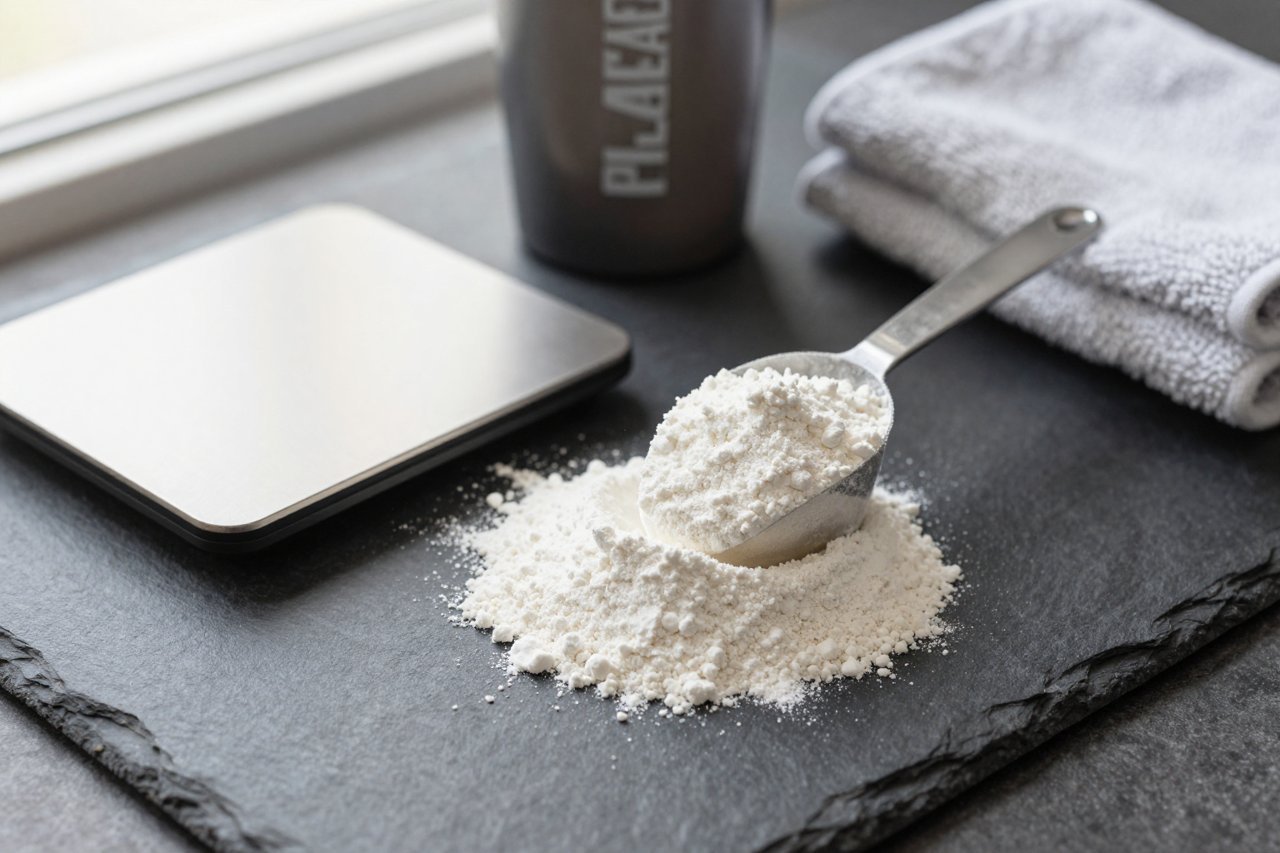
What goes wrong is the scoop. Scoop sizes vary wildly between brands, and a rounded scoop of a dense micronized powder can be nearly double a level one. People take 2g, feel nothing, and decide creatine doesn’t work for them. Others take 10g and wonder why their stomach is complaining. A cheap kitchen scale removes the guesswork permanently.
Timing is the least important variable
Pre-workout, post-workout, with dinner. The difference is small enough to ignore. Consistency is what keeps muscle stores topped up, so take it whenever you’ll reliably remember. If that’s with your morning coffee, that’s your answer.
Mistake #4: Cycling off because someone told you to
Creatine isn’t a stimulant and it doesn’t downregulate anything that needs a break. Your muscles stay saturated for as long as you keep taking it, and drift back to baseline over roughly four to six weeks if you stop. Cycling just parks you below saturation for a chunk of every month.
There are real reasons to pause: kidney disease, certain medications, pregnancy, or a doctor’s instruction. “I read you should cycle” isn’t one of them.
Mistake #5: Being scared off by the kidney and water-weight stories
Two myths that refuse to die.
The water weight. Creatine draws water into muscle cells. That’s part of how it works, not a side effect to dodge, and because it’s intracellular you look fuller rather than puffy. A 1 to 2kg jump on the scale in week one is common and it isn’t fat.
The kidneys. Decades of studies in healthy people show no damage at normal doses. One genuine complication: creatine raises serum creatinine, the standard marker doctors use to check kidney function, so a routine blood test can look alarming when nothing is wrong. Mention that you take creatine before anyone interprets the result.
Mistake #6: Assuming it’s a men’s supplement
Women make up a growing share of the research base, and the dose doesn’t change: 3 to 5g a day. Response tracks muscle mass, diet and training far more than sex, and the lean-mass and strength benefits show up in both. If you’re weighing creatine against a multivitamin or a broader daily stack, this breakdown of what actually wins for women’s supplements is a sensible place to start before you spend.
Mistake #7: Letting a pre-workout do your creatine job
Plenty of pre-workouts list creatine at 1 to 2g per scoop, sometimes tucked inside a blend. That’s a quarter of a dose at best, and you’re also paying for stimulants and flavour you may not want every single day.
Buying creatine on its own is nearly always cheaper and easier to dose. Stacking can make sense, but only when you decide what’s in the stack rather than inheriting it from a label. If you’re unsure where that line sits, this comparison of targeted supplements against all-in-one stacks is a useful reality check.
Mistake #8: Comparing tub prices instead of cost per gram
Creatine monohydrate is a commodity. A small number of manufacturers supply most of the brands you see, so the powder inside two tubs is often near-identical. What differs is purity, particle size, testing and margin.
That makes price per serving the only comparison that matters. Divide the tub price by the number of 5g servings you’ll actually get. A $50 tub yielding 40 servings costs nearly twice as much per dose as a $30 tub yielding 50. It’s also why a 1kg bag usually beats a 300g tub with a prettier label.
A thirty-second screen before you hit buy
Four questions:
- Is it creatine monohydrate, or something charging more for less evidence?
- Does the label show grams per serving without hiding behind a blend?
- Is there a third-party testing mark or a downloadable certificate?
- What’s the cost per 5g serving?
Pass all four and you’ve found something good enough that the rest is preference. If you want to factor in mixability, flavour and subscription pricing too, this six-step method for picking a creatine supplement walks through it with real examples.
The cost of getting it wrong adds up faster than you’d think
Run the numbers over a year. At 5g a day you’ll go through roughly 1.8kg of powder. Buy 300g tubs of an “advanced” form at $45 and you’re spending about $270 annually. Buy a 1kg bag of tested monohydrate at $35 and you spend closer to $65, for the same dose of a better-studied ingredient.
That gap doesn’t buy results. It buys a label, and the money is gone either way. The mistakes that genuinely hurt are the other ones: guessing at doses, quitting after three weeks because the scale moved 1.5kg and you panicked, trusting a proprietary blend to deliver a dose it never listed. Those cost you the thing you were paying for in the first place.
If you want the buying side laid out end to end one more time, the no-nonsense creatine buying guide covers it thoroughly. Otherwise the short version stands: buy plain monohydrate, weigh it once, take it daily, and stop thinking about it. That’s the whole trick.


