
Table of Contents
Tesla spent a decade as the default answer to “who’s winning the car business?” That question got a lot harder in 2024. Deliveries at the Austin company fell for the first time in its history, slipping about 1% to 1.79 million vehicles, while a battery maker from Shenzhen posted 4.27 million sales and a 41% jump. The fastest-growing car brands are no longer the ones with the loudest marketing. They are the ones with the tightest grip on battery costs, factory utilisation and shipping logistics.
Three shifts that redrew the sales charts
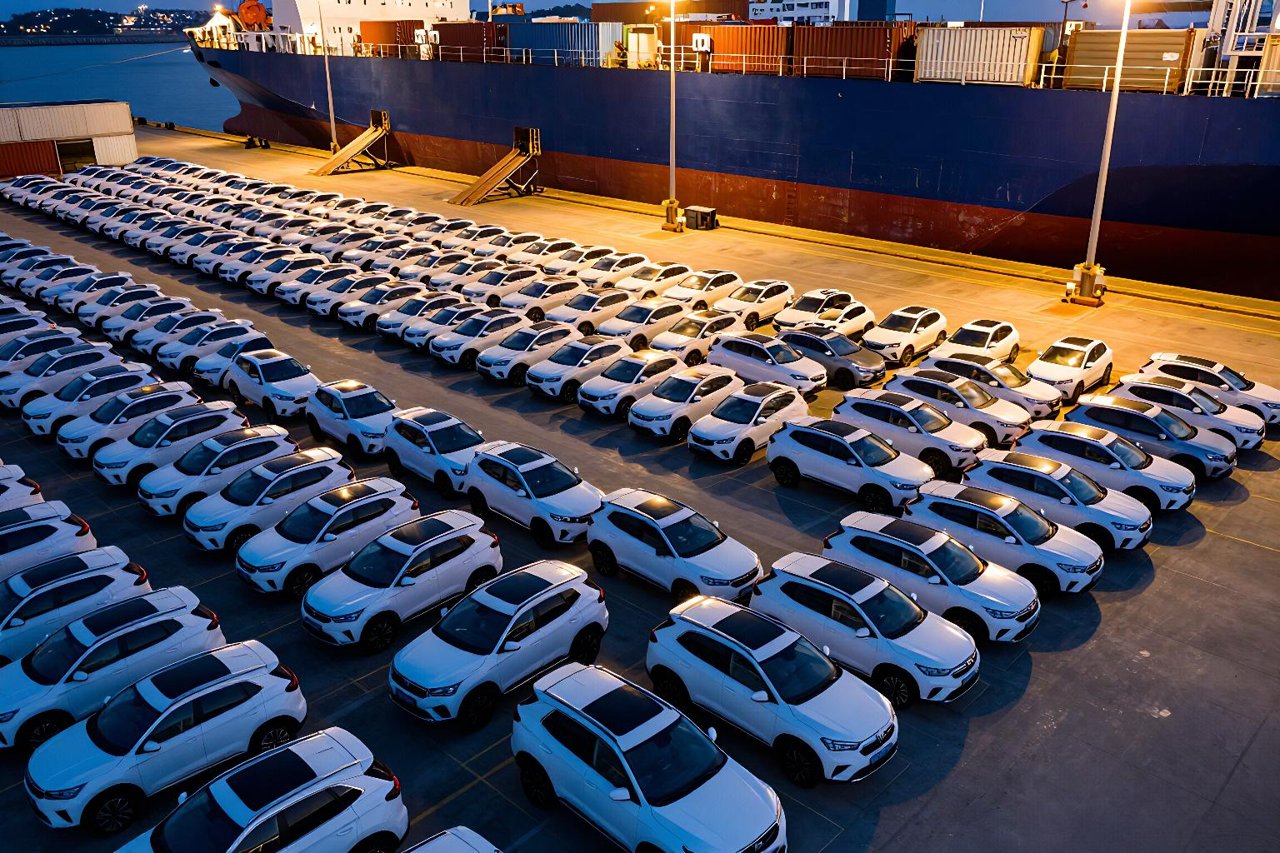
China’s domestic price war pushed electric cars below the price of equivalent petrol models, with entry-level hatchbacks now selling for the equivalent of £8,000 to £10,000. LFP battery packs moved out of fleet specials and into cheap consumer cars. And Chinese vehicle exports reached roughly 5.86 million units in 2024, up about 19%, as brands that had spent years building dealer networks in Southeast Asia, Latin America and the Middle East turned their attention to Europe.
Brussels answered with countervailing duties: an additional 17% on BYD, 18.8% on Geely and 35.3% on SAIC-built MGs, all stacked on the standard 10% tariff. Growth didn’t stop. It moved into local assembly, which is why Hungary, Spain, Turkey and Poland now host plants that didn’t exist three years ago.
BYD is the headline act, and it isn’t close
BYD’s 2024 total of 4.27 million vehicles broke down into roughly 1.76 million pure EVs and 2.5 million plug-in hybrids. In the third quarter of last year it overtook Tesla on quarterly revenue. The company builds its own batteries, power electronics, semiconductors and even seats, so it captures margin at every stage where rivals hand money to suppliers. The Seagull, sold as the Dolphin Mini in some markets, starts at around $10,000 at home.

For 2025 the target is 5.5 million vehicles, with the first European passenger car plant at Szeged in Hungary due to come online. Sponsorship has followed the sales push, including a deal as official partner of UEFA Euro 2024 that displaced Volkswagen. Car money keeps flooding into sport for the same reason the fastest-growing sports in the world keep attracting broadcasters: young, engaged audiences that are expensive to reach anywhere else.
Chery, Omoda and Jaecoo: the export machine
Chery Group sold 2.6 million vehicles in 2024, up 38%, and exported 1.14 million of them. It has been China’s largest passenger-car exporter for more than two decades, which is why its arrival in Europe looks less like a startup gamble and more like a logistics exercise.
The company doesn’t sell under one badge. Omoda and Jaecoo handle the European push, launched in the UK and Spain across 2024 and 2025 with petrol and plug-in hybrid models first. That sequencing is deliberate. Buyers in parts of southern and eastern Europe still worry about charging, so a £25,000 petrol crossover beats a £35,000 EV in the showroom. Seven-year warranties are standard in several markets, a blunt instrument that quietly kills the reliability objection.
Manufacturing followed the same pattern. Chery took over Nissan’s former Barcelona plant in a joint venture with Ebro, sidestepping the tariff question entirely. Getting a foothold in a new market is its own discipline, and the brands that do it well treat entry as a staged launch rather than a single press release, much as INNBEAUTY Project used its Sephora UK launch to borrow retail credibility overnight.
Geely quietly assembled a portfolio
Geely Auto sold 2.18 million vehicles in 2024, up 32%, and has set a 2.71 million target for 2025. The parent group owns or holds stakes in Volvo, Polestar, Lotus, Zeekr, Lynk & Co, smart and Proton, which gives it something rare: a badge for almost every price point and a shared platform underneath most of them.
Zeekr is the fast-moving piece, with 222,000 deliveries in 2024, up 87% year on year, and a premium position in Europe. Geely has also started collapsing overlapping brands, folding Lynk & Co into Zeekr in 2025 to cut duplicate development and marketing spend. Sprawl is easy to build and expensive to run.
Xiaomi went from phones to 136,000 cars in nine months
The SU7 launched in March 2024. By December, Xiaomi had delivered 136,854 of them, and it lifted its 2025 target to 350,000 before the YU7 SUV had even shipped in volume. No legacy automaker has launched a first car this quickly at this scale.
Xiaomi’s advantage isn’t engineering heritage. It’s more than 20,000 retail stores in shopping malls, a user base already locked into its phones and smart home gear, and software that feels like a consumer product instead of a car interface. The discovery side matters just as much, and the channels that sell cars now look a lot like the ones that turned viral TikTok beauty products into mainstream bestsellers: short video, real owners, zero polish.
Outside China, the growth is patchier
MG moved roughly a quarter of a million cars in Europe in 2024 despite carrying the heaviest tariff of any Chinese-owned brand, helped by a dealer network built over a decade. Leapmotor, sold through Stellantis, more than doubled to 293,000 units globally. Suzuki keeps compounding quietly in India, where Maruti Suzuki accounts for something close to four in ten new cars sold.
In the US the picture is different. Chinese brands are effectively barred by a 100% tariff on EVs, so growth comes from Korean and Japanese marques taking share from domestic incumbents. Hyundai and Kia both set US records in 2024, with Kia passing 796,000 units, and their EV lineups now undercut most rivals on price per mile of range.
What the fast movers have in common
- Control of the battery. BYD, Geely and Chery build packs in-house or through close partners, which shields them from supplier pricing swings.
- Hybrids as a bridge. Plug-in hybrids outsell pure EVs in most of BYD’s export markets, and brands shipping only EVs grow more slowly.
- Warranty as a marketing budget. Seven-year cover costs less than a national ad campaign and answers the first question buyers ask.
- Sub-brand segmentation. Omoda, Jaecoo, Zeekr and Leapmotor each occupy a distinct shelf rather than dragging one badge upmarket.
- Speed of iteration. Chinese development cycles run at 18 to 24 months, against 36 to 48 for most European and American rivals.
The next 18 months will be decided by service and resale
Selling cars is the easy part. Keeping them on the road is where fast-growing brands tend to stumble. Parts availability, technician training and body-shop networks are unglamorous costs that land two or three years after a launch, right when the first wave of owners needs a repair and starts posting about it.
Residual values are the other tell. A brand growing 40% a year while leaving buyers with a car worth 30% of its sticker price after three years will struggle on the second sale, and fleet managers notice long before private buyers do. Brand heat has a habit of showing up in resale prices before it shows up in market share, the same way StockX named Mizuno its fastest grower of 2025 off a run of releases that resold well above retail.
Watch the Hungary and Spain plants for real volume, watch European residuals on the first three-year-old BYD and Omoda trade-ins, and watch whether Xiaomi can service 350,000 cars a year without a dealer network that existed before 2024. The sales charts will keep moving. Whether the brands on top stay there depends on everything that happens after the keys are handed over.


