
Table of Contents
Many people picture medieval history as a grim parade of plagues, crusades, and muddy castles. That image isn’t baseless, but it misses the texture of a thousand years that produced parliaments, universities, and even the fork. The period was full of contradictions. The same monks who copied pagan poetry lived in fear of demons. The same merchants who traded across the Indian Ocean accepted that the Earth was flat (unless they had actually been to sea). These paradoxes make the period endlessly fascinating. Sometimes a single artifact can change the whole story, like a lost medieval manuscript finally found hiding in plain sight. Discoveries like these remind us that the Middle Ages are not a closed book.
What Exactly Is Medieval History?
Historians usually place the Middle Ages between roughly AD 500 and AD 1500, though the boundaries shift depending on region. The term itself was a Renaissance insult, a way of saying that the centuries after Rome fell were a long detour from civilization. We now know better.
Three Phases of the Medieval World
Medieval history is often split into three broad stretches:
- The Early Middle Ages (5th to 10th centuries) saw the collapse of Roman order, the spread of Christianity into northern Europe, and the rise of Islam in the South.
- The High Middle Ages (11th to 13th centuries) was a time of expansion. Population doubled, towns grew, cathedrals reached for the sky, and crusaders marched to the Levant.
- The Late Middle Ages (14th to 15th centuries) brought famine, the Black Death, and a series of crises that eventually gave way to the Renaissance.
The Rhythm of Daily Life
Daily life in the medieval world was rarely glamorous, but it had a rhythm that modern schedules have lost. Most people lived in small villages and worked the land. The year turned on ploughing, sowing, reaping, and resting for the winter.

The Agricultural Year
In the early medieval period, peasants used a heavy wheeled plough and grew rye, oats, barley, and wheat. Many villages followed a three-field rotation. One field lay fallow each year to regain fertility. Animals were essential, and their manure was the only fertilizer. In autumn, farmers turned pigs loose to gorge on acorns in the forest, earning the nickname “acorn season” in some regions.
Food and Drink
A medieval diet revolved around bread, porridge, and beans. Pottage, a thick vegetable stew, was the everyday meal. People at all ranks drank ale or small beer because the water could be unclean. Nobles ate game, poultry, and bread made from fine white flour, flavoured with imported spices like pepper, saffron, and cinnamon. The contrast between the rich and poor was as much about taste as it was about quantity.
Faith, Learning, and the Scriptorium
The Church was the single most powerful institution in medieval history. Monasteries accumulated land and wealth, but they also preserved learning. Monks and nuns copied manuscripts by hand. The majority of ancient Greek and Roman texts that survive today exist because of these laborious copies.
The medieval debt to antiquity is a big reason that ancient history still runs your life to this day. If you read any Greek tragedy or Roman law code, you are handling a manuscript that passed through someone’s hands in a candlelit scriptorium. The Middle Ages was not a dark void; it was a bridge.
The Rise of Universities
Out of cathedral schools came the first universities. The University of Bologna began in 1088, Paris followed, then Oxford. Students studied grammar, logic, rhetoric, arithmetic, geometry, astronomy, and music. They debated philosophical questions with an intensity that could make a modern seminar look tame. The university lecture format, which we still use, was invented here.
Feudalism, Knights, and Power
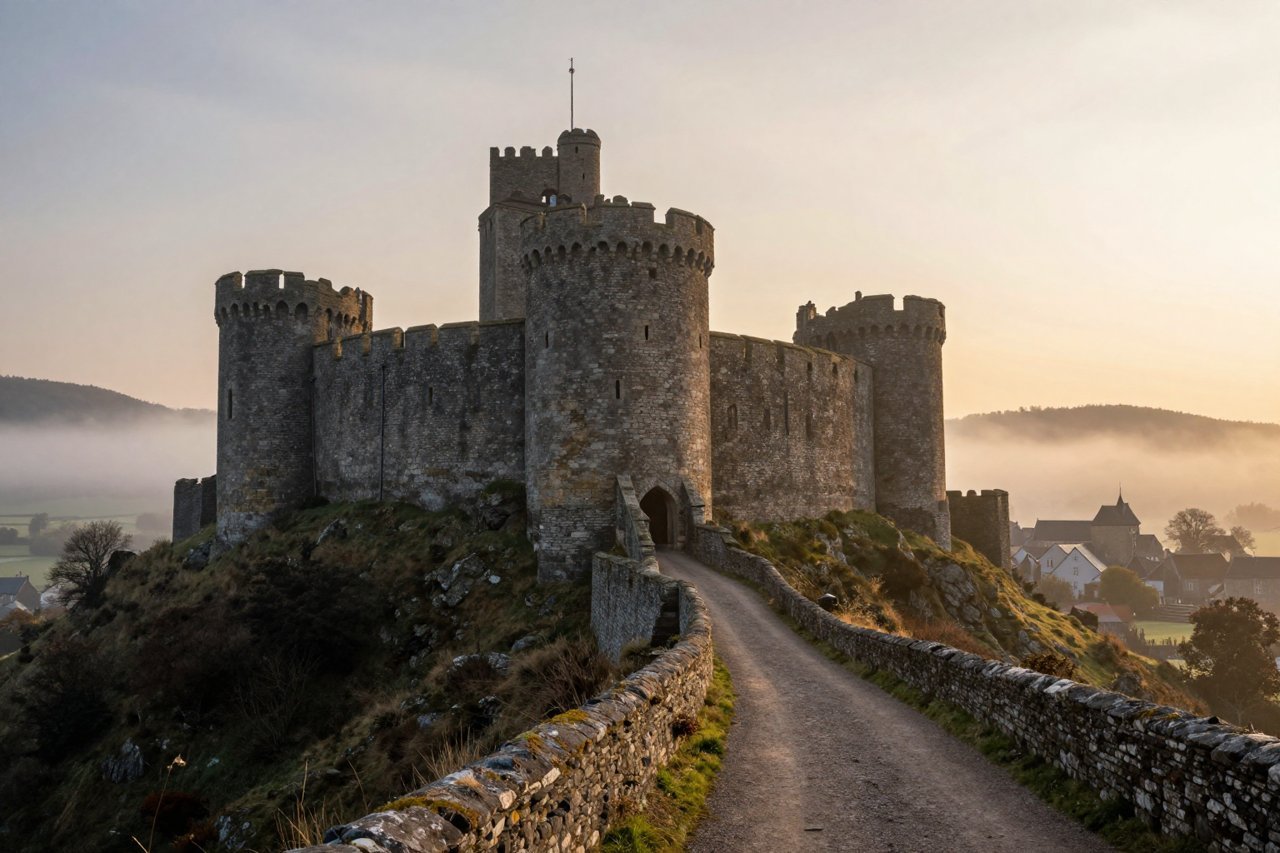
When people think of medieval history, they often think of knights, castles, and jousting. The reality of feudalism was less romantic and more practical.
The Feudal Contract
In the simplest terms, a king granted land (a fief) to a noble lord. In exchange, the lord promised to supply soldiers to fight when called. That lord might then grant parcels of that land to lesser knights, creating a web of obligations. Villagers worked the fields and paid rents in grain, eggs, or labour. This system gave stability, but it also made local lords nearly unstoppable.
Chivalry in Theory and Practice
Chivalry was a code of conduct for knights, honouring courage, loyalty, and courtesy. It sounds noble. In practice, knights could be brutal. Rampaging cavalry often burned crops and seized goods. Courtly love poetry praised devotion from afar, while marriages were arranged for inheritance. The gap between the ideal and the daily reality is one of the most interesting parts of medieval culture.
Trade, Travel, and the Global Middle Ages
Medieval history cannot be told as a European story. Armies of the Crusades marched to the Holy Land, and their journeys opened new routes for trade. Silk, dye, spices, and paper moved across continents. Cities like Venice and Genoa grew rich on this traffic.
You can still feel that on the water today. A Mediterranean cruise with Viking passes through the same harbours where galleys once unloaded porcelain and alum. At the same time, the Viking reputation as raiders often overshadows their skills as merchants. Norse traders made it to the Black Sea and even into the Byzantine Empire. To travel in their wake, you might book a Viking cruise that combines historical narrative with modern comfort. And if rivers are more to your liking, a riverboat cruise along the Rhine will glide past castles, vineyards, and medieval town centres. Those rivers were the roads of the medieval world.
The Medieval Roots of the Modern World
The final centuries of the Middle Ages saw plagues and revolts, yet many of our most familiar institutions emerged then. The English Parliament, the French Estates-General, and the Scandinavian thingstads all began as advisory bodies for kings. Banks opened in Florence. Double-entry bookkeeping was invented around 1300. The idea of a “university” set the stage for secular education.
Medieval history also shaped everyday language and law. In common law countries, trial by jury has roots in the 12th century. In politics, the principle that kings answer to something higher than their own will was hammered out in the Magna Carta in 1215. Those ideas did not disappear when the Renaissance began.
So the next time you stand in front of a cathedral or read a thick legal contract, remember that the medieval world built the bones of our own. It wasn’t a thousand-year dead end. It was a period of invention, faith, greed, and grandeur, still speaking to anyone willing to look.


