
Table of Contents
Let’s be honest—when you hear “healthy recipes,” you might think of bland salads and sad steamed vegetables. But healthy eating doesn’t have to be boring. In fact, the best healthy recipes are so full of flavor that you won’t even miss the excess oil, sugar, or processed ingredients. Whether you’re trying to lose weight, build muscle, or just feel better, these recipes will show you that eating well can be a genuine pleasure.
The Building Blocks of a Healthy Recipe
Before we get into specific recipes, it helps to understand what makes a recipe truly healthy. It’s not about cutting out entire food groups or following strict rules. Instead, focus on three principles.
Whole Foods First
Base your meals on ingredients that come from nature—vegetables, fruits, lean proteins, whole grains, nuts, and seeds. Processed foods often sneak in extra sugar, unhealthy fats, and preservatives. When you cook from scratch, you control what goes in. For example, a bowl of oatmeal with fresh berries and a sprinkle of cinnamon beats a packaged instant oatmeal packet any day.
Balancing Macronutrients
A healthy recipe includes a good balance of protein, healthy fats, and carbohydrates. This keeps you full, stabilizes your blood sugar, and gives you sustained energy. A simple formula: fill half your plate with vegetables, a quarter with lean protein, and a quarter with complex carbs. Drizzle with a little healthy fat like olive oil or avocado. That plate is a template for endless variations.

Quick and Easy Healthy Recipes for Busy Days
Not everyone has hours to spend in the kitchen. These recipes come together in 30 minutes or less—sometimes in the time it takes to watch a single TV episode.
15-Minute Veggie Stir-Fry
Heat a wok or large skillet over high heat. Add a tablespoon of sesame oil, then toss in chopped broccoli, bell peppers, snap peas, and carrots. Stir-fry for 3-4 minutes until crisp-tender. Push the veggies to one side, crack in two eggs, scramble, then mix everything together. Add a splash of low-sodium soy sauce and a squeeze of lime. Serve over brown rice or cauliflower rice. This meal delivers 20 grams of protein and loads of fiber.
Overnight Oats (Your New Breakfast Best Friend)
If mornings are hectic, prep these the night before. Mix 1/2 cup rolled oats, 1/2 cup milk (dairy or plant-based), 1 tablespoon chia seeds, and a dash of vanilla. Stir in fresh fruit like sliced banana or berries. Leave in the fridge overnight. In the morning, top with a spoonful of nut butter and a drizzle of honey. It takes 5 minutes to assemble, and you’ll have a nutritious breakfast ready to grab. For more healthy breakfast food ideas, check out our collection of morning meals that keep you energized until lunch.
Sheet Pan Salmon and Vegetables
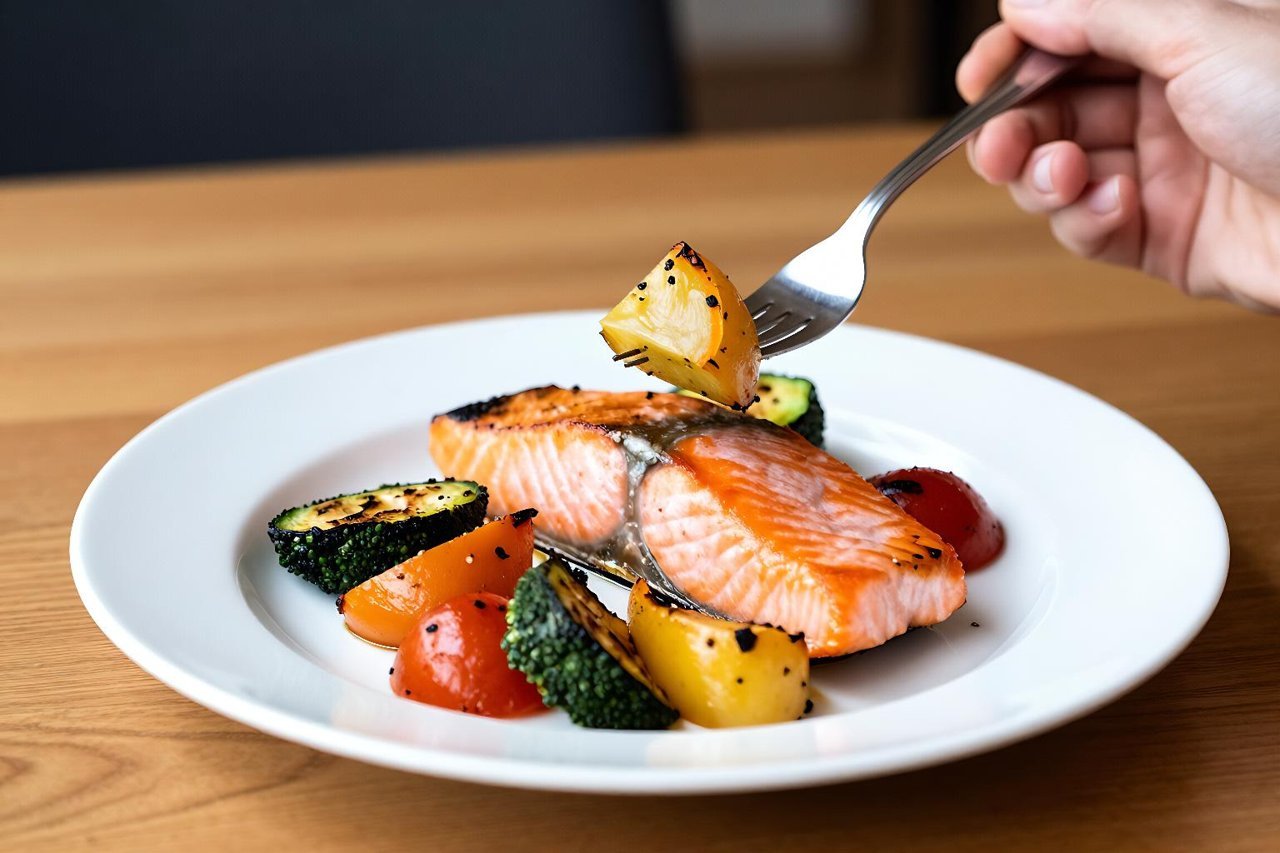
Line a baking sheet with parchment paper. Place a 6-ounce salmon fillet in the center, surrounded by chopped broccoli, cherry tomatoes, and red onion. Drizzle everything with olive oil, sprinkle with salt, pepper, and dried dill. Bake at 400°F (200°C) for 15-18 minutes. The salmon comes out flaky, and the veggies are perfectly roasted. Pair with quinoa or a side salad. This is a classic example of how simple ingredients can be incredibly satisfying.
Healthy Recipes for Specific Goals
Depending on what you’re working toward, you might tweak your recipes to support your body’s needs.
For Weight Loss
Focus on recipes that are low in calories but high in volume and nutrients. Think large salads packed with leafy greens, lean chicken, chickpeas, and a light vinaigrette. Or zucchini noodles with turkey meatballs and marinara. The key is to use ingredients that fill you up without weighing you down. For more structured plans, explore our guide to healthy meals for weight loss. It offers ten options that actually taste good and help you shed pounds.
For Muscle Gain
When building muscle, protein is non-negotiable. Aim for recipes that provide 30-40 grams of protein per meal. A great option: grilled chicken breast with sweet potato and steamed broccoli. Or try a quinoa bowl with black beans, corn, avocado, and grilled steak. You can also incorporate protein shakes, but whole food sources should be the foundation. If you’re serious about muscle gain, our high protein meals for muscle gain page has dozens of delicious ideas.
For Digestive Health
A healthy gut starts with fiber. Recipes rich in beans, lentils, oats, fruits, and vegetables support digestion and keep you regular. For example, a lentil soup with carrots, celery, and turmeric is comforting and fiber-packed. Another tip: snack on an apple with almond butter. Apples are a great source of pectin, a type of soluble fiber. Learn more about the highest fiber fruit and how to incorporate it into your daily diet.
Tips for Making Healthy Recipes a Habit
- Batch cook on weekends. Spend an hour chopping veggies, cooking grains, and prepping proteins. Then assemble meals quickly during the week.
- Invest in good spices. Cumin, smoked paprika, garlic powder, and chili flakes can transform basic ingredients into something crave-worthy.
- Double the recipe. Make extra portions and freeze them. Future you will thank you on days when cooking feels impossible.
- Don’t fear healthy fats. Avocado, nuts, seeds, and olive oil make meals satisfying and help absorption of fat-soluble vitamins.
- Start small. Swap one meal per day for a homemade healthy option. Over time, build up to more.
A well-stocked pantry makes healthy cooking easier. Keep canned beans, lentils, quinoa, oats, frozen vegetables, and a variety of herbs and oils on hand. When you have the basics, you can whip up something nutritious without a last-minute trip to the store. The recipes above are just a starting point—once you feel comfortable, experiment with your own combinations. The more you cook, the more you’ll discover that healthy recipes are not a compromise but an upgrade.


