
Table of Contents
Most adults eat only about 15 grams of fiber a day, while the recommended intake sits at 25 to 38 grams. That gap matters. Fiber supports digestion, evens out blood sugar, feeds the good bacteria in your gut, and helps you feel satisfied after meals. The best part is that fiber is found in ordinary, affordable foods you can find in any supermarket. You just need to know which ones to choose.
What Fiber Actually Does in Your Body
Fiber is the part of plant foods that your body can’t fully digest. It comes in two main forms: soluble and insoluble. Soluble fiber dissolves in water to form a gel, which can lower cholesterol and slow down sugar absorption. Insoluble fiber adds bulk to your stool and helps everything move through your digestive tract. Most high-fiber foods contain both, so you don’t have to obsess over the difference. You just need to eat a variety of plants.
Beyond regular digestion, fiber is a key player in long-term health. High-fiber diets are linked with a lower risk of heart disease, type 2 diabetes, and even certain cancers. Fiber also fuels the microbiome, and a healthy microbiome has been connected to improved mood and immune function.
The Best Foods High in Fiber, Category by Category
Instead of memorizing a random list, it helps to think in categories. Here are the standouts, with practical serving sizes and real fiber numbers.

Fruits That Pack a Fiber Punch
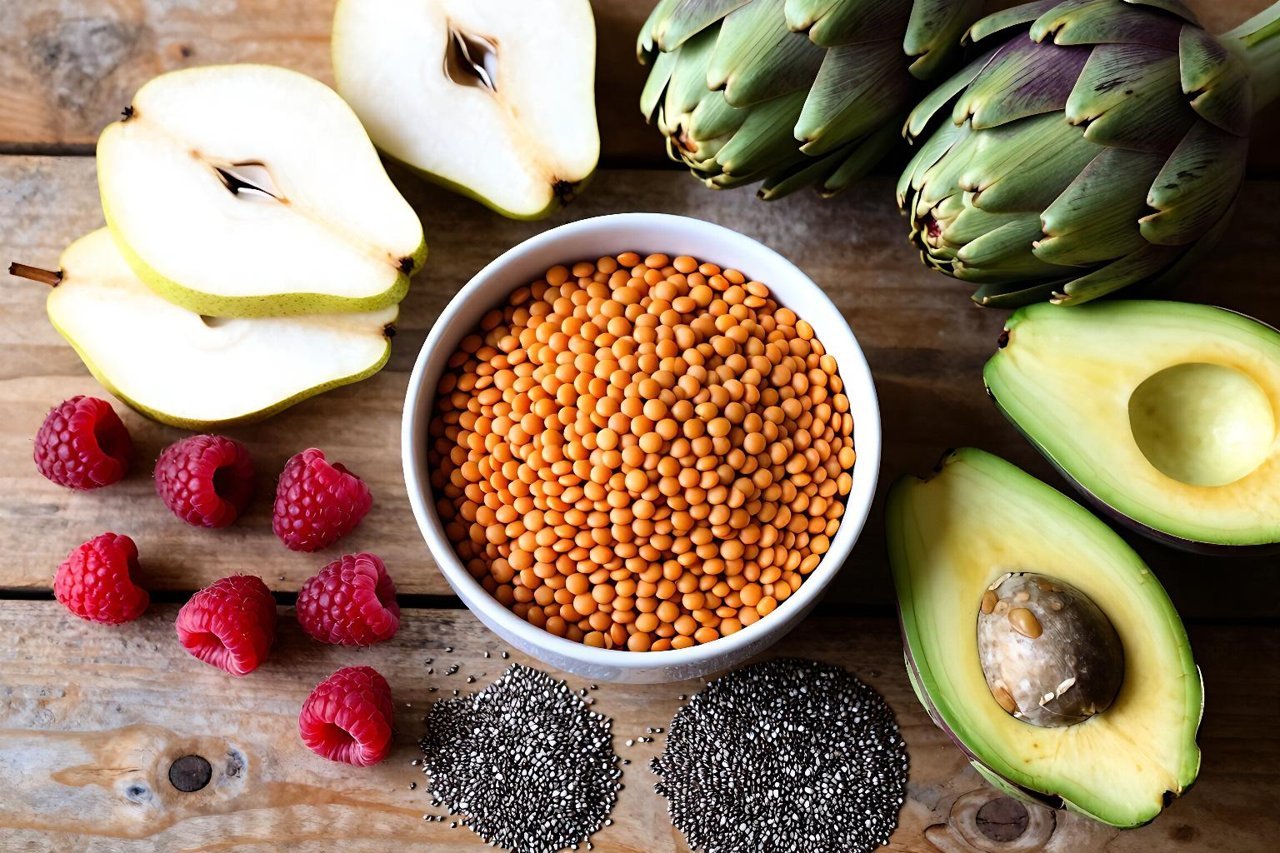
Raspberries are the quiet champion: a single cup delivers 8 grams of fiber, which is more than a third of your daily need. Pears are close behind with 5.5 grams in one medium fruit, apples come in around 4.4 grams, and a whole avocado has over 9 grams of fiber in just half of the fruit. For a complete rundown, check out the ultimate guide to the highest fiber fruit for digestive health, which includes more options and how to work them into your routine.
Vegetables With Serious Fiber Credentials
If you want to make the biggest difference per bite, start with artichokes. One medium artichoke (cooked) delivers 9.8 grams of fiber, more than any other vegetable. Green peas are another heavy hitter at 8.8 grams per cooked cup, followed by broccoli and Brussels sprouts, each providing between 4 and 5 grams per cup. For even more ideas, the top vegetables with the highest fiber and how to eat more of them is a great resource.
Legumes and Beans (The Double Win)
Beans and lentils are unbeatable when it comes to fiber density. Cooked lentils pack 15.6 grams per cup, black beans give you 15 grams, and chickpeas offer 12.5 grams in the same amount. They’re also one of the best high-protein foods you can buy, so you’re getting fiber and protein in a single ingredient. Add them to soups, salads, or simply sauté them with olive oil and garlic.
Whole Grains That Actually Move the Needle
Not all grains are created equal. Barley leads the pack with 6 grams of fiber per cooked cup, followed closely by bulgur and quinoa at around 5 grams. Rolled oats provide 4 grams per cup, and if you swap regular pasta for whole wheat, you’ll get about 6 grams per serving instead of 2.
Nuts and Seeds (A Little Goes a Long Way)
Chia seeds are the standout in this group: just two tablespoons contain 9.8 grams of fiber. Ground flax seeds give you 3.8 grams per tablespoon, and an ounce of almonds (about 23 nuts) has 3.5 grams. Sprinkle them over yogurt, oatmeal, and salads for an easy fiber boost.
One thing to keep in mind: nuts and seeds are also calorie-dense, so portion control matters, especially if your goal is weight loss. If you’re using them intentionally, they can be part of a weight loss foods plan because they’re so satiating.
How to Add More Fiber Without the Bloat
Going from 15 grams to 30 grams overnight can cause gas and cramping. The trick is to increase gradually and give your gut time to adjust. Start by adding one high-fiber food to each meal. Swap white rice for brown rice, snack on an apple instead of crackers, and stir a handful of spinach into your eggs.
Also, drink plenty of water. Fiber pulls water into your colon, so if you’re not hydrated, you can feel blocked rather than relieved. Try to keep your water bottle nearby, especially on days you’re eating more beans and whole grains.
Include a mix of safe, easy choices until your body adapts. There’s no need to go straight from a standard cereal to a bran bomb.
A Simple High-Fiber Day to Aim For
Rather than thinking about a number, set up your meals around fiber-rich whole foods. Here’s what a day might look like, with approximate fiber totals:
- Breakfast: oatmeal made with 1/2 cup rolled oats (2g), topped with 1 cup raspberries (8g) and 2 tablespoons chia seeds (9.8g) – about 20g total.
- Lunch: lentil salad with 1 cup cooked lentils (15.6g) and a handful of spinach (1g) – about 17g.
- Dinner: grilled chicken with 1 cup of roasted Brussels sprouts (4g) and 1/2 cup cooked quinoa (2.5g) – about 6.5g.
- Snack: one medium pear (5.5g) with 1 ounce of almonds (3.5g) – about 9g.
That adds up to over 50 grams, which is higher than the daily recommendation for most people. The key is to start with just one of these meals, see how you feel, and add from there.


