
Table of Contents
Your gut is home to trillions of bacteria, fungi, and viruses that outnumber your own cells about one to one. It sounds like science fiction, but the food you eat feeds those microscopic residents. A balanced microbiome is linked to better digestion, a stronger immune system, and even a more stable mood. So when people talk about foods for gut health, they’re really talking about the choices that keep those tiny bugs thriving.
You don’t need a restrictive diet or a cabinet full of supplements to improve your gut health. Real, research-backed foods are often the simplest and most effective way to support your digestive system. Here’s what to focus on, and why.
What Does a Healthy Gut Actually Mean?
Your gut is the part of your body that breaks down food, absorbs nutrients, and manages waste. The bacteria that live there, called the microbiome, do much more than simply pull energy from food. They help train your immune system, produce short-chain fatty acids like butyrate, and even synthesize certain B vitamins.
When the balance tilts toward unhealthy bacteria, you might experience bloating, irregularity, or a feeling of sluggishness. More research is emerging about links between gut health and chronic conditions like obesity and diabetes. A diverse array of beneficial bacteria is the most common marker of a healthy gut, and diet strongly influences that diversity.

Fiber Is Your Microbiome’s Best Fuel
If there’s one priority for gut health, it’s fiber. But not just one type. Soluble fiber, found in oats, barley, and legumes, dissolves in water and forms a gel that feeds bacteria directly. Insoluble fiber, like the kind in wheat bran and many vegetables, adds bulk to your stool and helps food move through your system.
Most adults need between 25 and 38 grams of fiber every day, yet most of us hover around half that number. The easiest way to close the gap is to build meals around plant foods. A bowl of oatmeal with berries, a lentil soup, or a handful of almonds all count.
If you’re adding more fiber, do it gradually. A sudden jump can leave you feeling gassy or bloated, which is the opposite of what you want. Try increasing your daily intake by five grams per week and drink plenty of water. For a more detailed walkthrough, this practical guide to eating more fiber without the bloat is a great starting point.
Fiber-Rich Foods That Are Easy to Add
- Raspberries: 8 grams per cup
- Chickpeas: 12.5 grams per cup, cooked
- Artichokes: 10 grams per medium artichoke
- Pear: 5.5 grams per medium fruit
- Popcorn: 3.5 grams per three cups, air-popped
Fermented Foods Bring in Live Cultures
Fiber feeds the bacteria already living in your system, but you can also introduce new beneficial strains through fermented foods. Live cultures of Lactobacillus and Bifidobacterium, for example, are common in many foods and can increase the diversity of your gut in as little as a few weeks.
Yogurt and kefir are the most studied fermented dairy products. Kefir, a tangy fermented milk drink, can contain dozens of different strains and has been tied to improved lactose digestion in athletes, and better bowel movements in those with constipation.
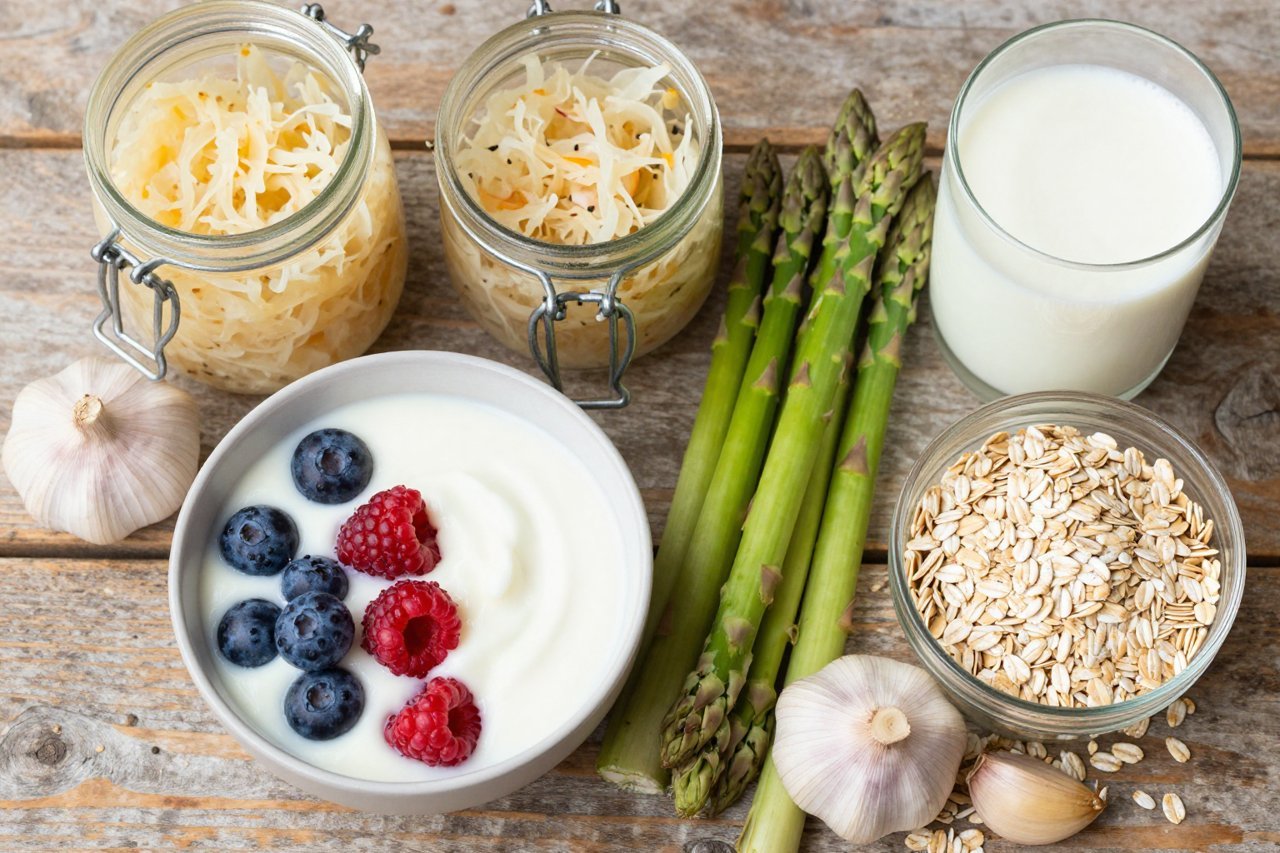
If you’re not into dairy, you have options. Sauerkraut and kimchi are both fermented vegetables that deliver live bacteria. Select refrigerated versions rather than canned ones, since heat during canning often kills the cultures. Miso paste, fermented soybean, and kombucha, a fizzy green or black tea drink, also bring friendly microbes to the table.
The key is reading the label. Look for phrases like “live and active cultures” or “probiotic” on the package. You want foods that haven’t been pasteurized after fermentation.
Prebiotics: The Food That Feeds Your Food
Probiotics deserve time in the spotlight, but prebiotics are just as important. Prebiotics are a type of fiber that your own body can’t digest. Instead, they travel to your colon and become food for beneficial bacteria.
The best sources are foods naturally rich in inulin and fructooligosaccharides. Onion, garlic, leeks, asparagus, and Jerusalem artichokes top the list. Green bananas, oats, and apples also provide a steady supply. Think of prebiotics as the fertilizer that keeps your microbial garden growing.
One small tip: slice onions or garlic and let them sit for five minutes before cooking. This activates an enzyme that increases their prebiotic potential. It’s a tiny change with a measurable benefit.
Eat a Rainbow of Plants for a Diverse Microbiome
A recent research initiative called the American Gut Project found that people who eat more than 30 different types of plants each week have a more diverse gut than those who eat fewer than 10. That number might sound ambitious, but it includes everything from fruits and vegetables to nuts, seeds, herbs, spices, and whole grains. A single smoothie with spinach, banana, walnuts, and cinnamon counts as four plants right there.
Why does plant diversity matter so much? Each plant carries a unique combination of fiber and phytochemicals, and different bacteria specialize in breaking down different compounds. More variety on your plate encourages more variety in your gut.
Many of these plant foods also help counteract inflammation. Berries, leafy greens, and oily fish like salmon provide polyphenols and omega-3 fatty acids that support a balanced immune response. In fact, you can find a longer list in this article about anti-inflammatory foods that help tame chronic inflammation.
What to Limit for a Calmer Gut
Just as some foods feed good bacteria, others feed the less friendly ones. A diet packed with ultra-processed snacks, added sugar, and artificial sweeteners can reduce microbial diversity and lead to an overgrowth of certain bacterial strains linked to inflammation.
You don’t need to swear off ever eating a cookie again. The goal is to make rich, plant-forward meals the default and leave processed foods for the occasional treat. For example, you might swap a sugary breakfast cereal for a bowl of plain yogurt topped with fruit and a sprinkle of chia seeds. That’s a meal that supports your gut, not one that works against it.
Small Swaps That Add Up
- Start your day with rolled oats instead of white toast. The oats provide soluble fiber that feeds beneficial bacteria.
- Add a spoonful of sauerkraut to your lunch bowl or sandwich. Look for unpasteurized versions in the refrigerated section.
- Snack on almonds or walnuts instead of crackers. Both are rich in fiber and healthy fats.
- Choose a side of roasted chickpeas instead of a processed granola bar. Chickpeas deliver both protein and fiber.
- Drink water, unsweetened tea, or sparkling water instead of sugary soft drinks. Hydration is important for intestinal transit.
Protein also plays a supporting role in gut health because it helps maintain the mucosal lining of your intestines, and a good dose of plant-based options like lentils, tofu, and tempeh bring prebiotic fiber with them. For a closer look, check out these high-protein foods with real numbers and simple swaps.
Consistency Beats Perfection
Your gut microbiome is resilient, but it also responds to long-term habits rather than a single perfect meal. A week of eating more plants, fermented foods, and whole grains will change your gut for the better, but the real benefits appear after months of consistent choices. Don’t get discouraged if you slip up on a busy day. The goal is to make gut-friendly foods the default, not to chase an unattainable list of rules. Start with one meal today, and let that be enough.


