
Table of Contents
Three hours into a movie marathon, you turn to grab a snack and the whole side of your neck seizes up. You can’t quite look right, and every tilt of your head sends a sharp reminder through your shoulder blade. It’s a familiar scene for millions of people. Neck pain is one of the most common reasons adults see their doctor, and the good news is most cases respond well to simple, at-home care.
If you or someone you love is waking up stiff or walking around with a kink that won’t quit, this guide walks through the neck pain treatment approach that doctors and physical therapists actually recommend. No gimmicks, no $200 massager gadgets, just practical steps that work.
First, Figure Out What You’re Dealing With
Not all neck pain is the same. The right treatment depends on whether your pain is acute—meaning it started within the last few days—or chronic, dragging on for months.
Acute Neck Pain
Acute pain usually comes from a specific trigger: sleeping in the wrong position, carrying a heavy bag, or turning your head quickly. The muscles in your neck go into spasm as a protective response. That spasm cuts off blood flow to the muscle fibres, which creates more pain, which causes more spasm. It’s a vicious cycle.

Chronic Neck Pain
Chronic neck pain develops slowly, typically from accumulated poor posture. Your head weighs around 10 to 12 pounds. For every inch you hold your head forward of your shoulders, the load on your neck muscles roughly doubles. Over time, that constant tension leads to achy, tight muscles and even strain on the vertebral joints.
Red Flags That Need a Doctor
Most neck pain is muscular, but not all. See a healthcare professional quickly if your pain came on after a fall or car accident, if you have numbness or tingling that runs down your arm, or if you wake up unable to move your limbs. These are signs of nerve compression or worse.
Also pay attention to the front of your neck. Persistent hoarseness, a lump, or swelling that doesn’t go away needs investigation. In rare cases, neck pain can be a clue to something like a thyroid problem or lymphoma. If you notice a painless lump in your neck along with fatigue, read up on non-Hodgkin’s lymphoma symptoms so you know what to watch for. And if the pain is in the front and comes with voice changes, a doctor may want to examine your thyroid. Understanding thyroid cancer causes and warning signs can help you decide when to push for answers.
Home Treatment That Works
For the typical muscle strain, you don’t need to rush to a clinic. You need the right combination of ice, heat, and gentle movement, in that order.
Ice Before Heat
For the first 48 to 72 hours after the pain starts, use an ice pack. Wrap a bag of frozen peas or a gel pack in a thin kitchen towel and lay it on the sore area for 15 minutes. Take a break for at least 45 minutes before repeating. The cold dulls the pain and reduces local inflammation.
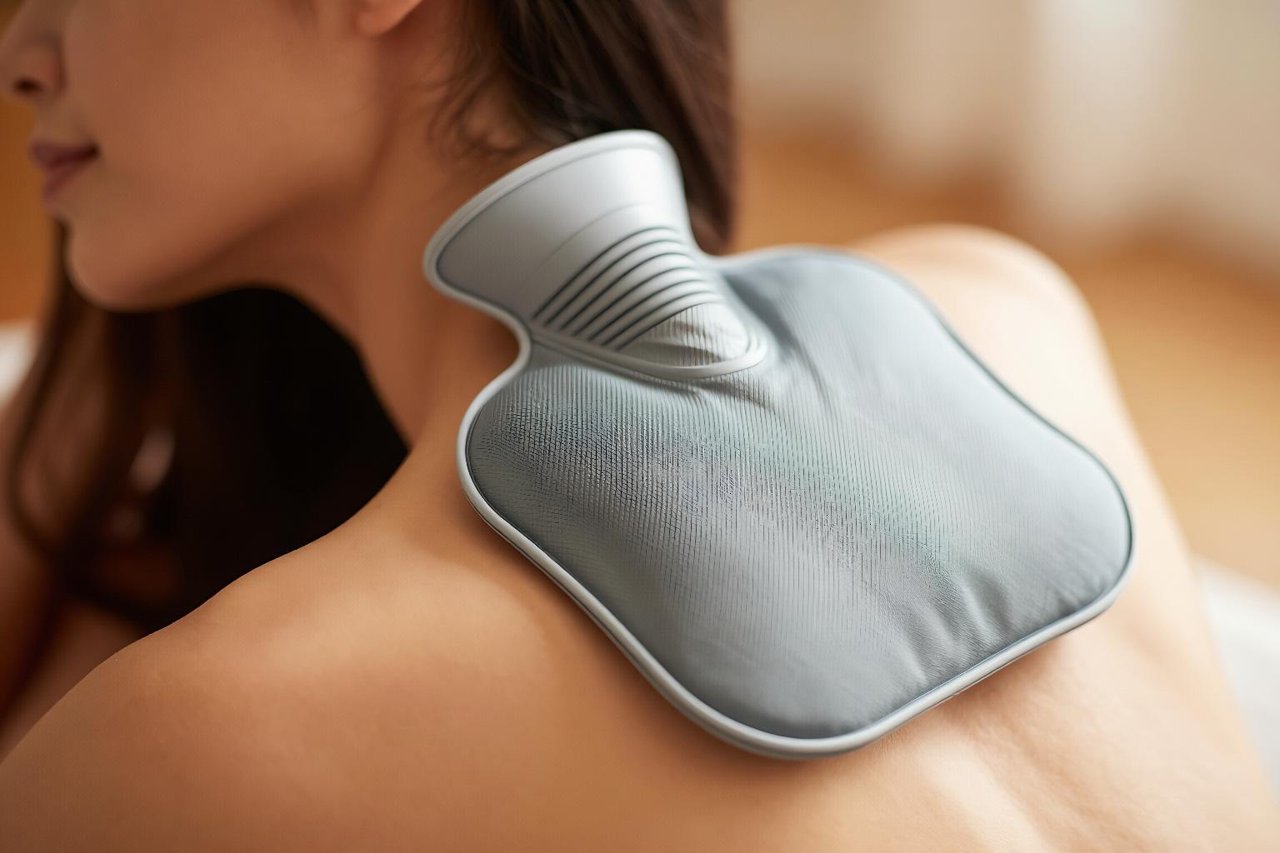
After a few days, switch to a heating pad set on low or a warm shower. Heat relaxes muscle spasm and loosens stiff tissues. Use it for 10 to 15 minutes at a time. People often ask which is better, but both have a role. A good rule is:
- First 2 days: use ice to control swelling and pain.
- After day 2: use heat to relax tight muscles.
- If pain flares up after activity, go back to ice for that day.
Over-the-Counter Medication
Non-steroidal anti-inflammatory drugs like ibuprofen or naproxen can take the edge off while you work on the underlying cause. Take them with food, and follow the label directions for only about 5 to 7 days. These are meant to help you move, not to mask pain for weeks.
Get Moving Instead of Staying Still
Total rest for a stiff neck is outdated. In fact, staying too still can make the muscles tighten further. Gentle movement is the best remedy. Here are three exercises that help, done slowly, ideally every couple of hours:
- Chin tucks: sit up straight and pull your chin straight back as if you’re making a double chin. Hold for 3 seconds, then release. Do 10 reps. This works the deep neck flexors.
- Side-to-side rotation: slowly turn your head to the right until you feel a mild stretch. Hold 5 seconds, then return to center. Repeat on the left. Do 5 to 8 times each side.
- Shoulder shrug roll: raise both shoulders toward your ears, then roll them backward and down. Repeat 10 times. This releases tension in the upper trapezius muscles.
Movement should be smooth and pain-free. If an exercise makes your pain shoot down your arm, stop immediately and call a doctor.
When Self-Care Isn’t Enough: Professional Treatment
Sometimes over-the-counter help doesn’t cut it. If you’ve been treating your neck pain at home for more than a week with no change, or if your pain keeps coming back, consider a professional neck pain treatment approach.
Physical Therapy
A physical therapist doesn’t just hand you stretches. They assess your muscle strength, flexibility, and posture, then design a targeted program. For neck pain, a typical plan runs 4 to 6 weeks, with sessions two or three times a week. The most effective techniques include manual therapy, which involves hands-on pressure to release tight muscles, plus frequent check-ins to correct how you move. One study of over 200 patients with chronic neck pain found that supervised physical therapy reduced pain scores by nearly 40% in just six weeks, compared with about 12% for people who only read a pamphlet.
Massage and Myofascial Release
Deep-tissue massage can help with muscular knots, but don’t expect one session to change your posture. It works best in combination with strengthening exercises. Myofascial release, often done by a physical therapist, targets the connective tissue around the muscle and can improve range of motion considerably. Expect some soreness the next day, but that should fade.
Injections and Manual Adjustments
Trigger point injections with saline or a corticosteroid can quiet a stubborn knot, but they don’t fix the reason the knot formed. Chiropractic spinal manipulation helps some people with mechanical neck pain, but it’s not appropriate for everyone—especially if you have signs of spinal cord compression. Always get a medical exam first.
Fix the Habits That Caused It in the First Place
You can treat the symptoms over and over, but if your daily routine keeps your neck in a strained position, that pain will come back. The real long-term fix for neck pain is changing those habits.
Check Your Workspace
When you work at a desk, your monitor’s top edge should be at eye level, so you don’t have to look up or down. Sit with your feet flat on the floor and your forearms roughly parallel to the ground. If you use a laptop for hours, get a separate keyboard and mouse, or raise the laptop on a stand and use a wireless keyboard. Your head should sit squarely over your shoulders, not out in front of them like a hound tracking a scent.
Stop Texting With Your Head Down
The average adult spends 3 to 4 hours per day on a phone. Every time you look down at the screen, you add the equivalent of 27 pounds of extra load to your neck. Instead, bring the phone up to eye level, or at least hold it higher so your head stays upright. Your shoulders will thank you.
Pick a Pillow That Supports, Not Piles Up
Your pillow needs to keep your head in line with your spine, not prop it up at an angle. Side sleepers generally do best with a firm, tall pillow that fills the space between the shoulder and ear. Back sleepers need a thinner pillow under the head and maybe a second one under the knees. Try to avoid sleeping on your stomach entirely—it forces your neck to twist for hours.
A Note on Underlying Causes
While most neck pain is musculoskeletal, it can occasionally be a symptom of infection or referred pain. If your neck is stiff and you also have a fever, headache, and sensitivity to light, that could point to meningitis—a medical emergency. Do not wait for that to resolve on its own.
Similarly, if the pain sits at the base of your skull and radiates around to your forehead or cheeks, your sinuses may be the trigger. Congestion creates pressure that pulls on neck muscles, and treating the underlying infection might be the key to unlocking that stiffness. Learn what works for sinus infection relief so you can tell whether that’s part of the problem.
If you’ve been struggling with neck pain on and off for months, list down your symptoms and when they happen. Bring that list to a doctor. The exact right treatment for you depends on an exact diagnosis, but you now have a good sense of what to try first.


