
Table of Contents
If someone told you that you had to live on just seven foods forever, what would you pick? This is the mental exercise that reveals what you truly believe about nutrition. Some would choose comfort foods; others would google the top 7 healthy foods in the world to figure out the optimal mix of nutrients, fiber, and taste. The truth is, there’s no single perfect food, but there are a handful of ingredients that show up again and again in the world’s healthiest diets. Here are the seven that deserve a permanent spot in your grocery cart.
1. Salmon: The Omega-3 Champion
Wild-caught salmon is packed with long-chain omega-3 fatty acids (EPA and DHA), which can lower inflammation, protect your heart, and support brain function. A 100-gram portion of wild salmon gives you around 22 grams of protein and a full day’s requirement of vitamin D. The American Heart Association recommends eating fish, especially fatty fish, at least twice a week. You don’t need a complicated recipe: a simple roast with lemon and herbs works brilliantly.
The omega-3s in salmon are the same ones that support memory and focus, which is why nutritionists never stop recommending it. If you’re curious about other science-backed ways to keep your brain sharp, check out our look at the 7 best supplements for brain health.
2. Blueberries: Small Yet Mighty
Blueberries, especially wild ones, pack more antioxidants per cup than almost any other fruit. The deep blue comes from anthocyanins, compounds that help neutralize free radicals and reduce oxidative stress. A 2019 meta-analysis in the journal Nutrients found that regular blueberry intake was linked to better memory, improved blood pressure, and lower risk of type 2 diabetes. One cup has just 84 calories but 3.6 grams of fibre and high doses of vitamins C and K.

Blueberries also come up again and again in longevity research. In fact, they are a staple in the eating patterns of people who live the longest. If you want to see what else is on their plates, read our article on the top 7 foods for longevity.
3. Leafy Greens: Kale and Spinach Lead the Pack
Kale and spinach are arguably the kings of nutrition density. A cup of cooked kale gives you over 1,000% of the daily value for vitamin K, along with significant amounts of vitamin A, vitamin C, calcium, and manganese. Spinach brings a hefty dose of folate and iron. Both are rich in nitrate, which supports blood flow and lowers blood pressure. You can add them to smoothies, scrambled eggs, or grill them with garlic.
The one downside is that leafy greens often come with pesticide residue. If you can, buy organic, especially since the industrialisation of our food supply has made things complicated when it comes to GMO crops. If you’ve ever wondered how conventional farming got this way, the history of Monsanto and GMO effects is a fascinating and alarming read.
4. Quinoa: The Complete Protein
Quinoa is technically a seed, but it acts like a whole grain with a serious nutritional upgrade. It is one of the few plant foods that contains all nine essential amino acids, making it a complete protein. That’s a big deal for vegetarians and vegans. A cooked cup has 8 grams of protein, 5 grams of fibre, plus magnesium, iron, and B vitamins. It’s also naturally gluten-free. Cook it in vegetable broth instead of water and it becomes a fragrant base for buddha bowls.
5. Broccoli: A Cruciferous Cancer Fighter
Broccoli is famous for sulforaphane, a sulphur compound that triggers the body’s own antioxidant and detoxifying enzymes. Studies suggest it can slow the growth of certain cancer cells and protect the liver. Just half a cup of cooked broccoli delivers 84% of your daily vitamin C. Here’s a tip: slightly steaming broccoli (instead of boiling) preserves more of the sulforaphane. Add a little shredded cheese or a lemon-tahini dressing and you’ll look forward to it.
6. Almonds and Walnuts: The Smart Snack
Nuts, especially almonds and walnuts, are the kind of snack that actually does your heart a favour. Almonds are loaded with vitamin E (a fat-soluble antioxidant), magnesium, and plant protein. A 28-gram serving (about 23 almonds) contains 6 grams of protein and 4 grams of fibre. Walnuts, on the other hand, are the only nut with a significant source of alpha-linolenic acid (ALA), a plant-based omega-3. A handful a day is associated with lower LDL cholesterol and better metabolic health. Sprinkle them on porridge or eat them straight out of the jar.
7. Greek Yogurt: Probiotics in a Cup
Greek yogurt has roughly twice the protein of regular yogurt because much of the whey is strained off. A 170-gram serving of plain non-fat Greek yogurt delivers around 17 grams of protein and a good chunk of calcium. More importantly, the live active cultures support your gut microbiome, and a healthy gut influences everything from digestion to immune function. Choose plain unsweetened varieties to avoid the added sugar lurking in flavoured yogurts, then sweeten with fresh fruit or a drizzle of honey.
How to Turn These Seven Foods Into Everyday Meals
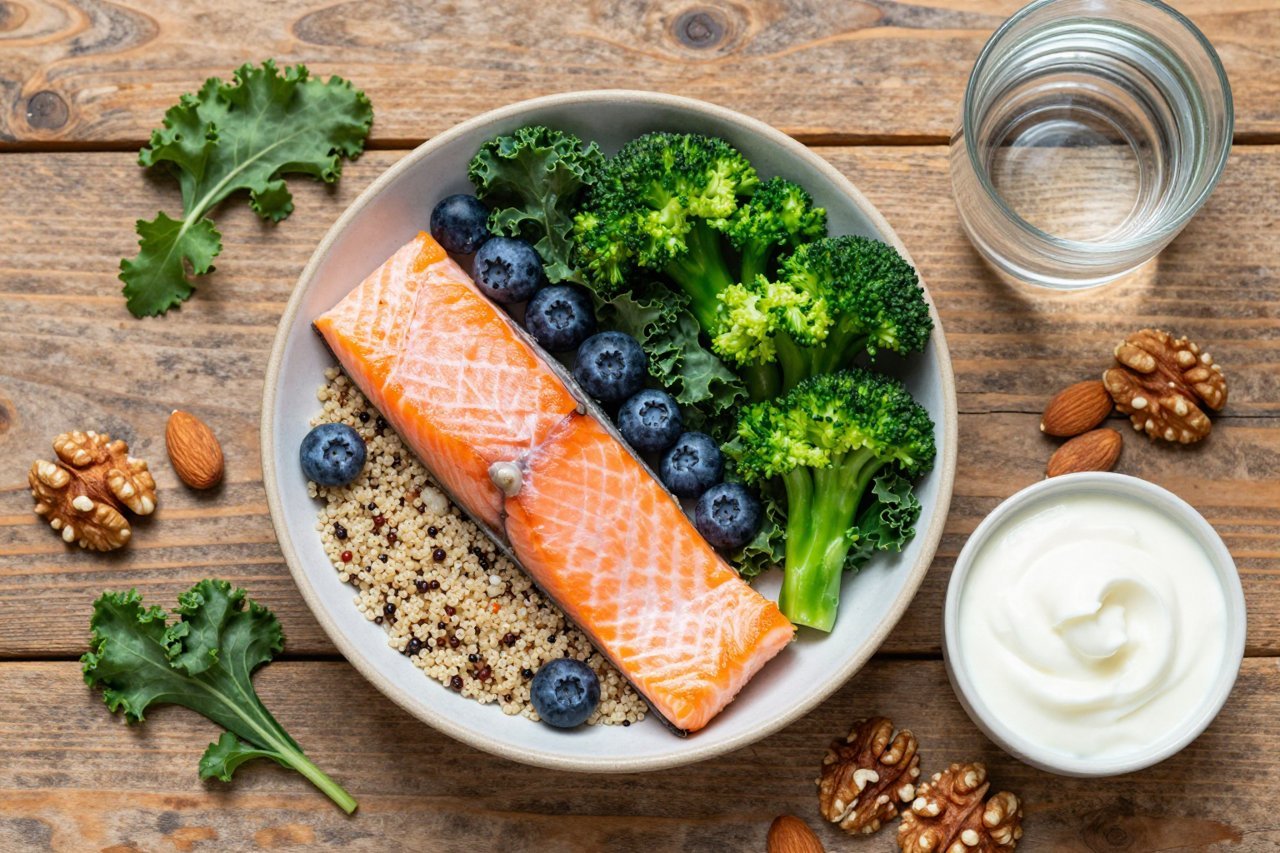
Knowing that salmon, blueberries, kale, quinoa, broccoli, nuts, and Greek yogurt are good for you is one thing. Actually eating them day in and day out? That takes a little planning. Here’s how to work them into breakfast, lunch, dinner, and snacks without turning meals into a chore.
Quick Meal Ideas
- Breakfast: Start the day with Greek yogurt, a handful of blueberries, and a sprinkle of walnuts.
- Lunch: Make a leafy green salad with quinoa, roasted broccoli, and flaked salmon on top.
- Dinner: Roast a salmon fillet alongside broccoli and a simple quinoa pilaf.
- Snack: Keep almonds at your desk, or grab a small apple with a spoonful of Greek yogurt.
You don’t need every meal to be a perfect mix, but if you hit at least three of these foods a day, you’re doing better than most. Try buying one new ingredient each week and play with spices and formats. Over time, these seven foods won’t just be a list you read about – they’ll be a way of eating that feels effortless.


