
Table of Contents
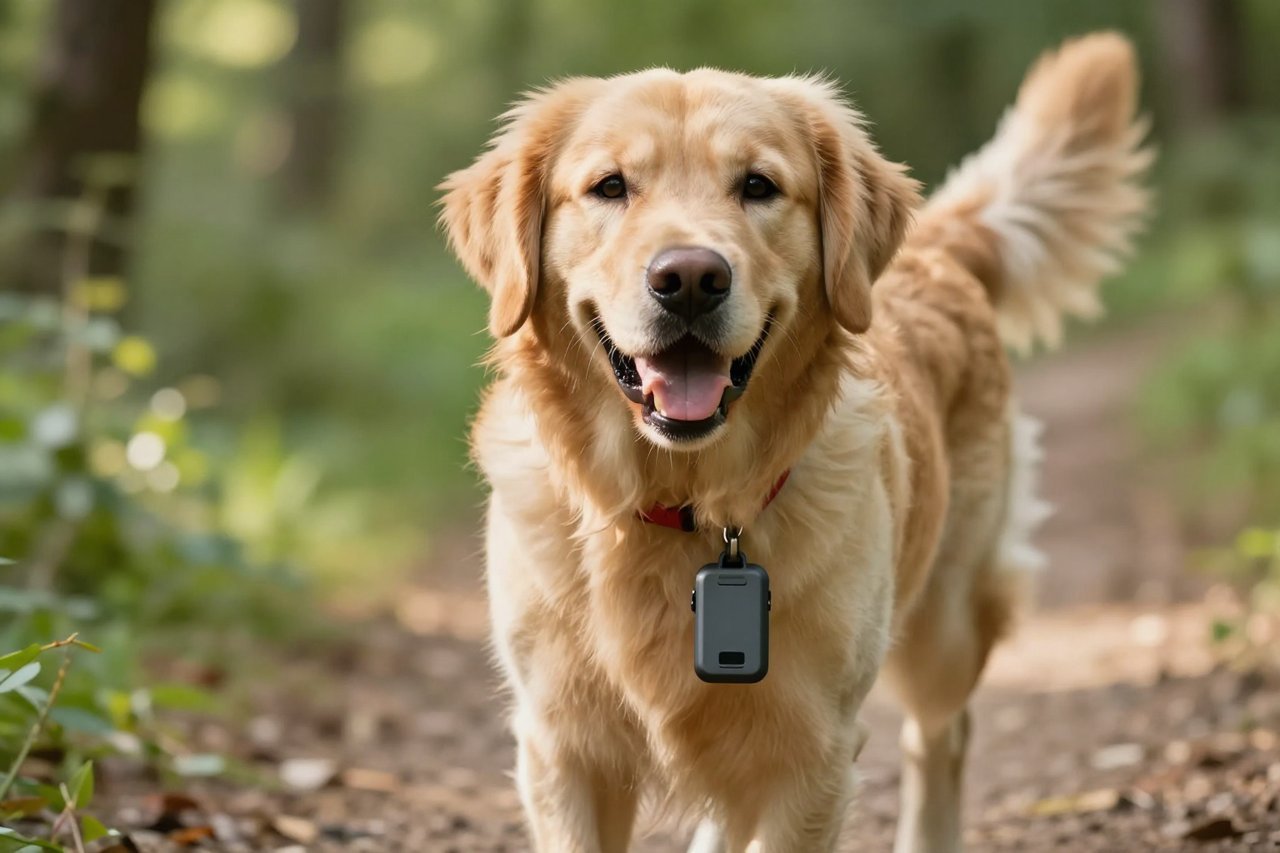
Your dog can cover a mile in under ten minutes. Mine once cleared a six-foot fence because a squirrel laughed at her from the other side. In that moment, I didn’t need a whistle, a treat pouch, or better recall. I needed to know where she was. Dog trackers with GPS promise exactly that. After testing six different devices across wooded trails, suburban backyards, and a chaotic city park, I learned that the reality is a little more complicated.
Some trackers are lifesavers. Some are overpriced carabiners you’ll lose in a week. Here’s the honest breakdown of how they work, where they fall short, and how to choose one you’ll actually trust.
How Dog GPS Trackers Actually Work
Every “GPS tracker” has the same basic job: tell you where your dog is. But the way it sends that location to your phone matters a lot.
Cellular GPS Trackers
These use a GPS receiver to get coordinates and a cellular modem (think 4G LTE) to relay them to an app. The Tractive and Fi devices are common examples. They work anywhere your phone gets a signal, and they update your dog’s position every few seconds. But they need a data plan and a battery large enough to sustain both radios.

Radio Frequency (RF) Trackers
RF trackers are a different animal. The collar unit broadcasts a radio signal, and a handheld receiver shows you the direction and strength of that signal. Hunting dog brands like SportDOG and Garmin still sell these because they work in deep canyons where cell towers don’t exist. There’s no map, but you can track a dog for many miles. No subscriptions, either.
Bluetooth Trackers
Bluetooth collars only work within 100 metres. Those are for finding your keys behind the couch, not for a dog that’s just vanished into a ravine. For most escape artists, they’re not enough.
Want a deeper breakdown of how each type handles different terrain? The dog tracker guide comparing which type works for which dog covers that in more detail.
Battery Life: The Spec Everyone Gets Wrong
Manufacturer battery claims are about as reliable as a dog’s promise that “this stick is the last one.” My tests of six GPS collars showed a consistent gap: a tracker rated for 24 hours usually died after 14-16 hours when updating every 5 seconds. If you only want to check your dog’s position every 30 seconds, you can stretch that, but yes, it affects your ability to track in real time.
So before you buy, ask:
- How long is the battery life at the fastest update interval?
- Does the device switch to a lower-power mode when the battery is low?
- How long does it take to recharge?
- Is the battery replaceable, or do you have to ship the whole unit back?
That last one matters. One tracker in my test required a screwdriver and a 20-minute video process just to swap the battery. Not a fun thing to do at 9 p.m. after your dog slipped out the gate.
What a GPS Tracker Won’t Do
It won’t prevent the escape. It won’t stop a dog from chewing through the collar. It won’t work if you forget to charge it. And it won’t work in a location where there’s no mobile signal for that cellular tracker.
Think of a tracker as an insurance policy, not a fence. You still need a secure yard and a well-trained animal. During my side-by-side testing of six GPS collars, I watched one unit detach from the collar after the dog rolled in a mud puddle. Buy a dedicated collar or a more secure mount if you can.
Features That Matter (and One That Doesn’t)
When you’re comparing dog trackers with GPS, the marketing jargon can get overwhelming. Skip the gimmicks. Focus on these.
Real-Time Tracking vs. Interval Updates
Some budget trackers only update your dog’s location every 60 seconds. That’s fine if you’re checking a bed buddy, but not if your dog is running across a field. Look for a device that can update every 5-10 seconds, even if it means shorter battery life.
Geofencing and Escape Alerts
Set a virtual boundary around your home. The tracker sends a notification the instant your dog crosses it. This is the feature that actually gives you peace of mind, not the live map.
Activity Monitoring is Nice, But Not Essential
Some trackers double as fitness bands for dogs. It’s fine to know your dog slept 18 hours, but this does little to help in an emergency. There’s a reason police K9 units don’t care about the dog’s step count.
For a full breakdown of which features justify their cost and which are purely decorative, my honest guide to dog GPS tracker features is worth a read.
Choosing a Tracker by Your Dog’s Lifestyle
The right tracker depends on where you live and what your dog does every day. The no-nonsense buyer’s guide to choosing a GPS locator walks through the decision step by step, but here are the main scenarios.
Suburban Escape Artists
If your dog is a hound or a husky with a reputation for fence-climbing, a cellular tracker gives you instant notifications and a phone-friendly map. Suburban areas usually have good coverage, and setting up a geofence takes less than a minute.
Hunters, Hikers, and Rural Dogs
A cellular tracker is useless when you’re 10 miles up a logging road. For these situations, look into RF trackers that don’t rely on towers and have a range of several miles. Garmin’s Alpha and Astro lines combine both cellular and RF in some models, but they’re pricey.
Urban Dogs
You may think a GPS tracker is unnecessary in the city, but it’s actually one of the most stressful environments for losing a dog. A lightweight cellular tracker with fast update rates can alert you the instant your dog slips out of a doorway on a busy street. Just keep the battery topped up.
The Subscription Fine Print
Most cellular trackers require a monthly subscription. Prices range from $6 to $15 per month, and some manufacturers charge extra for premium features like faster alert speeds or multiple device support. Over three years, a $200 tracker with a $10/month plan runs you $560. That’s the real cost of ownership.
RF trackers, on the other hand, have no subscription. You pay a high upfront cost for the handheld transmitter and receiver, then it’s yours forever. If you’re only going to use it sporadically, the subscription model might make more sense.
Before buying, check whether the subscription renews automatically and whether there’s a cancellation fee. I know someone who paid for a tracking plan for a year after their dog had already passed. Don’t be that person.
Test Your Tracker Before You Actually Need It
The day you buy a tracker is the worst time to learn how it works. So when you get yours, do this:
Charge it fully. Set up a geofence around your home. Go for a walk and bring a friend with a dog. Have them walk away through the woods and watch how the tracker behaves. Does it update smoothly? Does the map lag? Are you getting alerts when the dog crosses the boundary?
Then check what happens when the battery drops to the last 20%. Many trackers will throttle the update frequency or completely stop working. You need to know if your tracker will give you an hour of tracking or a worthless blip when it’s low.
My testing session with six collars taught me that one of them went from “battery low” to completely dead in 30 minutes with no signal at all. That’s a critical detail. You shouldn’t learn about it when you’re searching the woods.
A Note on Collar Attachment That Could Save You Money
The attachment mechanism is often the least considered spec. But it’s the part you’ll lose time and money on. Cheaper trackers use plastic clips that are not designed to withstand a dog hitting a bush at full speed. In my tests, one such clip snapped under light pressure. Another unit required a separate mounting holster that made the whole device strangely bulky.
Look for trackers that either slide into a purpose-built collar (like the Fi) or attach with a solid positive-locking system that can’t be unclipped by your dog’s neck. Some brands sell silicone sleeves with a ribbed pattern that keeps the tracker in place. Test that mechanism at home, pull it in all directions, and also make sure it doesn’t interfere with your dog’s other gear like a harness or a sling.
If you’re still torn between a subscription-based GPS tracker and a no-fee RF device, check out the practical guide to picking a tracking device that works. It does a good job of laying out the real-world trade-offs with no marketing fluff.
At the end, you need a tracker that fits your dog’s size, your terrain, and your day-to-day habits. A tracker is not a substitute for training and secure fencing. But after a real escape, you’ll be glad the little gadget was on the collar.


