
Table of Contents
Your dog is gone. You called her name a dozen times, and the woods aren’t answering. This is the moment a “gps dog leash” starts to sound like the only sensible purchase you ever considered.
But if you start browsing, you’ll notice something odd. The phrase “GPS dog leash” covers two very different products. One is a leash with a tracker built into the handle. The other is a normal leash sold together with a GPS tracker you clip onto your dog’s collar. They’re not equally useful, and for some people, neither is the right answer.
What Is a GPS Dog Leash, Really?
Google “gps dog leash” and you’ll see a mix of designs. Some are made from tough nylon webbing with a plastic box sewn into the handle. Others look like any ordinary leash, with a simple tracker pod included in the box. The first design is what most people imagine: your hand holds the GPS, the dog runs ahead, and if she gets too far, you’ll know exactly where she is on your phone.
That sounds brilliant until you think about how a leash actually works. When your dog slips away and runs after a squirrel or a deer, what happens to the leash? It stays in your hand. So the tracker stays in your hand too. You’re not tracking the dog, you’re tracking yourself. The only way a built-in tracker helps is if the dog is still attached to the leash, but then you know where she is anyway.

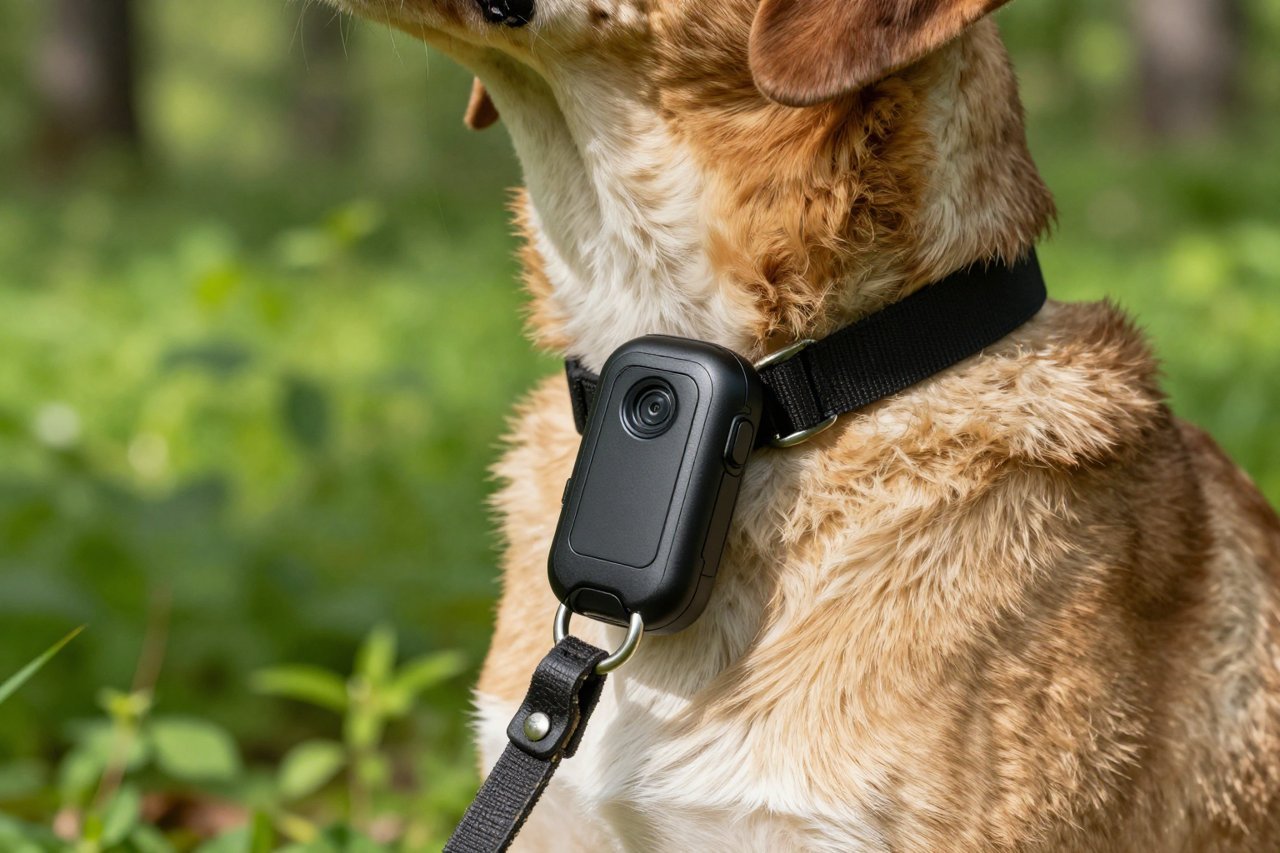
The second version, a regular leash bundled with a separate collar tracker, is a smarter compromise. The tracker goes on your dog’s neck, the leash stays in your pocket, and the GPS data comes back to your phone. That’s effectively a GPS collar with a leash thrown in as an extra. Whether you call it a GPS dog leash or not doesn’t change how it functions.
If you want to understand the full range of tracking options, the dog tracker guide is a good place to start. It compares the different hardware approaches and helps you decide which one fits your habits.
Why a GPS Collar Usually Beats a GPS Leash
Here’s the core issue. A gps dog leash that lives in your hand can’t tell you anything when your dog isn’t attached to it. A dedicated GPS collar, or a clip-on tracker, sits right on the animal. That makes it the only device that can give you a live location when you need it most.
Think about a typical off-leash walk. Your dog runs ahead into a thicket. You can’t see her. She’s wearing a collar. The question is whether a tracker is on that collar. If yes, you pull out your phone and get a dot on a map. If no, you’re doing what people have done for generations, calling her name and hoping, or waiting for her to return.
I’ve used both approaches in the field, and there’s no contest. When I tested six different trackers with my own dog, a border collie mix with a serious hunting streak, the device that worked best was a collar-mounted model that connected to LTE and refreshed its position every couple of seconds. None of the built-in leash trackers could match that. I wrote up the full results in The best tracker for my dog, and it’s worth reading before you spend money on the wrong style of hardware.
Features That Separate a Great Dog Tracker From a Waste of Money
If you end up buying a GPS collar or a clip-on tracker, there are a few specifications that make or break the experience. Ignore the flashy extras and look for these details first.
- Battery life. A GPS unit that dies after eight hours won’t get you through a full day in the hills. Aim for at least 24 hours of continuous tracking. Many collars now deliver 48 hours, but that falls dramatically if you use live update modes or light a built-in LED.
- Update interval. Some trackers report the dog’s position once per minute. Others send an update every two to three seconds. The faster interval is what lets you pinpoint a moving dog behind a hill, especially if you’re trying to catch up in real time.
- Water and dust resistance. Dogs swim, roll in mud, and crash through bushes. You want a device with at least IP67 rating. Some inexpensive models only have a splash-proof finish, and that’s a problem on the first rainy walk.
- Network compatibility. The tracker has to talk to your phone through a cellular network. If your area has strong 4G coverage, make sure the unit supports 4G. Some older or cheaper models still rely on 2G, which is being switched off in many countries.
- Subscription cost. Every tracker that uses cellular data has a monthly fee. The fee ranges from not much to quite a lot depending on the brand. Read the fine print before you commit, because you’ll be paying it for as long as you own the collar.
If you’re curious which of those features actually matter in practice, rather than on a spec sheet, the honest guide to dog GPS trackers breaks down each one and explains the trade-offs clearly.
The Subscription Trap: Know What You’re Paying For
No GPS device works for free. The reason is the cellular network. The tracker carries a small SIM card that sends a signal to cell towers, and that signal carries your dog’s location back to a server. The server then sends it to your phone. Someone has to pay the phone company, and that someone is you.
The upfront price of a gps dog leash or a GPS collar is only part of the total cost. A $50 tracker might come with a $10 monthly subscription. Over two years, that’s an extra $240. Some brands charge $20 a month, which turns a modest device into a serious investment. Look for models that offer a cheaper annual plan or a lifetime subscription, but always compare the total cost over three or four years, not just the first month.
I’ve seen plenty of people buy a tracker online without reading the fine print, then discover they’re locked into a plan they didn’t want. If you want to avoid that frustration, take a look at how to find a tracker for your dog that won’t let you down. It covers the exact questions to ask before you add anything to your cart.
Training Still Comes First
Here’s a hard truth. A GPS tracker tells you where your dog is. It doesn’t make the dog come back to you. If your dog has poor recall, you’ll still spend twenty minutes trying to get her near enough for the leash. The tracker is a safety net, not a replacement for training.
When you train a reliable recall, you can let your dog run with confidence. The GPS unit then becomes a backup for the rare moment something goes wrong, like a deer running past or a sudden storm that makes your dog bolt. If you’re working on your dog’s listening skills, there are some down-to-earth methods that have worked well for real owners in everyday situations. Those are in 7 best dog training tips that actually work in real life.
What I’d Actually Do With a “GPS Dog Leash” Urge
So, you’re looking for a gps dog leash. Here’s my honest recommendation. If the leash has a built-in tracker and that’s your only option, skip it. Instead, buy a durable regular leash and a separate GPS module that clips onto your dog’s collar. You get the same convenience, plus the flexibility to attach the tracker to a harness, a jacket, or even a travel crate.
If you find a “GPS leash” set that includes a removable tracker pod, check whether that pod can be attached to a collar or harness as well. A removable pod is the only way a leash can double as a real tracking system, because the tracker itself has to be on the dog.
Alternatively, go straight for a dedicated GPS collar. Many of them have D-rings where you can clip your usual leash, so you’re still using your favourite walking gear. The collar stays with the dog, the dog stays visible on your phone, and you avoid the awkward moment of trying to figure out why your leash is telling you the dog’s location when the dog is running in the opposite direction.
Whatever you choose, remember that the goal is to find a tracking system that works every single time, not just in the shop. A GPS dog leash can be a clever way to get started, but the more flexible tools usually earn their place in your pocket much faster. Give one a try with a clear head and you’ll know within a week whether it fits your life.


