
Table of Contents
Ask ten different people to name the top 7 smartest animals, and you will probably get the same few names in slightly different order: chimpanzees, dolphins, elephants, parrots, crows, octopuses, and maybe dogs or pigs. The list is less controversial than the idea behind it. What does being ‘smart’ even mean when each animal solves the problems its own world throws at it?
This guide is written for beginners, so it will not crown a single winner. Instead, it explains the basics of animal intelligence, from how researchers measure it to why the same seven names keep appearing. By the time you finish, you will have enough context to understand, not just repeat, the phrase top 7 smartest animals.
What Does Smart Mean for an Animal?
Researchers rarely ask whether an animal is ‘smart.’ Instead, they ask whether it can solve a particular problem. A border collie that remembers the names of a thousand toys shows one kind of skill. A honeybee that navigates for miles and tells its hive mates where the food is shows a completely different one. Both are intelligence, but they are very hard to compare with a single number.
This is why many casual rankings cause so much confusion. Intelligence is not one skill; it is a toolkit made of memory, learning speed, problem solving, abstract reasoning, self-awareness, and social understanding. An animal at the top of one category might not even score on another. If you want to reset any wrong ideas you picked up along the way, this overview of common myths and misconceptions around animal intelligence is a great first step.

The Top 7 Smartest Animals: A Beginner’s Hit List
The order below is not a scientific ranking. It is a starting map, and each species is here because it represents a distinct type of intelligence. If you want to compare the species side by side by brainpower category instead, that separate guide can take you deeper. For now, meet the usual suspects.
1. Chimpanzees
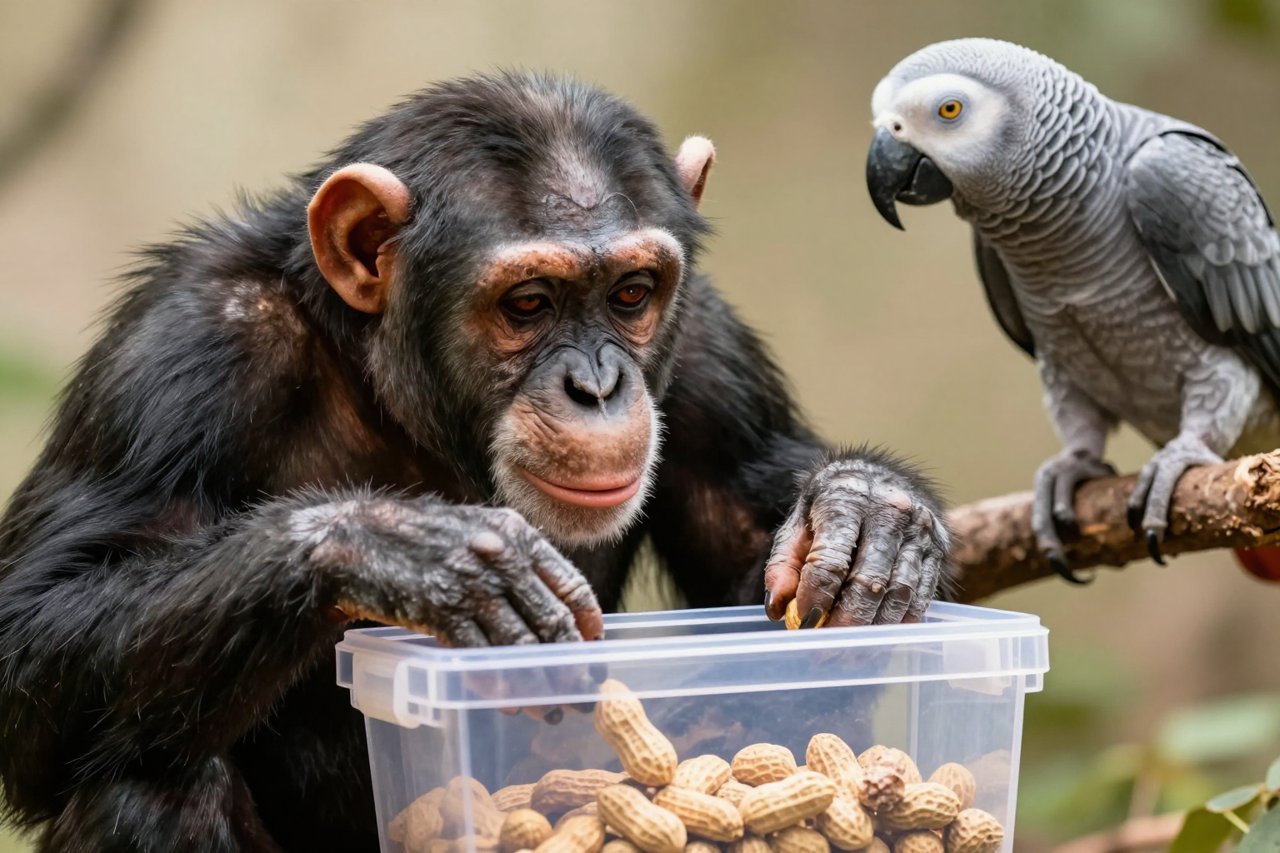
Chimpanzees are famous for sharing 98.8% of their DNA with humans, but their smarts show up in what they do with that close relationship. In Senegal, chimps sharpen sticks and use them as spears to hunt small primates. Elsewhere, they crack nuts with stones, use leaves as sponges, and remember when certain fruit trees become ripe.
What makes chimpanzees stand out is their combination of tools and social awareness. They learn tricks by watching other chimps. They cooperate, negotiate, and sometimes console a partner after a fight. In a famous 2007 study at Kyoto University, a young chimp named Ayumu remembered the position of numbers on a screen faster than college students did, even when the numbers flashed for just fractions of a second.
2. Bottlenose Dolphins
Dolphins live in a world without hands, so their intelligence is mostly social and acoustic. Each dolphin develops a unique signature whistle, a name, and calves learn the whistles of family members. They also understand pointing gestures, a skill that even great apes struggle with in many test settings.
Wild bottlenose dolphins in Shark Bay, Australia, have been seen carrying sea sponges on their snouts to protect themselves while foraging on the seafloor. That behaviour is passed from mothers to daughters. Adult dolphins also cooperate when herding fish and can learn artificial language rules in captivity, grasping the difference between syntax and word order.
3. Elephants
Long-term memory is the elephant’s most familiar talent. A matriarch can remember the smell and sound of other herds decades later and know where to find water during a drought. But elephants also show a lesser-known skill: coordinated teamwork.
In a 2011 study in Thailand, two elephants had to pull two ends of the same rope at exactly the same moment to move a tray within reach. Not only did they solve it, they waited for their partner to arrive before pulling. That pause shows they understood the task explicitly, not just through trial and error.
4. African Grey Parrots
Parrots are often dismissed as talented mimics, but African grey parrots have changed how scientists think about animal language. The famous grey parrot Alex could label colours, shapes, and materials, answer questions about quantity, and say ‘no’ when he was tired or frustrated. He also invented the word ‘banerry’ to describe an apple, combining the words banana and cherry that he already knew.
These parrots do not simply repeat words. They use labels to answer new questions, which suggests some understanding of the concepts. To see more extraordinary behaviour like this, check the astonishing things the top 7 smartest animals can do.
5. Crows and Ravens
Corvids are often called feathered apes because their cognitive results mirror chimpanzees. A New Caledonian crow named Betty bent a piece of wire into a hook to fish a small bucket out of a tube. The researchers designed the task because they figured the action would be impossible without previous training, yet Betty solved it on the first attempt.
Ravens also understand hidden displacement, remember individual human faces for years, and adjust their behaviour if another raven is watching them. They seem to consider what other birds can and cannot see.
6. Octopuses
The octopus is the introvert of the smart-animal world: a soft-bodied invertebrate with most of its neurons in its arms. It can open childproof pill bottles, escape from closed tanks, change colour and texture to camouflage, and solve mazes that frustrate many vertebrates.
Individual octopuses also show distinct personalities. Some are bold and social, others shy and cautious. That variation in behaviour, rather than hardwired instinct, points to a flexible learning system.
7. Pigs
Pigs surprise people because they are rarely seen as clever companions, yet they outperform dogs in several cognition tests. They can learn to move a cursor on a screen, recognise themselves in mirrors, and remember where food is hidden weeks later. Piglets also learn from watching other pigs, sometimes picking up a trick faster than most humans would guess.
Like many smart animals, pigs get bored easily when kept without mental stimulation. That is one reason they are far more demanding as pets than most people expect. Any intelligent species needs room, time, and enrichment, so make sure you understand the costs, care needs, and legal trade-offs of exotic pet ownership before considering one.
How to Practise Spotting Animal Intelligence Yourself
You do not need a laboratory to start noticing real intelligence. The next time you watch an animal, look for these signs:
- Problem solving: Does the animal try different approaches when a trick stops working?
- Learning by watching: Can it copy another animal’s method instead of discovering everything blindly?
- Memory with purpose: Does it return to a useful spot after a long gap or take a new route to an old goal?
- Social reading: Does it notice another animal’s gaze, body language, or mood?
Try this with dogs in a park, crows in a parking lot, or squirrels in your backyard. You only need curiosity and a habit of asking what skill just did the work. If you want a more reliable approach, work through a step-by-step guide to spotting animal genius using the same top seven species as models.
The deeper you go, the clearer one thing becomes: there is no single gold medal. The top 7 smartest animals are not the winners of a worldwide contest. They are animals whose minds fit their lives so precisely that we can see ourselves in them, and understanding that fit is more valuable than any number next to a name.


