
Table of Contents
Ask ten people with arthritis what they eat for their joints and you’ll get ten different answers. Turmeric shots. Cherry juice. No nightshades. Keto. Vegan. Bone broth at 7am. The information isn’t the problem anymore, it’s everywhere. What trips people up is the way they apply it. Most of the frustration I hear comes down to a handful of predictable mistakes, and once you spot them, the whole thing gets a lot less complicated.
Mistake 1: Treating anti-inflammatory eating as a shopping list
The most common one, by far. Someone reads that turmeric, ginger and fatty fish dampen inflammation, so they buy all three, sprinkle them around, and change nothing else. Meanwhile the actual bulk of their plate is still white toast, deli meat, crisps and fizzy drinks.
Inflammation responds to the pattern you eat most days, not the condiments on top. A teaspoon of turmeric in a curry made with a jar of sugary sauce and a mountain of white rice is not the same intervention as a plate of lentils, roasted vegetables and salmon. The base layer matters more than any single hero ingredient. If you only fix one thing, fix what fills two-thirds of your plate.
Mistake 2: Panicking about nightshades
Tomatoes, potatoes, peppers and aubergine get blamed constantly. The theory is that solanine triggers joint pain, and for a small number of people there may be something to it. For most people, there isn’t, and the cost of cutting them out is real: you lose vitamin C, potassium and lycopene, which are all things a body dealing with chronic inflammation actually needs.

If you suspect a genuine reaction, test it properly. Remove one food for two weeks, note your pain and morning stiffness, then reintroduce it and note again. One at a time. Single bad days prove nothing, because arthritis flares on its own schedule. If nothing changes, put the tomatoes back on the plate and move on.
Mistake 3: Cutting entire food groups because a stranger online did
There’s real evidence behind several dietary patterns for arthritis, but they don’t do the same job. Mediterranean-style eating has the broadest support for both rheumatoid arthritis and osteoarthritis, largely because it’s sustainable and easy to keep up. Plant-based diets have shown promising results for RA symptoms in some trials. Very low-carb approaches help some people mainly through weight loss.
None of them is universally right, and picking one because it worked for a stranger in a forum is a coin flip. It’s worth understanding how Mediterranean, vegan and keto approaches actually compare for arthritis before you commit to six months of something you’ll resent.
Mistake 4: Expecting a diet to work like a painkiller
Food is slow. Genuinely slow. When people start an anti-inflammatory pattern and feel no different after four days, they quit, convinced it was nonsense. But the honest timeline for noticeable joint changes is usually somewhere between six and twelve weeks, and sometimes longer if you’re also losing weight and adjusting medication.
A structured short run, like this 10-day step-by-step plan for reducing stiffness, isn’t a cure. Its job is to build the habits and give you a baseline you can compare against later. Treat the first two weeks as setup, not verdict.
Mistake 5: Blaming one trigger food for a bad week
You eat something, your knee swells the next morning, and that food is banned forever. The trouble is that flares have plenty of other authors: poor sleep, a stressful week at work, a cold snap, a missed dose, or simply the natural rhythm of the disease. Attributing a flare to last night’s dinner is guesswork dressed up as detective work.
Keep a simple log instead. Rate pain from 0 to 10, jot down how many minutes your morning stiffness lasts, and write down what you ate in broad strokes. After a month, patterns show up that a single bad day never could.
Mistake 6: Ignoring weight, the biggest lever for knee and hip pain
For osteoarthritis in the knees, body weight is arguably the strongest dietary factor there is, and it has nothing to do with turmeric. Every kilogram lost takes roughly four kilograms of load off the knee with each step. Over thousands of steps a day, that adds up fast.
This doesn’t mean crash dieting. It means the anti-inflammatory way of eating should be doing double duty:
- Fill half the plate with vegetables and fruit so you’re full on fewer calories.
- Choose beans, lentils and fish over processed meat, which is calorie-dense and pro-inflammatory.
- Swap refined grains for whole ones, which keep blood sugar steadier and appetite calmer.
- Cook with olive oil rather than butter, and use it generously but not endlessly.
- Watch liquid calories. Juice and sweetened drinks slip past your fullness signals entirely.
Losing even 5% of your body weight often produces a meaningful drop in knee pain. That’s 4kg for someone at 80kg, which is a realistic target.
Mistake 7: Trying to buy your way out with supplements
Walk into any pharmacy and you’ll find turmeric capsules, fish oil, glucosamine and rosehip, all promising joint relief. The evidence is uneven. Glucosamine for knee osteoarthritis is weak at best. Fish oil shows modest benefits for morning stiffness in rheumatoid arthritis. Curcumin has some encouraging results, though ordinary turmeric powder is poorly absorbed without black pepper or a formulated extract.
None of this makes supplements useless, but they’re a topping, not the meal. Two other things are worth knowing: high-dose fish oil and turmeric can thin the blood, so check with your doctor if you’re on anticoagulants, and some supplements interact with methotrexate and other DMARDs. Your rheumatologist needs the full picture, not just the prescription list.
Mistake 8: Setting rules so strict you abandon ship in three weeks
The all-or-nothing approach is where most good intentions go to die. No sugar, no gluten, no dairy, no nightshades, no alcohol, no eating out. It’s a perfect plan for a fortnight and completely unworkable for a decade.
A diet you can hold for years beats a flawless one you quit in spring. That means aiming for roughly 80% consistency and leaving room for birthdays and holidays. There’s more than one way to structure it too, which is why comparing different Mediterranean meal plan styles is worth ten minutes of your time before you design your own.
What a realistic week actually looks like
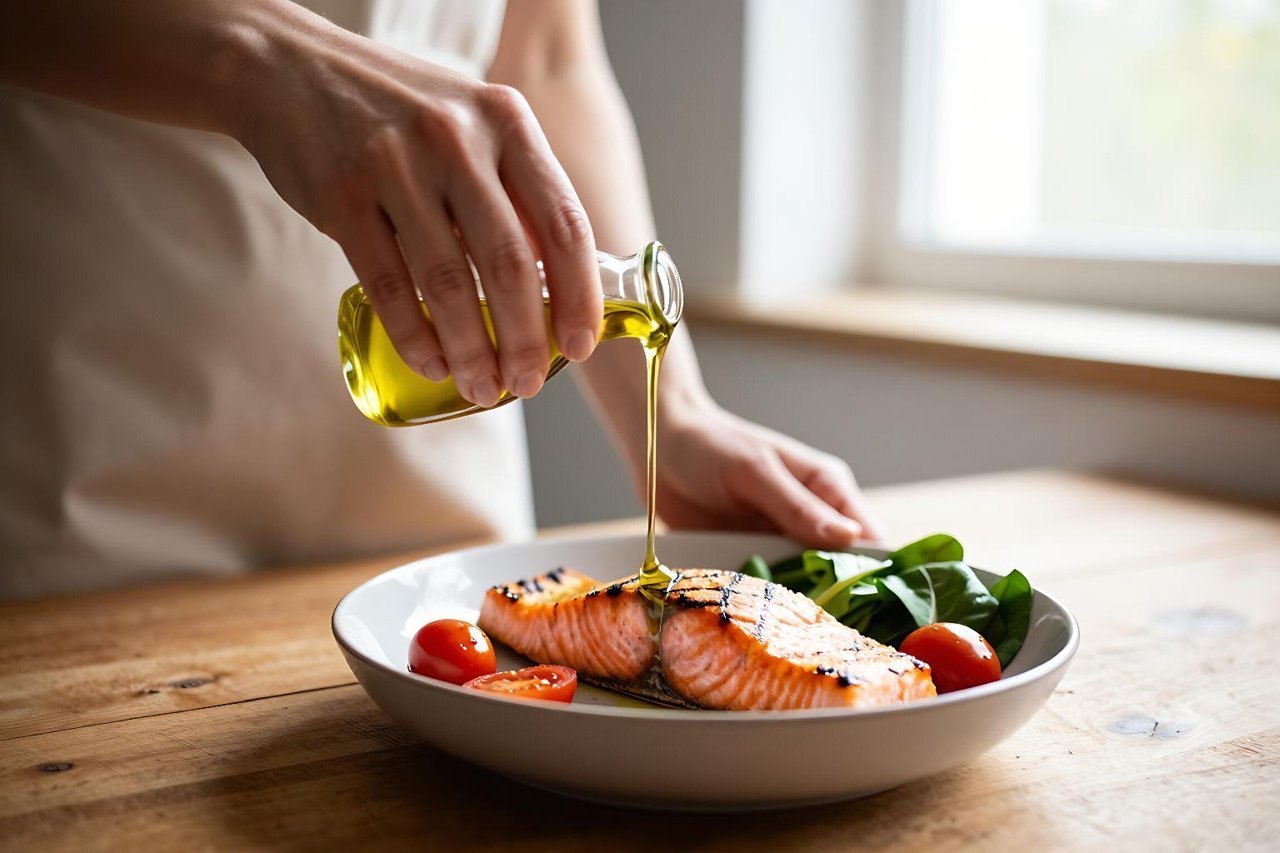
Strip away the noise and the practical version of eating for arthritis is almost boring. Olive oil as your main fat. Fish twice a week, ideally oily ones like salmon, sardines or mackerel. Beans or lentils on most days. A couple of handfuls of vegetables at lunch and dinner, plus fruit. Nuts and yoghurt instead of biscuits. Whole grains rather than white. Herbs and spices used like seasonings rather than medicine.
Then the other half of the job: eating slightly less than you burn if you’re carrying extra weight, sleeping properly, and moving the joint gently even on bad days. If you want the fuller version of what to put in your trolley, this practical guide to eating for joint relief covers the specifics without turning dinner into a chemistry experiment.
Start with one change you can repeat tomorrow. Cook one extra vegetable-heavy meal this week. Swap one processed lunch for beans on toast with olive oil and a pile of spinach. Add fish to Friday. Do that for a month before you add anything else. The people who get results with foods for arthritis aren’t the ones who overhaul everything on a Sunday, they’re the ones who make a small change and then don’t stop.


