
Table of Contents
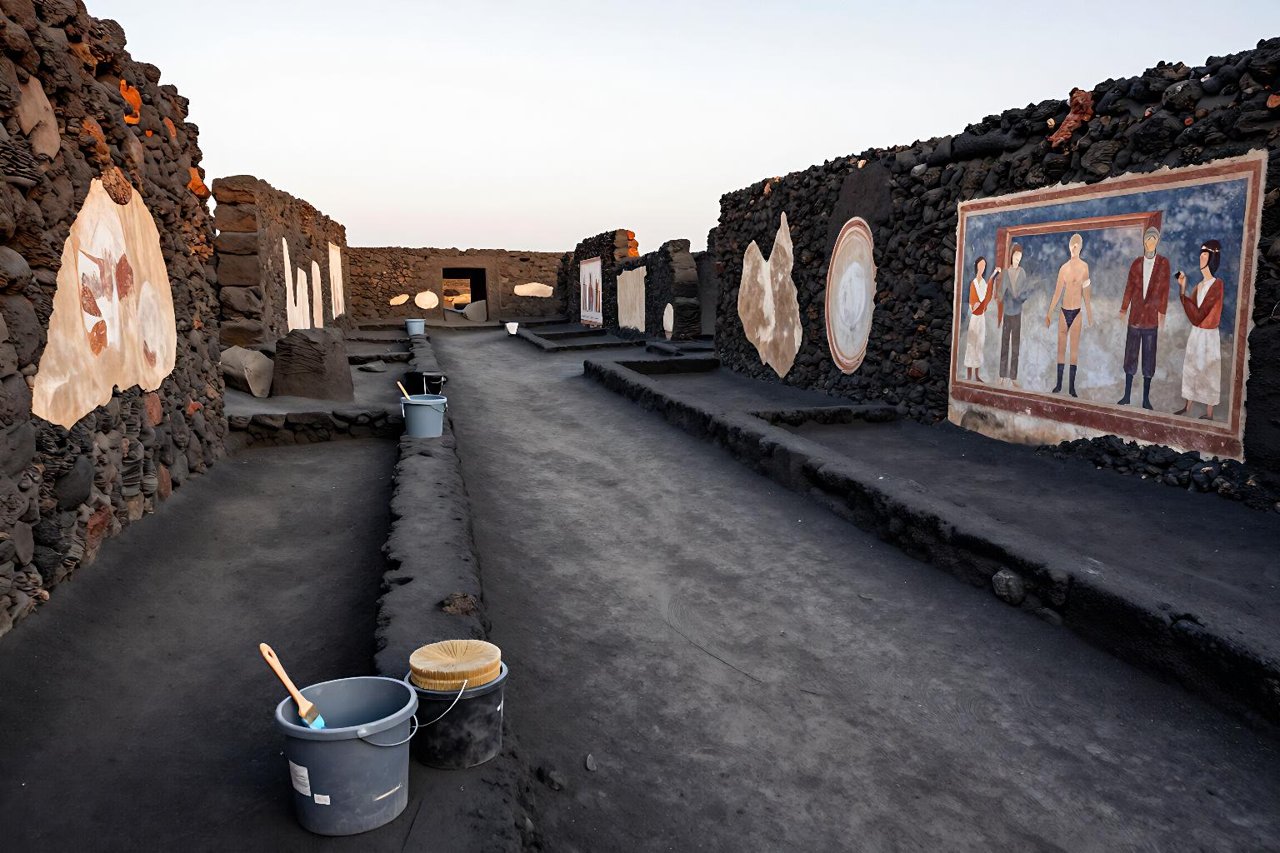
In 1748, a work crew digging near Naples struck a wall painted with frescoes. They had not found a ruin. They had found a city. Pompeii had been buried under volcanic ash since 79 CE, and the excavation that followed exposed streets, bakeries, and graffiti from ordinary Romans. Ancient cities buried underground rarely announce themselves. They wait under fields and construction sites until someone notices a wall where no wall should be.
Why Cities End Up Underground
Most buried cities share a handful of fates. Volcanic eruptions dump ash and pumice. Rivers shift and leave silt. Earthquakes trigger landslides or liquefy soil. Sometimes people bury a site on purpose, backfilling temples or settlements for ritual or defense. The result is the same: sediment or stone seals a moment in time.
That sealing can be a gift. Oxygen and moisture are cut off, slowing decay. At Herculaneum, a pyroclastic surge buried the town under roughly 20 meters of material. Wooden beams, ropes, and foodstuffs survived in conditions that would normally destroy them. At Pompeii, the cover was thinner, around 4 to 6 meters in many places, but enough to preserve frescoes and street plans for centuries. Some of these sites sit alongside the most mysterious archaeological discoveries that still defy explanation.
Pompeii and Herculaneum: Two Kinds of Burial
Pompeii gets the attention, but Herculaneum is the quieter marvel. Pompeii was a busy commercial city with a population often estimated between 11,000 and 15,000. Herculaneum was smaller, wealthier, and closer to the volcano. When Vesuvius erupted, ash rained on Pompeii for hours before a pyroclastic flow finished the job. Herculaneum was hit first by surges that carbonized wood and left a compact, dense layer.

What the ash kept
Walk through Pompeii today and you see a working city: millstones, counters, crossing stones, and election notices scratched on walls. Herculaneum offers something different. Excavators have recovered wooden furniture, a baby’s crib, and papyrus scrolls carbonized into brittle black logs. The Villa of the Papyri alone yielded more than 1,800 scrolls.
Everyday detail makes these ancient cities buried underground compelling. A loaf of bread left in an oven. A dog’s paw print in a tile. A complaint scratched into plaster. These small, human traces often get left out of grand histories, which is why they fit naturally into forgotten history and the untold stories that change everything.
Derinkuyu: The City That Went Down Instead of Up
Not every buried city was buried by disaster. In Turkey’s Cappadocia region, Derinkuyu was carved downward into soft volcanic rock. It extends at least 18 levels deep, though only eight are open to visitors, and reaches roughly 85 meters below the surface. At its height, it may have sheltered 20,000 people along with livestock and stores.
The engineering is almost absurdly practical. Ventilation shafts run from the deepest levels to the surface, disguised as wells. Massive circular stone doors could be rolled across passages to block attackers. There are stables, chapels, wine presses, and communal kitchens. People lived underground for weeks or months during raids, then returned to the surface. Derinkuyu is not a tomb. It is a survival machine.
Akrotiri: A Bronze Age Town Frozen in Pumice
On Santorini, the Bronze Age settlement of Akrotiri was buried by the Thera eruption around 1600 BCE. Excavations led by Spyridon Marinatos from 1967 uncovered multi-story buildings, advanced drainage, and frescoes with vivid blues and reds. The town had paved streets and workshops. It also had no obvious bodies, suggesting residents evacuated before the worst of the eruption.
The site is often called a Minoan Pompeii, but that undersells it. Akrotiri was buried under meters of pumice and ash, and the absence of a final catastrophe scene leaves questions open. Who lived here? Where did they go? The site belongs with archaeological discoveries that still defy explanation, because the evidence is rich but the ending is missing.
Göbekli Tepe and the Puzzle of Deliberate Burial
Göbekli Tepe in southeastern Turkey is not a city in the usual sense. It is a monumental complex built by hunter-gatherers around 11,600 years ago, long before farming villages appeared in the region. The site contains T-shaped limestone pillars weighing up to 16 tons, some carved with foxes, scorpions, and snakes. After centuries of use, people deliberately filled the enclosures with rubble and soil.
That deliberate burial is the hard part. Why build stone circles and then bury them? One idea is that the site was decommissioned or renewed in phases. Another is that burial protected the structures. Göbekli Tepe reminds us that “buried underground” does not always mean “lost by accident.” Sometimes a community chooses to put a place beneath the earth.
Thonis-Heracleion and Mohenjo-daro: Water as the Burier
Water buries cities too. Thonis-Heracleion was an Egyptian port at the mouth of the Nile, a gateway for trade before Alexandria rose to power. Earthquakes and liquefaction caused the ground to collapse, and the city sank into the Mediterranean around the 8th century CE. Franck Goddio’s team found it in 2000 under meters of water and sediment. Statues, shipwrecks, and gold coins emerged from the mud.
Inland, the Indus Valley city of Mohenjo-daro was buried by silt and flood deposits over thousands of years. Built around 2500 BCE, it had grid streets, covered drains, and the Great Bath. Its population may have reached 40,000. The city was abandoned, then covered, then forgotten until the 1920s. Today, rising groundwater and salt damage threaten what remains.
What Buried Cities Reveal About Ordinary People
Palaces and temples get the headlines. Buried cities give us the rest. At Pompeii, graffiti includes insults, love notes, and bar tabs. At Herculaneum, a carbonized loaf tells you more about a kitchen than any statue of an emperor. At Akrotiri, a drainage system says something about public planning. At Derinkuyu, a ventilation shaft speaks of fear and cleverness.
Excavation reports can read like detective files. A broken jar in a doorway might mean a hurried exit. A stack of coins might mean hidden savings. A child’s toy might mean a family stayed longer than expected. The material record is ordinary, and that is exactly what makes it valuable.
- Food: carbonized bread, olives, and fish bones show diet and trade.
- Work: tools, looms, and workshops reveal industries that rarely appear in royal records.
- Health: skeletons and parasites tell us about disease, nutrition, and sanitation.
- Belief: household shrines and amulets show religion outside official temples.
How Archaeologists Find Cities Beneath the Surface
Digging is expensive and destructive, so modern teams try to see underground before they break ground. Satellite imagery can reveal crop marks and soil changes. Magnetometry detects burned areas, ditches, and walls. Ground-penetrating radar maps buried structures. LiDAR, which fires laser pulses through vegetation, has transformed jungle archaeology. In 2018, LiDAR surveys in Guatemala’s Maya Biosphere Reserve revealed tens of thousands of structures, including defensive walls and raised roads.
Soil chemistry helps too. High phosphate levels can mark animal pens or human occupation. Microscopic plant remains show what people grew. Drone photography and 3D modeling let researchers document a site as they dig, layer by layer. The tools are technical; the goal is simple: find the city without destroying it.
The Ethics of Leaving a City Underground
Not every buried city should be dug up. Excavation is irreversible. Once a site is opened, rain, roots, tourists, and oxygen start working on it. Pompeii has struggled with collapsing walls and poor drainage for decades. Herculaneum is only partly excavated, and much of it lies beneath the modern town of Ercolano. At Göbekli Tepe, some enclosures were reburied after excavation to protect the stone.
A human question remains. Buried cities are often someone’s ancestral home, even if the connection is distant. Local communities may want tourism income, while archaeologists may want preservation. The best projects involve both, along with engineers, conservators, and sometimes the military or police when looting is a risk. A site left in the ground is a reserve of evidence for future techniques.
The Next Discovery Is Already Underground
Somewhere right now, a farmer is plowing a field that hides a Roman villa. A construction crew is pouring concrete over a Bronze Age settlement. A drought is exposing crop marks that no one has seen for 2,000 years. Ancient cities buried underground are not a closed chapter. The map we walk on is thin, and ordinary ground can hold extraordinary evidence.
The next Pompeii will probably not announce itself with a painted wall. It may show up as a strange line in a satellite image, a cluster of magnetic readings, or a handful of pottery in a drainage ditch. When it does, the careful work begins: mapping, sampling, conserving, and deciding what to leave alone. The city beneath us is not just a ruin. It is a record of how people lived, and it is still being written.


