
Table of Contents
A chicken breast and a bag of spinach weigh almost the same. The chicken brings roughly 280 calories and 53 grams of protein. The spinach brings about 40 calories, a pile of vitamin K, folate and iron, and almost no protein at all. Two foods, similar weight, completely different jobs. That gap is the whole story of nutrition in miniature.
Understanding macronutrients and micronutrients gives you a working model you can apply to any meal, any restaurant menu, any half-confusing health claim on a packet. It is not about perfection. It is about knowing which lever does what.
What the two words actually mean
Macronutrients are the nutrients you need in large amounts, measured in grams. They supply energy: protein and carbohydrate at about 4 calories per gram, fat at 9. Micronutrients are vitamins and minerals, needed in milligrams or micrograms, and they supply no calories at all. They are the spark plugs rather than the fuel.
That is the whole distinction. Everything else is detail, and the detail is where things get interesting.

The three macronutrients and what each one does
Protein: the builder
Protein is broken into amino acids and reassembled into muscle, enzymes, hormones, skin, hair and immune cells. The baseline recommendation for a sedentary adult is 0.8 grams per kilogram of body weight, so about 56 grams for a 70 kg person. Active people do better somewhere between 1.2 and 1.6 g/kg, and anyone lifting weights seriously often lands at 1.6 to 2.2 g/kg. Spread across the day, that means 25 to 40 grams at each main meal rather than 80 grams at dinner.
Carbohydrate: the fast fuel
Carbohydrate becomes glucose, and glucose powers your brain, red blood cells and hard training sessions. Your body stores roughly 400 to 500 grams of it as glycogen in muscle and liver. The minimum intake to keep your brain running smoothly is around 130 grams a day, which is far less than most people eat and far more than low-carb advocates suggest. Fibre is a carbohydrate too, and this is where most diets fall down: the target is 25 to 38 grams daily, while the average adult manages about 15.
Fat: the long-burn regulator
Fat carries 9 calories per gram, which is why a small drizzle of olive oil adds up quickly. It also builds cell membranes, produces hormones including testosterone and oestrogen, and lets you absorb vitamins A, D, E and K. A reasonable range is 20 to 35 percent of daily calories, with saturated fat under 10 percent and at least one or two portions of oily fish a week for omega-3s.
Micronutrients: tiny amounts, heavy lifting
Vitamins
There are 13 vitamins, and they split into two camps. A, D, E and K are fat-soluble, stored in the liver and fatty tissue, which means you can have too much of a good thing. The B group and vitamin C are water-soluble, so excess is mostly flushed out and needs replacing daily. Reference intakes are small but specific: 75 mg of vitamin C for women and 90 mg for men, 600 to 800 IU of vitamin D, 2.4 micrograms of B12. That last one matters enormously for anyone eating plant-based, because B12 occurs naturally almost only in animal foods.
Minerals
Calcium (around 1,000 mg), iron (8 mg for men, 18 mg for menstruating women), magnesium (310 to 420 mg), zinc (8 to 11 mg) and potassium (2,600 to 3,400 mg) do the structural and electrical work. Absorption is not just about quantity. Iron from red meat is absorbed at roughly 25 percent, while iron from lentils and spinach sits nearer 5 percent unless you pair it with vitamin C. Calcium in spinach is largely locked up by oxalates; the calcium in kale and broccoli is far more available.
Where the two categories meet
This is the part most nutrient lists leave out. Macros and micros work as a team. Fat in a salad carries the carotenoids from tomatoes and carrots into your bloodstream. Vitamin C from a squeeze of lemon lifts non-heme iron absorption several-fold. Vitamin D improves calcium uptake. Eat a bowl of plain lentils and you get some iron; eat them with peppers and a little olive oil and you get noticeably more.
What a day of both looks like
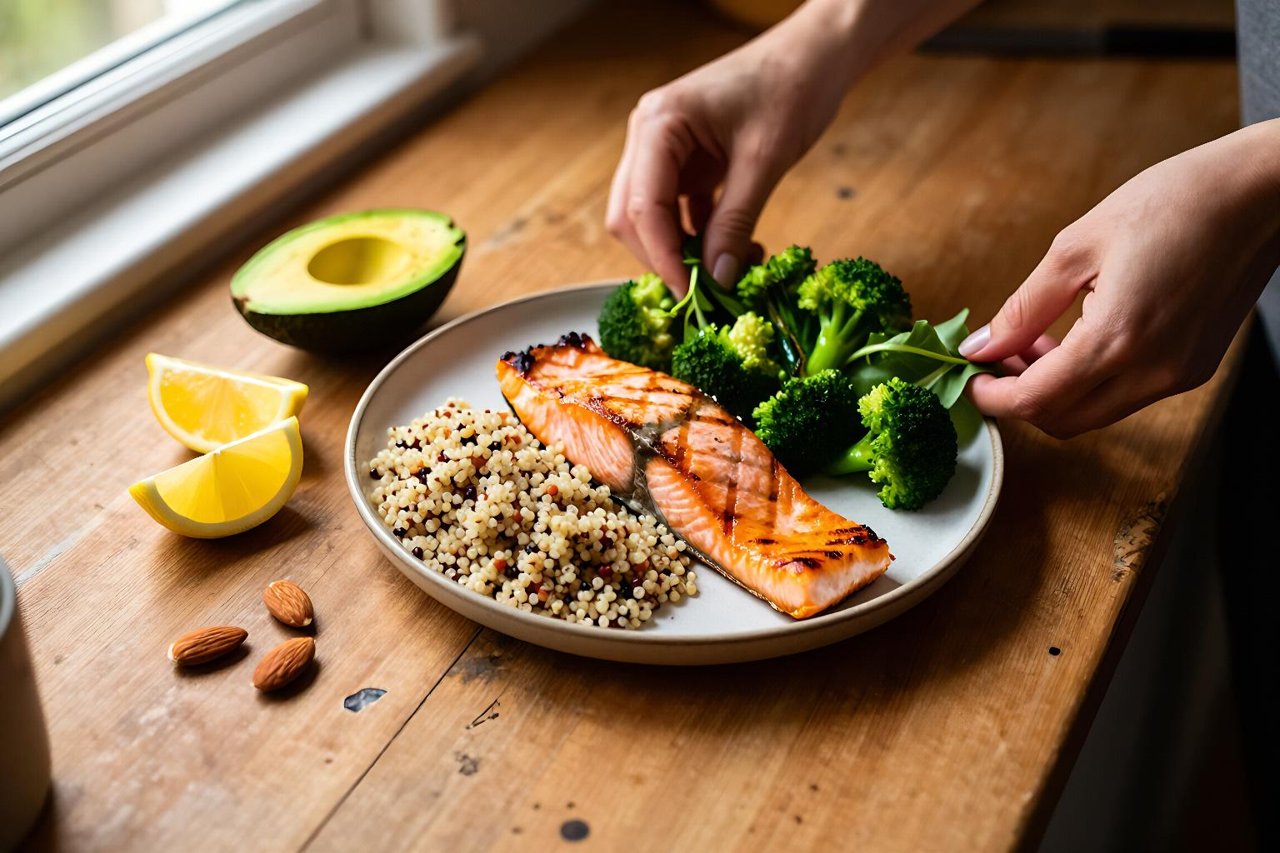
Take a 75 kg moderately active woman eating around 2,000 calories. Breakfast: Greek yoghurt with berries and pumpkin seeds, roughly 25 g protein plus calcium, vitamin C and magnesium. Lunch: two eggs on wholegrain toast with a tomato and spinach salad, another 20 g protein, plus iron, folate and lutein. Dinner: salmon with quinoa and roasted broccoli, 30 g protein, omega-3s, vitamin D and highly absorbable calcium. A handful of almonds mid-afternoon covers vitamin E and magnesium.
That day lands near 100 g protein, 70 g fat, 230 g carbohydrate, 32 g fibre, and hits almost every micronutrient target without a single supplement. It also shows why the question “are you getting enough nutrients?” is really two questions at once.
Where most people go wrong
- Tracking macros obsessively while eating the same three vegetables on rotation.
- Reaching for a multivitamin before fixing a diet built on white bread and coffee.
- Cutting fat to 10 percent of calories, then wondering why skin and joints feel rough.
- Eating 10 g of protein at breakfast and 70 g at dinner, which is not how muscle repair works best.
- Assuming anything sold as “natural” is nutrient-dense. It usually is not.
Labels tell you more than the front of the packet
The marketing panel shouts about protein or antioxidants. The back panel gives you the actual numbers, and learning to skim it takes about ten seconds once you know the layout. If percentage daily values still feel like a foreign language, this walkthrough on reading food labels like a pro is worth twenty minutes of your evening. Watch the serving size first, because it is where most comparisons get quietly distorted. A cereal listed at 110 calories per serving is often measured at 30 g, and most bowls hold twice that.
When a professional is worth the money
Pregnancy, diagnosed deficiencies, inflammatory bowel disease, eating disorder recovery, kidney disease, or a stubborn plateau after months of effort all justify a registered dietitian rather than a search engine. Iron and B12 deficiencies in particular need blood tests before you start supplementing, since too much iron is genuinely harmful.
Some people take that curiosity further than their own kitchen. If the topic has turned into something you read about on weekends and you are weighing a change of direction, there is a practical route mapped out in this guide to moving into nutrition as a career from another field.
A plate you do not have to think about
Forget the apps for a week and use structure instead. Fill half the plate with vegetables and fruit of at least three different colours, since colour correlates reasonably well with different micronutrient profiles. Give a quarter to a protein source at 25 to 40 g, whether that is fish, chicken, tofu, tempeh, eggs, dairy or legumes. Give the last quarter to a starch, ideally wholegrain or a starchy vegetable with the skin on. Add a thumb of fat: olive oil, nuts, seeds, avocado.
That single template covers fibre, potassium, magnesium, most B vitamins and enough protein for muscle maintenance, and it scales from 1,500 to 3,000 calories without changing shape. Then check the edges of your week rather than every meal. Oily fish twice. Legumes four or five times. Dark leafy greens most days. A vitamin D supplement in winter if you live above roughly 40 degrees latitude. Those four habits close more micronutrient gaps than any regimen of pills, and they leave plenty of room for the foods you eat purely because they taste good.


