
Table of Contents
A two-pound puppy at eight weeks tells you almost nothing about the dog you’ll have in two years. Some of those puppies turn into 30-pound dogs with a Labrador hiding in the family tree. Others stay small enough to carry under one arm for their entire lives. If size is the non-negotiable part of your wish list, the breed you pick matters far more than the size of the paws.
Here are twelve breeds that reliably stay small as adults, with real weights, honest downsides, and the practical details most people only learn after the dog is already home.
What “stays small” actually means
Kennel clubs split the little guys into two rough groups. Toy breeds sit at 12 pounds and under. Small breeds top out somewhere around 22 to 25 pounds. For this list I’ve stuck to breeds whose adult weight lands under about 15 pounds the vast majority of the time, so you aren’t gambling on a late growth spurt.
One warning before we start: “teacup” is a marketing word, not a breed classification. There’s more on that further down.

The genuinely tiny: breeds under 8 pounds
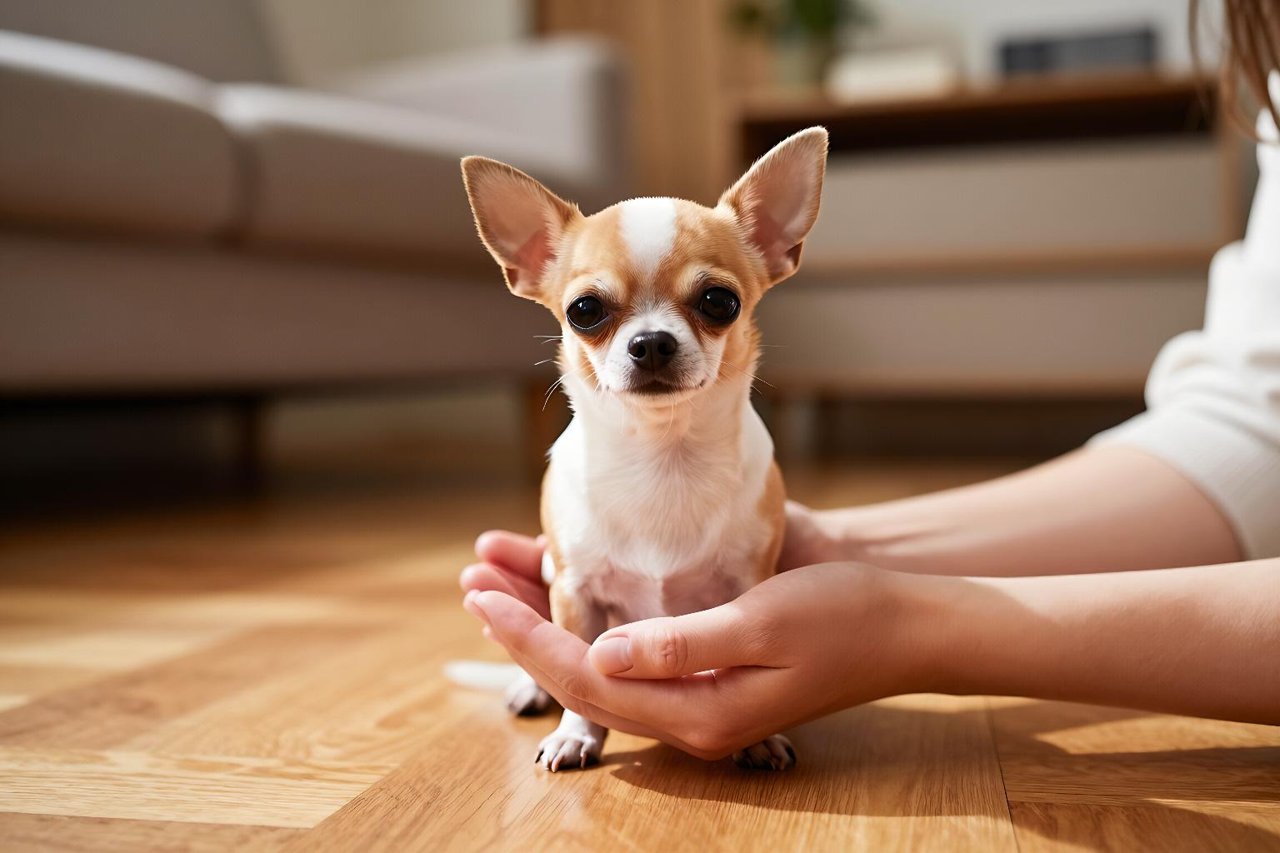
Chihuahua
Six pounds is the breed standard, and plenty of adults finish at three or four. Height runs 5 to 8 inches at the shoulder. They live 14 to 16 years, sometimes longer, and they tend to lock onto one person with startling intensity. They’re also vocal, possessive of laps, and completely unbothered by the fact that they’re small. Socialise them early or you’ll spend a decade managing a five-pound opinion. If you want a shadow, they belong near the top of any list of the most affectionate dog breeds.
Pomeranian
Three to seven pounds under a double coat that looks twice that size. Poms are busy, alert little dogs that bark at the doorbell and mean it. The coat is the catch: brush three times a week or it mats into felt, and budget for a professional groom every six to eight weeks. They shed more than new owners expect.
Yorkshire Terrier
Four to seven pounds with a terrier’s stubborn streak in a silky package. Yorkies were ratters in Yorkshire mills, which explains why a four-pound dog will square up to a German Shepherd. Their fine hair grows continuously, so most owners keep it clipped short rather than wrestling with show-length coat.
Maltese
Four to seven pounds, 7 to 9 inches tall, and one of the few toy breeds with a single coat that sheds very little. That makes them a common pick for people with mild allergies, though no dog is truly hypoallergenic. Our breakdown of breeds that actually shed less covers why coat type matters more than breed reputation.
Papillon
Four to nine pounds with butterfly ears and a serious brain. Papillons compete in agility and obedience against dogs three times their size and often win. They need actual mental work, not just a lap. If you’re drawn to clever dogs, they hold their own among the most intelligent dog breeds — and yes, intelligence means you have to keep them busy.
Toy Poodle
Under 10 inches tall and usually four to six pounds. Curly, low-shedding, and sharp as a tack. The trade-off is grooming: a full clip every four to six weeks, often $60 to $90 depending on where you live, plus brushing at home to prevent matting behind the ears.
Small but sturdy: the 8 to 15 pound group
Havanese
Seven to thirteen pounds of cheerful, people-oriented fluff. The Havanese was bred as a companion and it shows: they follow you room to room and take badly to long stretches alone. Soft, wavy coat, low shedding, moderate brushing.
Shih Tzu
Nine to sixteen pounds, bred for a thousand years to do nothing but sit in someone’s lap, which they still do beautifully. The flat face is a genuine limitation: they overheat fast, struggle on long walks in summer, and many need eye care. Keep them clipped short and they’re a low-effort companion.
Cavalier King Charles Spaniel
Thirteen to eighteen pounds, so right at the upper edge of small, but included because they’re one of the sweetest-natured dogs in existence. Be honest about health: mitral valve disease affects a large share of the breed by age ten, and syringomyelia appears in some lines. Buy from a breeder who health-tests both parents. They appear again and again in our guide to calm companions for older owners.
Miniature Pinscher
Eight to ten pounds of pure velocity. The Min Pin looks like a tiny Dobermann and moves like one. They need two real walks a day and some kind of game that uses their brain, or they’ll invent jobs like rearranging the sofa cushions at 2 a.m.
Japanese Chin
Seven to eleven pounds and quietly cat-like. Chins perch on the back of the sofa, pick their moment for affection, and are far less demanding than most toy breeds. Rare enough that you may wait a year for a puppy from a good breeder.
Norfolk Terrier
Eleven to twelve pounds, drop ears, wiry coat, and the confidence of a much larger working dog. Norfolks were bred to bolt rabbits, so they dig, chase and investigate. A sturdy small breed for someone who wants a real dog in a compact body.
The catch with “teacup” and “mini” labels
No kennel club recognises a teacup size. Breeders who advertise teacup puppies are usually breeding the runts of the litter, or breeding for extreme smallness without regard to health. The results are predictable: hypoglycemia in puppies, brittle bones, dental crowding, retained baby teeth, and liver shunts. Vet bills climb while lifespan drops. A healthy four-pound Chihuahua is not a better dog than a healthy six-pound one.
“Mini” in a crossbreed name is a different trap — it’s a prediction, not a guarantee. A Mini Goldendoodle with a 60-pound grandparent can hit 35 pounds. Ask for the weight of both parents and, if possible, the weight of a puppy from a previous litter at the same age.
Small doesn’t mean simple
People assume a little dog is an easy dog. Often the opposite is true.
- Grooming costs money. Curly and long coats need professional clipping every four to eight weeks, which runs $400 to $900 a year depending on the breed and your area.
- Exercise still matters. Min Pins, Papillons and Norfolk Terriers need genuine daily activity, not a lap.
- Training gets skipped. Because a four-pound dog can be picked up, owners tolerate jumping, barking and snapping that would be unacceptable in a Labrador. That’s how you get a small dog nobody enjoys visiting.
- Weather cuts both ways. Toy breeds lose body heat fast and shiver through winter; flat-faced breeds struggle in summer heat.
- Teeth need work. Small mouths cram teeth together, so brushing three times a week and annual dental checks are close to essential.
If low effort is the priority, look at the best low-maintenance dog breeds — some are small, but not all small dogs qualify.
Matching a small breed to your actual household
Apartment with thin walls? Cross the Pomeranian and Chihuahua off unless you’re committed to training quiet. Bitter winters? A Maltese will need a coat and indoor exercise. Children under six? Skip the four-pound breeds entirely; a Cavalier or Norfolk tolerates clumsy handling far better. Want a dog that can be left eight hours? That rules out the Havanese.
Cold-weather owners, busy professionals and first-time buyers tend to do best with the sturdy middle group rather than the tiny end of the spectrum. The romance of a two-pound dog fades the first time you can’t find a sitter who’ll take one.
Questions worth asking before you commit
Whether you’re talking to a breeder or a rescue, a few specifics separate straight answers from sales patter:
- How much did the mother weigh at two years old?
- Have the parents been screened for the breed’s known issues — patellas, heart, eyes, liver?
- How old is the puppy at pickup, and has it had its first vaccinations?
- What’s the adult height range for this line, not just the breed average?
- Can I see the mother with the litter?
Twelve pounds of dog can fill a house. The trick isn’t finding the smallest breed you can — it’s finding the one whose size, energy and grooming needs line up with the life you can actually give it for the next fourteen years.


