
Table of Contents
Bailey was nine the first time he refused to jump into the back of the car. His owner thought little of it, put it down to age, and quietly stopped taking him to the woods on Sundays. Within two months the dog was stiff getting off the sofa and lagging on the familiar loop around the block.
That pattern plays out in clinics constantly. A dog slows down, the walks get shorter, and the muscles that support the joints waste away faster than they would have otherwise. Learning how to help an older dog stay active is rarely about pushing harder. It is about reshaping the exercise so the dog can keep doing something, every single day, for years longer than they otherwise might.
Older dogs need less impact, not less movement
Ageing in dogs is not a straight line. A Great Dane is considered senior at six, while a Jack Russell terrier might not show meaningful changes until eleven or twelve. What most dogs share from around seven onwards is a slow loss of muscle mass and a stiffer, less forgiving joint surface.
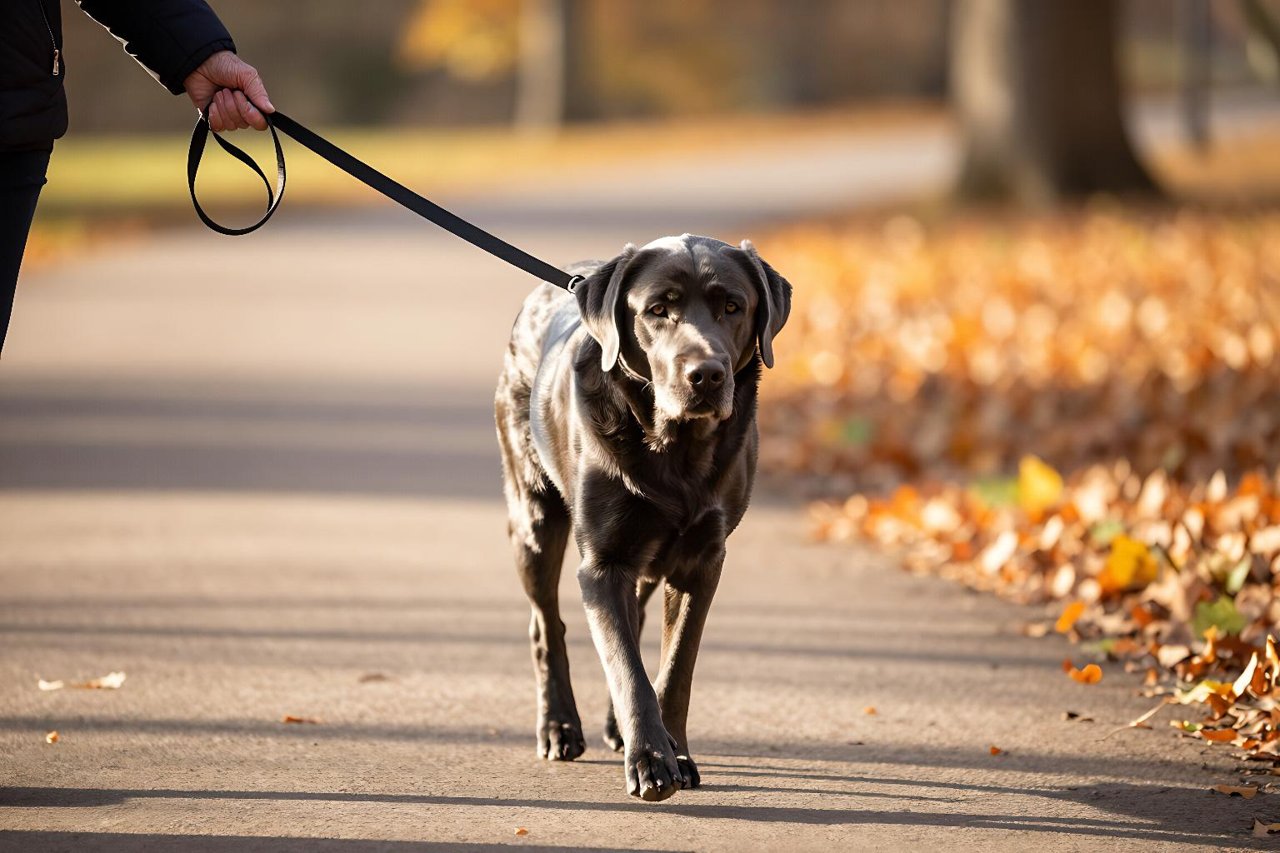
Rehab vets tend to work on one principle: keep the total amount of movement roughly where it was, but trade hard, fast and jarring activity for slow, low-impact work. A 45-minute weekend hike becomes three 15-minute wanderings. A sprint after the ball becomes a gentle trot. Same dog, same week, very different load through the knees and hips.

Get a proper check-up before you change anything
Before you redesign the routine, book a vet visit and ask specifically about arthritis, dental pain, thyroid function, hearing loss and body condition score. Dogs hide discomfort well, and a dog who has started sleeping more is often a dog in low-grade pain rather than one who has simply slowed down.
From about seven years old, twice-yearly checks make more sense than annual ones. Ask the vet to watch the dog walk and trot on a hard floor, because a five-second video of that gait can reveal more than a hands-on exam alone.
Split one long walk into three short ones
A useful rule of thumb for a stiff senior is 30 to 60 minutes of total daily walking, spread across two or three outings. Splitting the time keeps the joints moving without letting them stiffen up mid-walk, and it gives you more chances to check for lameness while the dog is still reasonably fresh.
Let sniffing do the work
A sniff walk covers 300 metres in 20 minutes and leaves most older dogs more satisfied than a brisk mile on a tight lead. Standing and investigating burns time, engages the brain and gives the spine a break from constant forward motion. If your dog stops to read a hedge for two minutes, that is not wasted exercise.
Pick the surface on purpose
Grass, packed dirt and woodland paths are kinder than pavement and kerbs. Skip the stairs, cut out steep descents where you can, and on hot days test the pavement with the back of your hand for five seconds. If it is too hot for your hand, it is too hot for paws. Keep walks earlier in the morning and later in the evening through summer.
Five minutes of home strength work beats an extra mile
Muscle is what protects an older dog’s joints, and it can still be built at ten or twelve years old. Three short sessions a week, done on a carpet or non-slip mat, make a real difference:
- Sit-to-stands: ask for a sit, then a stand, five times. Slow and controlled beats fast and sloppy.
- Cookie stretches: hold a treat at the dog’s hip so they turn their head to the side, then at the shoulder, then between the front legs. Two or three seconds per stretch.
- Weight shifts: standing still, gently lift one paw a centimetre off the floor for two seconds at a time. This builds the stabilising muscles around the hips.
- Backing up: three steps backwards on a flat surface, rewarded each time.
Warm up with a five-minute walk first and keep sessions short enough that the dog is still willing at the end. Stop the moment you see a wobble or a shift in breathing.
Water is the kindest exercise there is
Swimming or walking on an underwater treadmill takes load off sore joints while working the whole body. Sessions of 15 to 20 minutes, run by a qualified canine hydrotherapist, are often transformative for dogs recovering from cruciate surgery or managing arthritis. Ask your vet for a referral and have the heart checked first if your dog has a murmur.
The scale is the biggest lever you own
Carrying an extra kilo on a 12kg dog is like a person carrying six. Even 5% above ideal body weight adds measurable strain to hips, elbows and the lower back, and it makes every walk harder than it needs to be. Weigh your dog monthly, feel for ribs without pressing, and cut treats by a third if the number creeps up. Measuring kibble with a scale rather than a scoop is the single most reliable fix.
Recovery belongs in the plan
An active senior dog still needs 12 to 14 hours of rest a day, and undisturbed sleep is when tissue repairs itself. Add a ramp to the car, a step to the sofa, a firm orthopaedic bed and a few non-slip rugs on wooden floors. If your dog is pacing or unsettled overnight, it is worth working out why your dog won’t settle at night before you add another walk to the schedule, because broken sleep and sore joints tend to feed each other.
Brain work wears them out without touching a joint
Mental effort is genuine exercise. Scatter a handful of kibble across the lawn instead of using a bowl, hide treats around one room for a five-minute search, or teach a new trick in three-minute bursts. Puzzle feeders and treat-dispensing balls make excellent gifts for dogs who already have every toy, because they do actual work rather than sitting in a basket.
Keep a simple record so you spot changes early
Senior dogs decline gradually, which means you notice nothing until the change is obvious. A GPS tracker for dogs that logs distance, pace and time gives you numbers to compare week to week. A sudden 20% drop in daily distance is a reason to call the vet, not a reason to shrug.
Make the route easier on their nerves
Hearing and eyesight fade, and a dog who once ignored other dogs may start barking at them out of sheer uncertainty. That is not stubbornness. Reactive and fearful behaviour in older dogs often has a physical trigger, and a frightening walk leaves a dog braced and tense for hours afterwards. Walk at quieter times, give other dogs a wide berth, and let the dog choose the direction home some days.
Know the signs you have done too much
The 24 to 48 hour rule is your best guide. If your dog is more stiff the next morning than they were before the walk, you went too far. Watch for:
- Limping during a walk, or a leg carried for a few steps afterwards
- Reluctance to get up after resting, or a slower first five minutes the next day
- Lagging behind, stopping on the way home, or refusing a familiar route
- Lip licking, panting out of proportion to effort, or turning the head away when touched
Any of these mean a shorter route and a vet call, not a day on the sofa for a fortnight.
Adjust the plan instead of abandoning it
The dogs who do best in their teens are rarely the ones with the most ambitious exercise regimes. They are the ones whose owners kept tinkering. Ten minutes on the lead instead of twenty-five. A flatter loop. A paddle in the shallows on a warm day. A puzzle toy on the days the weather is foul. If your dog can still get out of the front door most days, still use their nose, still climb the back steps with a bit of spring, the plan is working. Change one thing at a time, write down what you changed, and give it two weeks before you judge it.


