
Table of Contents
Every July, veterinary clinics fill up with dogs who collapsed on a walk that their owner thought was fine. It usually happens around midday, on a route the dog has done a hundred times, and it comes on fast. Dogs don’t sweat through their skin the way we do. They cool themselves by panting and by releasing a little heat through their paws and nose, which is a wildly inefficient system on a 32°C afternoon.
The good news is that keeping a dog comfortable in hot weather is mostly about timing, water, and shade, plus a handful of small habits that take five minutes to set up. Here’s what actually works.
Understand why your dog overheats so quickly
A dog’s normal body temperature sits between 38°C and 39.2°C, already a couple of degrees warmer than yours. Push past roughly 40.5°C and you’re in heatstroke territory, where organs start to suffer damage. That gap is small, and it closes quickly in a few common situations:
- Brachycephalic breeds (pugs, French bulldogs, Boston terriers, shih tzus) have squashed airways and struggle to move enough air when panting.
- Double-coated breeds like huskies, malamutes and German shepherds trap heat but also insulate against it, which is why shaving them often backfires.
- Older dogs, overweight dogs and puppies regulate temperature poorly and dehydrate faster.
- Dogs with dark coats absorb more solar heat, particularly on the back and head.
Add excitement to the mix and things get worse. A dog that’s bouncing at the door, pulling on the lead and greeting every other dog is generating internal heat on top of the sun. A calm, slow walk in the cool of the morning is genuinely better for them than a brisk one at 2pm.

Change when you walk, not just where
In a heatwave, split the daily walk into two shorter outings and move them to the edges of the day. Before 8am and after 8pm are the usual safe windows in the UK, pushed earlier and later if the forecast is extreme. The rest of the day, garden time and indoor games cover the exercise gap better than most owners expect. Ten minutes of scent work with treats scattered in the grass tires a dog out more than a 40-minute plod.
The seven-second pavement test
Put the back of your hand flat on the pavement and hold it there for seven seconds. If you can’t, it’s too hot for paws. Asphalt that feels warm to your palm can sit at 50°C or more when the air is only 25°C, which is hot enough to blister a paw pad in under a minute. Grass, dirt tracks and shaded woodland paths stay far cooler, and a pair of dog boots can rescue a walk when you have no choice.
Set up water and shade properly
Most dogs need roughly 30 to 60ml of water per kilogram of body weight per day, and considerably more in hot weather. A single bowl refreshed each morning isn’t enough. Put out two or three bowls in different spots, including one in the shade of the garden, and top them up with cool water rather than ice-cold, which some dogs refuse. A splash of water in their food also helps.
Shade matters more than people realise, because a kennel or a plastic dog house can turn into an oven. The interior of a garden igloo-style shelter in direct sun can hit 45°C. Real shade means a tree, an awning, or a purpose-built shade sail that blocks sun from mid-morning through late afternoon as it moves. Check where the shadow actually falls at 1pm, not at 9am.
Cooling products worth the money (and the ones that aren’t)
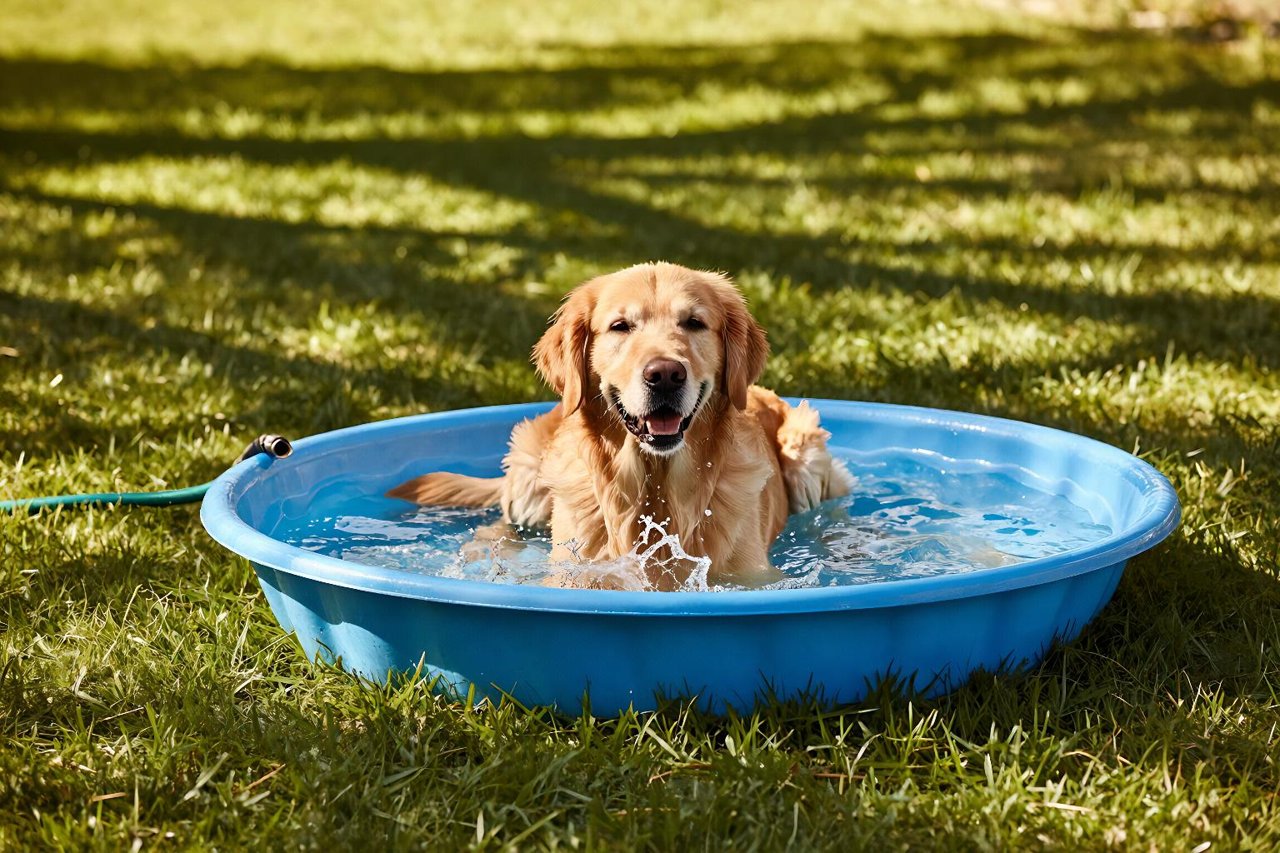
Cooling mats filled with water-absorbing gel work well for dogs who will lie on them, and they stay effective for an hour or two before needing a re-soak. Raised mesh beds let air circulate underneath, which helps a surprising amount on a still day. A paddling pool with two inches of water does more than any gadget, as long as your dog is the type to step in rather than stare at it suspiciously.
Skip the ice-cold baths and the frozen water bottles wrapped in towels left unattended. Sudden whole-body cooling causes blood vessels in the skin to constrict and can trap heat in the core, and chewing a frozen bottle can crack a tooth. If you want to stock up on mats, bowls and pool before the next heatwave, this trick for saving up to 50% on dog essentials is worth a look before you pay full price.
Grooming myths that make things worse
Don’t shave a double-coated dog down to the skin. The undercoat sheds out with regular brushing, and the topcoat reflects sunlight and insulates against heat. A professional deshed or a daily going-over with an undercoat rake does far more than clippers. For single-coated breeds, a shorter trim is fine and can help, but leave at least an inch of coat for sun protection.
Frozen treats and enrichment for hot afternoons
Freezing food is the easiest way to keep a dog occupied and hydrated between walks. Stuff a rubber toy with wet food, freeze it overnight, and you’ve got 45 minutes of quiet licking. Licking is also a self-soothing behaviour, so it calms anxious dogs during thunderstorms or fireworks as a bonus. If you’re choosing what to freeze, this guide to wet dog food covers which canned, pouch and fresh options hold their texture well once frozen.
Other reliable options: frozen carrot batons, ice cubes made from low-salt stock, and a Kong packed with mashed banana and a spoon of yoghurt. Avoid freezing anything with a bone in it, and don’t leave a frozen treat on a hot patio where it melts into a puddle before the dog gets to it.
Know the signs of heatstroke and act immediately
Heatstroke kills dogs every summer, and the window for intervention is measured in minutes. Watch for heavy, noisy panting that doesn’t settle, thick drool, bright red gums or a tongue that looks brick-coloured, wobbliness, vomiting, or a glazed look. A dog that lies down and refuses to move on a walk is in trouble, not being stubborn.
What to do: move them to shade or a cool room, pour room-temperature water over the neck, armpits, groin and paws, keep air moving with a fan or open window, and offer small amounts of water to drink. Then phone your vet. Don’t use ice packs directly on the skin and don’t force them to drink. Cooling too aggressively can tip them into shock.
Keeping indoor dogs cool without air conditioning
Flats and south-facing rooms get brutal by mid-afternoon. Close curtains and blinds on the sunny side before 10am, open windows on opposite sides of the home once the outside air is cooler than inside, and run a fan to push air across a bowl of ice. Tiled bathroom floors are genuinely the coolest spot in most homes, so leave the door open and put a bed down there.
Smaller dogs have a higher surface-area-to-volume ratio, so they gain and lose heat quickly, and many of them are the flat-faced types that struggle most. If you’re choosing a companion with hot summers in mind, these small dog breeds compared by owner type include a few notably heat-tolerant options.
Extra care for older dogs
Senior dogs often have heart or kidney conditions that make heat far more dangerous, and they may not show obvious signs until they’re already struggling. They need shorter walks, more water stations, and a soft bed in the coolest room. If your dog is slowing down and you’re not sure whether the change is age or the weather, this breakdown of calm, manageable breeds for older owners is a useful read on what normal aging looks like.
Cars, days out and boarding in a heatwave
Never leave a dog in a parked car, even with the windows cracked. On a 26°C day, the inside of a car can reach 43°C within ten minutes and 50°C within half an hour. That’s not a risk, it’s a certainty, and it’s why leaving them at home for a quick shop is always the better call.
If you’re boarding your dog during a hot spell, ask directly how they manage shade, water and afternoon exercise. Kennels with concrete runs and no shaded area are a genuine hazard in July. These common kennel mistakes that stress dogs out are worth checking against whatever facility you’re considering, especially the ones about ventilation and shaded rest areas.
For days out, plan around water. A river, a lake edge or a shaded picnic site beats any beach at noon. Take a collapsible bowl, two litres of water for a medium dog, a towel and a shade cloth. Let them paddle but rinse off lake water afterwards to avoid skin irritation, and dry inside the ears properly. If your dog seems off on the drive home, panting hard with the air conditioning on full, stop, find shade, and cool them down before you carry on.


