
Table of Contents
Max had never slept anywhere but my bedroom floor, so the first night in a rented cottage in Snowdonia involved a lot of pacing, one failed attempt at the sofa, and a 4am barking incident I’m still apologising for. By night three he was flat out in front of the fire like he’d lived there for years.
That’s roughly how dog travel goes. Nothing catastrophic, plenty of small friction, and a learning curve you only climb by actually going. What follows is what made the difference for us, plus the things I wish someone had told me before the first 200-mile drive.
Sort the paperwork before you think about the fun parts
Documents are the most common reason a trip falls apart at a check-in desk or a border. They’re also the cheapest thing to fix, provided you start early.
For international travel, the order matters. Your dog needs a microchip implanted before the rabies vaccination, or the vaccine doesn’t count for most destinations. Rabies jabs then need at least 21 days to become valid, so a last-minute booster is useless. Coming back into the UK, dogs need a tapeworm treatment given between 24 and 120 hours before arrival, and that window is checked to the hour.

Within the country, airlines typically want a health certificate issued within 10 days of flying, though a few allow 30. Keep a photo of every certificate on your phone, plus one of your dog’s face. If a collar slips in an unfamiliar car park 300 miles from home, a recent photo is the thing that gets them back.
Train the carrier weeks in advance, not the night before
An unfamiliar crate on departure morning reads as a trap. A crate that’s been sitting open in the living room for three weeks, dispensing chicken, reads as furniture. Feed meals inside it, toss treats in at random, and do two or three short drives that end somewhere good.
Airlines require a dog to stand, turn around and lie down inside the carrier. Measure before you buy rather than guessing from the product photo. And trim nails about a week ahead: long nails skate on smooth train floors and hotel lobbies, and a dog that slides is a dog that panics. This guide to trimming a dog’s nails without the drama (or the bleeding) covers the technique if you’d rather not attempt it cold.
On the road: the details that matter
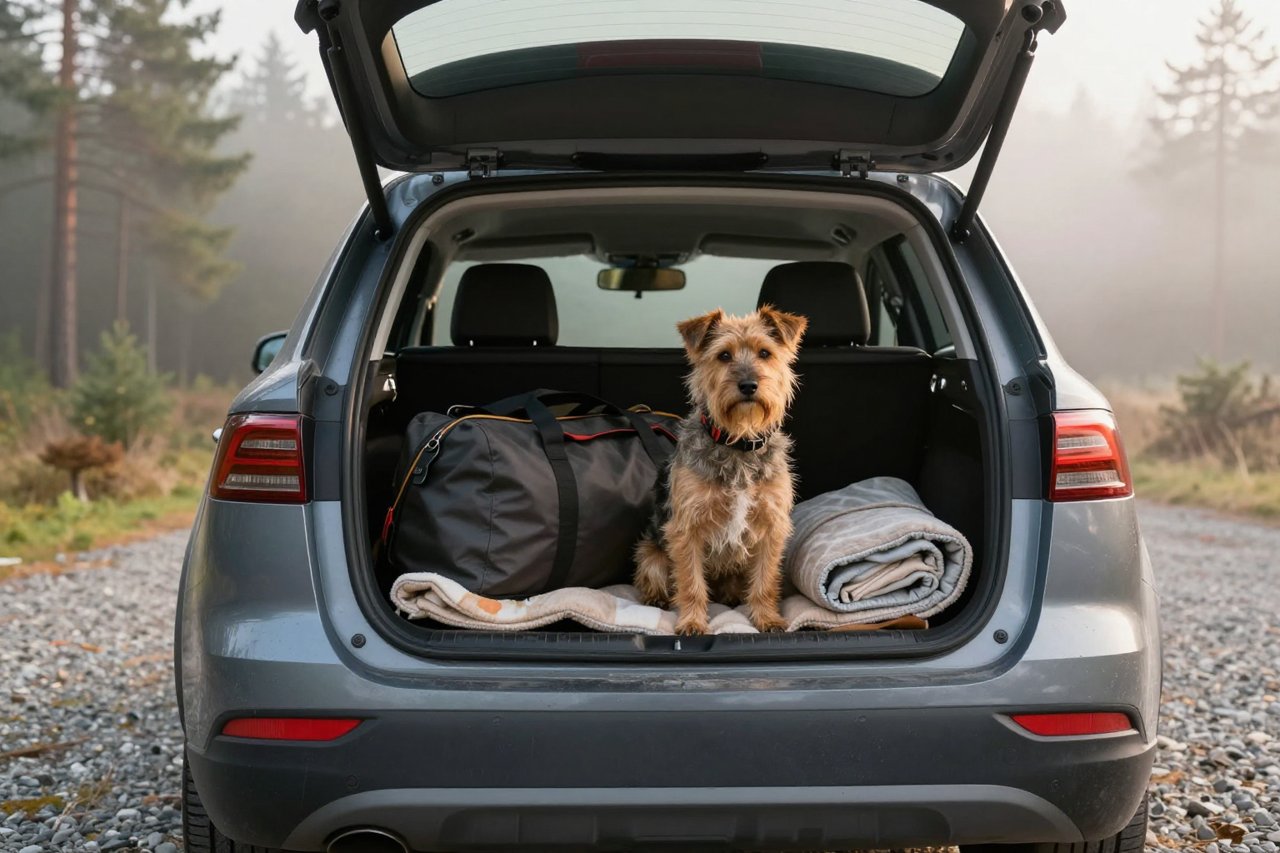
A loose dog in a moving car is a projectile. At 50 km/h, a 20 kg dog carries roughly a tonne of force in a sudden stop, which is why a crash-tested harness or a properly secured crate is worth the money.
Plan on a stop every two to three hours. Not just for toilet breaks. Dogs need to sniff, stretch and drink, and a 20-minute leg stretch at a services car park saves you a much worse evening.
- Never leave a dog in a parked car. At 22°C outside, the inside of a car can pass 47°C within an hour, and cracking the windows changes very little.
- Skip the head-out-of-window look. Road grit and insects cause eye and ear damage, and it’s a vet bill you can avoid.
- Keep water in a spill-proof bottle and offer it at every stop rather than one big drink at the end.
Motion sickness and the first twenty minutes
Most car sickness happens early in the journey. Withhold a big meal for three to four hours before setting off, and ask your vet about maropitant, the same anti-nausea drug used for people. It works far better than the old advice of starvation and hope. Puppies often grow out of it by 18 months.
Flying with a dog
Cabin travel is usually limited to dogs under about 8 kg including the carrier, and each airline sets its own soft-sided bag dimensions. Larger dogs go in the hold, which brings a separate set of rules: many carriers refuse flat-faced breeds like pugs, bulldogs and Frenchies outright because of breathing risk at altitude.
Book early. Most airlines cap the number of pets per flight at two to four, and those slots go months ahead on popular routes. Direct flights beat cheaper connecting ones every time, because a dog sitting on a tarmac in a crate during a two-hour layover is a genuinely bad experience.
Trains, ferries and the odd taxi
Rules vary wildly between operators. Many UK train companies carry dogs free of charge, others charge a modest fee, and a handful restrict you to two dogs per person. Avoid rush hour if you can, and pick a seat near the vestibule where there’s floor space for your dog to lie flat.
On ferries, you usually choose between a kennel on deck and staying in the car. Kennels book up, so reserve one when you book the crossing. As for taxis, ask before the door opens. Most drivers say yes to a dog on a short lead and a towel on the seat; almost none say yes to a wet dog and no towel.
The packing list that earns its space
- Food for the whole trip plus two spare days, in case of delays
- A two-litre bottle of water from home, then gradual changes if you run out
- Collapsible bowls, a 3-metre long line, and one short lead
- The bed or a blanket that smells of home
- Tick treatment, any regular medication, and a basic first-aid kit
- Enzyme cleaner, old towels, and more poop bags than seems reasonable
- Vaccination records, health certificate, and a recent photo
Calming the nerves without sedating your dog
Pheromone sprays on the carrier lining, a snug body wrap, and white noise in the hotel room all help a mildly anxious dog. A heavily sedated dog is a different story: sedation dulls balance and body temperature control, and most vets now prefer anti-nausea medication over knocking a dog out for a flight.
If your dog trembles for the first hour of every journey, acupressure for dog travel anxiety is worth ten minutes of your time before you set off. It’s gentle, it’s free, and it gives you something useful to do with your hands instead of worrying.
Read the pet policy twice
“Pet friendly” can mean anything from a bowl of biscuits at check-in to a £40-per-night surcharge and a strict no-dogs-on-furniture rule. Ask three questions before booking: is there a fee, is there a size or breed limit, and can the dog be left alone in the room? That last one determines whether you eat dinner out or order in.
A washable throw for the bed and a lint roller cover most furniture sins, though if your dog sheds heavily you’ll be fighting a losing battle. These dog breeds that shed the least are worth knowing about if travel and rentals are a big part of your life. Thin hotel walls raise a different issue entirely, and the honest picks in this guide to dog breeds that bark less explain why some dogs sleep through hallway footsteps and others announce every one.
Size matters too. A Great Dane in a budget chain room is a logistical problem, not a charming quirk. If a dog is still in your future, it’s worth thinking about choosing a breed that fits your travel habits before you fall for a face on a rescue page.
Keep the routine boring
Same food, same feeding times, same bedtime ritual. Novelty is fine during the day and terrible at 11pm, when a dog in a strange room is already running a mental risk assessment. A long walk before dinner does more for a settled night than any gadget.
What nobody warns you about at rest stops
Hot asphalt is the quiet danger. If you can’t hold the back of your hand against the pavement for five seconds, it’s too hot for paws. Standing water in lay-bys can carry blue-green algae or leptospirosis, so bring your own. In late summer, foxtail grass seeds work their way into ears and between toes, and they don’t come out on their own.
Know when the dog stays home
Some trips aren’t dog trips. Long-haul flights with a hold transfer, countries with quarantine rules, dogs who genuinely dread the car, elderly dogs with stiff hips, and any trip built around eight-hour museum days all argue for a sitter. A good boarder or a house-sitter who stays overnight will usually want a trial night first, so book that a month ahead rather than the week you fly.
Knowing your dog’s limits is part of the skill. The best trips are the ones where you planned around the animal you actually have, not the one you saw in a travel advert.


