
Table of Contents
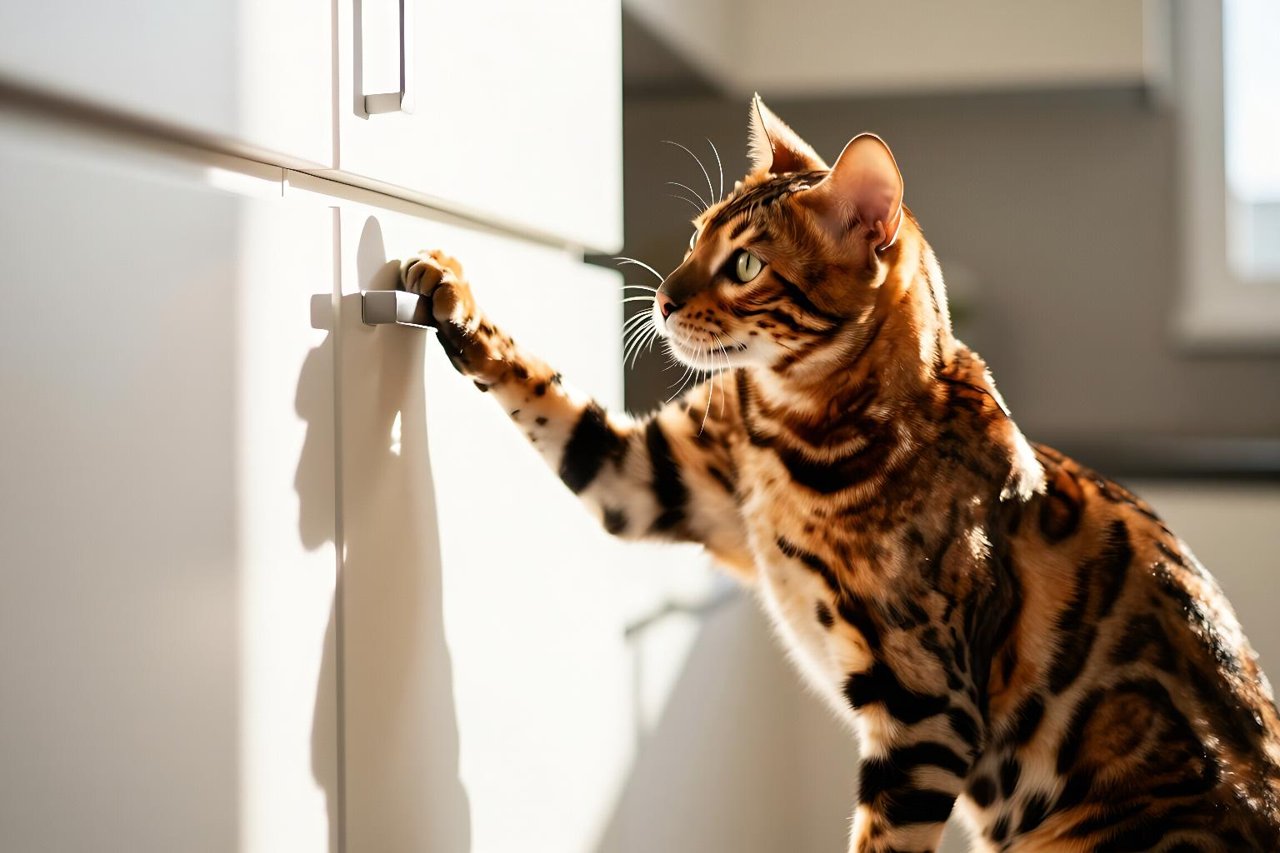
A cat that flips a cupboard latch, hooks a bag of treats off the shelf and then sits on the counter watching you discover the mess has already made its point. Cat intelligence is an awkward thing to measure. There are no obedience trials for cats, no herding championships, no equivalent of the border collie round-up. Spend a week with a Bengal, though, and a week with a placid, sleepy Persian, and the difference stops being theoretical.
So here’s a look at the most intelligent cat breeds, what makes each one sharp, and, just as importantly, what that sharpness costs you in daily life.
What Do We Actually Mean by Cat Intelligence?
Vets and behaviourists tend to break it into three things: problem-solving, communication and trainability. A cat that works out how to open a door is solving a problem. A Siamese that yowls at you from the hallway until you follow it to an empty food bowl is communicating. A cat that learns to sit, target and come when called, usually in a handful of five-minute sessions, is trainable.
Breeds differ, but less dramatically than dogs do. Finnish research on thousands of cats found real personality differences between breeds in activity, boldness and sociability, yet there is no cat version of the border collie ranking. Where dog intelligence has been tested through working roles for centuries, cats mostly get judged by how loudly they complain and how quickly they defeat a child-lock.

It’s also worth keeping perspective. The most intelligent animals on the planet include corvids and cephalopods that leave every domestic cat standing. If you’re drawn to the dog side of the comparison, the most intelligent dog breeds are a useful benchmark, and they come with the same warning: clever animals are rarely the easiest ones to live with.
The Most Intelligent Cat Breeds
Abyssinian
One of the oldest known breeds, with a ticked coat and the build of a small mountain lion. Abyssinians treat furniture as scaffolding and will work out latches, cupboard doors and fridge handles if given enough unsupervised time. They’re interactive without being clingy, following you room to room while narrating the trip. Give them vertical space and a window with a view or they’ll invent their own entertainment.
Bengal
Bred from Asian leopard cat crosses in the 1970s and 80s, Bengals come with wild-looking rosettes and a genuinely busy brain. Many learn to fetch, walk on a harness and turn on taps, because running water fascinates them. A bored Bengal will redecorate. Expect to spend real money on climbing frames and puzzle feeders, and expect to child-proof the kitchen.
Siamese
The breed that talks back. Siamese cats are famously vocal, with a raspy, insistent voice they use to comment on everything from closed doors to your choice of dinner. They bond hard, often to one person, and dislike being left alone for long stretches. If you want a cat that greets you at the door and holds a conversation, this is the one.
Burmese
Compact, heavy for their size, and unusually people-focused. Burmese are often described as dog-like, which mostly means they play fetch, greet guests and stay involved in whatever you’re doing. They’re quick learners and tolerate handling well, which makes them one of the easier clever breeds to train.
Egyptian Mau
Believed to be the only naturally spotted domestic cat, and often cited as the fastest, capable of short bursts around 30 mph. They’re alert, athletic and selective: reserved with strangers, devoted to their own family. Maus like routine and notice when something in the house has changed.
Savannah
Another wild hybrid, and the tallest domestic cat going in the early generations. Savannahs jump higher than most owners expect, often seven feet from a standing start, and need serious enrichment or an outdoor enclosure. Check local rules before falling in love: ownership is restricted or banned in some places, including parts of Australia and Hawaii.
Maine Coon
Big, gentle and surprisingly trainable. Maine Coons fetch, learn their names and chirp rather than meow. They’re patient with children and other pets, which makes them a sensible choice for a household that wants a clever cat without constant chaos.
Smart Doesn’t Mean Easy
That’s the part most breed lists skip. Intelligence in a cat usually shows up as curiosity, and curiosity needs somewhere to go. A bored Bengal or Abyssinian will find work: shredding loo roll, fishing in the fish tank, yowling at 4am, learning to open the bin. The behaviour isn’t naughty, it’s occupational therapy it arranged for itself.
If this is your first cat, be honest about how much time you have. A calmer breed can be a much better fit, and there are plenty of cat breeds suited to first-time owners that won’t test your patience or your DIY skills. Two cats often work better than one for the high-energy breeds, since they wear each other out.
How to Keep a Clever Cat Occupied
- Feed the brain, not just the bowl. Puzzle feeders, snuffle mats and food scattered around the room turn a two-minute meal into ten minutes of work.
- Try clicker training. Cats learn sit, target and come faster than most people expect. Keep sessions to three or five minutes, use real meat, and stop while it’s still fun.
- Build upwards. Shelves, cat trees and window perches turn one room into three. Vertical space is the cheapest enrichment you can buy.
- Rotate toys weekly. Novelty matters more than quantity. A toy that vanishes for a fortnight becomes new again.
- Teach a harness. Many Bengals, Savannahs and Abyssinians take to leash walks with a bit of patience, which drains energy fast.
Choosing a Clever Cat Without Regretting It
Ask breeders about the temperament of the parents, not just the coat colour. Meet the kittens in a busy room and watch which ones come over and which ones hide. An adult rescue is worth considering too: personality is already fixed, so you know whether you’re getting a lap cat or a demolition expert.
Budget realistically. Clever, high-energy breeds tend to cost more upfront, need more toys and climbing equipment, and are more likely to end up at the vet after eating something they shouldn’t. Pet insurance is not a luxury with a Savannah. Plan for a 15 to 20-year commitment, and think about whether you’ll still have the energy for daily play sessions in a decade.
The honest test is simple. If you like the idea of a cat that watches you, learns your routine and occasionally outsmarts you, one of these breeds will be the best animal you’ve ever lived with. If you want a warm body on the sofa and a quiet house, choose differently. Both choices are good ones. They just belong to different people.


