
Table of Contents
Three days before we moved flats, our cat Otto found the carrier in the hallway, stared at it for a long moment, then went and sat under the bed for six hours. That reaction tells you most of what you need to know about travelling with cats. The journey itself is rarely the hard part. The weeks of preparation, or the lack of them, are what decide whether it goes smoothly.
Here’s what actually works, based on several hundred miles of motorway, one ferry crossing and a lot of trial and error.
Start with the carrier, not the destination
Most cats only ever meet a carrier when something unpleasant is about to happen: a vet appointment, a house move, a booster jab. No wonder the sight of it sends them under the furniture for the afternoon.
Get the right box
Soft-sided carriers look cosy and fold away neatly, but a determined cat can claw through the mesh, and they collapse in a boot. Go for a rigid plastic carrier with metal clips and a wipeable floor. Your cat should be able to stand up without their head touching the roof, turn around, and lie down stretched out. For an average 4–5kg cat that’s roughly 55 x 35 x 35cm.

- Top-opening or front-and-top loading, so you can lift a reluctant cat in rather than pushing them through a tunnel
- Secure, lockable clips — a carrier that pops open at a service station is a genuine nightmare
- No fabric liners you can’t machine wash; a towel over a puppy pad is easier
- Something absorbent and familiar inside, ideally a worn t-shirt of yours
The two-week bootcamp
Leave the carrier out in the living room with the door open, permanently, for at least a fortnight before you travel. Feed meals next to it. Drop a treat inside every time you walk past. By day four, most cats are napping in it voluntarily, which is exactly what you want.
Then add movement. Close the door for thirty seconds, treat, release. Carry it around the flat. Take it to the car with the engine off. Then engine on, no motion. Then a five-minute lap of the block. It sounds fussy and it takes ten days, but it’s the difference between a cat that settles by junction 12 and one that yowls for three hours.
Paperwork: the dull part that ruins trips
For travel from Great Britain to the EU, your cat needs a microchip, a rabies vaccination given at least 21 days before departure, and an Animal Health Certificate issued by your vet within 10 days of travel. Budget £150–£250 for the certificate, and expect to pay it again on the way back, since an AHC is valid for a single trip.
Ferries vary wildly: some let you stay in the car with your pet, others insist the animal remains in the vehicle while you go upstairs. Le Shuttle is the easiest option because you stay in the car the whole way. Call the operator before booking rather than guessing. If your cat is on regular medication, pack double and carry the prescription.
Car journeys that don’t end in howling
Cats are far more tolerant of cars than the internet suggests. The first twenty minutes are often loud, then most settle into a grumpy silence and sleep. A few things tilt the odds in your favour.
Skip the meal immediately before you leave. Feed four to five hours ahead and let them drink normally, which cuts the odds of car sickness and a vomit-covered towel by a surprising margin. Cover the carrier with a light cotton sheet on three sides, leaving the front open for airflow, and wedge it on the back seat with the seatbelt threaded through the handle. A loose cat in a moving car is dangerous for everyone.
Stop every two hours. Offer water from a small bowl at each break, but don’t take a cat out of the carrier at a motorway services unless you’re in a closed, locked environment. Panicked cats are fast, and a car park is full of terrible places to hide.
Heat is the silent danger here. A car that feels mild at 9am can hit 40°C inside by midday, and cats don’t sweat the way we do. If you’re travelling in summer, read up on how to keep cats cool in summer before you set off — shade, airflow and timing the drive around the hottest hours matter enormously.
Trains, taxis and the airport question
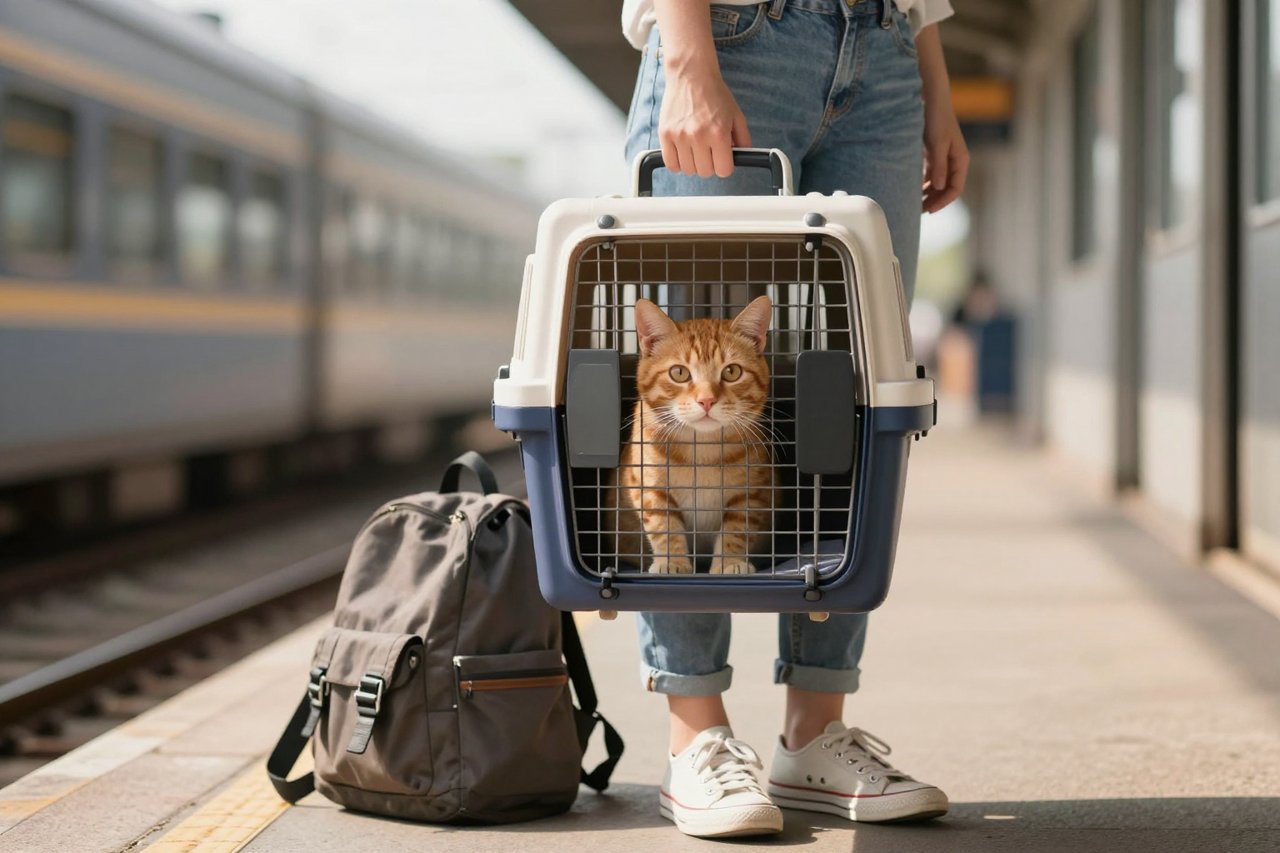
Most UK train operators allow up to two cats per person in a carrier, usually free, though a few charge or restrict busy times. Sit in the quiet coach or a reserved table seat, not a busy vestibule, and keep the carrier on your lap or the floor between your feet.
Taxis need booking in advance. Ring the firm, say the word ‘cat’ out loud, and confirm they’ll take you. Expect a surcharge and a driver who would rather you hadn’t asked.
Flying is where it gets awkward. No UK scheduled airline currently carries cats in the cabin, so they travel in the hold in an IATA-approved crate. Most vets advise against sedation for flights, since it affects balance and temperature regulation at altitude. It’s a last resort for a long-haul move, not a normal holiday solution.
Setting up base camp at the other end
Bring the litter your cat already knows. Now is not the time to test a new brand in a strange house. If you’ve never pinned down which litter suits your cat, this guide to choosing the best cat litter without wasting £40 on the wrong bag is worth ten minutes before you shop.
For the trip itself, a shallow foil roasting tray with 2cm of litter does the job for a single night and gets thrown away. For longer stays, buy a cheap plastic storage box and cut a doorway in the side — it’s cheaper than a travel litter tray and easier to clean.
Don’t give your cat the run of the place on day one. Unpack them into one small room with food, water, litter and a hiding spot. Cats that have spent their lives in small spaces often adapt quicker than you’d expect, and if you’re curious about which temperaments cope best with compact living, these cat breeds suited to apartment living are a useful reference point. Open the door after a few hours and let them explore on their own schedule.
Food, water and the fur situation
Keep the food identical for the whole trip. A sudden switch plus travel stress is a reliable recipe for diarrhoea in a car. Bring bottled water from home if you’re going somewhere with very hard water, and pack three days more food than you think you need.
Long-haired cats are the ones who suffer quietly. A day of nervous sweating in a carrier plus a strange environment turns small tangles into mats within about 48 hours. A quick brush before you leave — here’s how to groom a cat at home without a wrestling match — saves a stressful session with a mat comb in a hotel bathroom.
If you’re travelling with both species, the dog side of the equation needs its own planning. Most of what works for travelling with a dog — rest breaks, restraint, water — translates, but the two animals should be separated in the car and reintroduced calmly at the other end, not thrown together in an unfamiliar hallway.
The first 48 hours decide the rest of the trip
Everything that makes a cat feel safe is scent. Bring the unwashed blanket, the same bowls, the same litter, the same food, and keep the routine identical: meals at the same times, a play session in the evening, the litter scooped twice a day. Resist the urge to invite everyone round to meet the cat on arrival day, however proud you are.
Expect a day of hiding, a night of wandering and yowling, and a return to normal by day three in most cases. If your cat stops eating entirely for more than 24 hours, or hasn’t used the litter tray in 36, that’s a vet call rather than a wait-and-see. Cats who stop eating can go downhill quickly, and ‘they’re just settling in’ is not a diagnosis.
Book the vet check-up for the day after you arrive home, too. Twenty minutes and a once-over is cheap insurance after a long journey, and it gives you a baseline if anything seems off in the following week.


