
Table of Contents
Those short, frizzy strands sticking up around your crown probably aren’t new growth. They’re the tail ends of hairs that snapped somewhere between your scalp and your shoulders, and they’ll keep snapping unless you change what’s breaking them.
Breakage is quiet. It shows up as a few extra strands in the shower drain, a ponytail that feels thinner than it did last spring, or split ends that reappear three weeks after a trim. Hair is dead keratin the moment it leaves the follicle, so it can’t heal itself. It can only be protected. The seven habits below are the ones that make the biggest measurable difference.
1. Treat Wet Hair Like It’s Made of Tissue Paper
Dry hair can stretch roughly 20% of its length before it snaps. Wet hair stretches closer to 30%, and it doesn’t spring back the same way. That’s why most breakage happens in the ten minutes after you step out of the shower, not during the day.
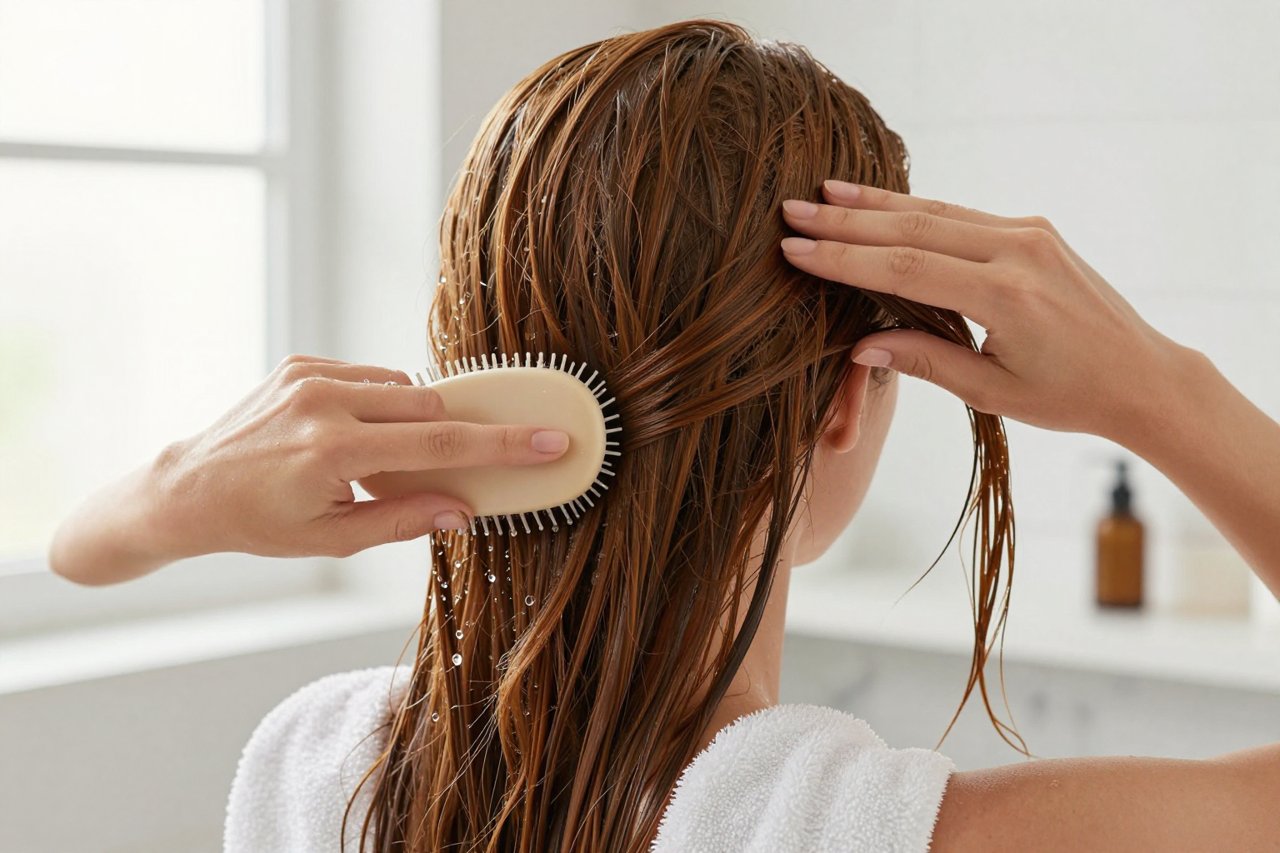
Two changes fix most of it. First, stop rubbing your hair with a terry towel. The looped fibres catch on the cuticle and drag strands in different directions. Swap in a microfiber towel or an old cotton t-shirt and squeeze the water out in sections instead of scrubbing. Second, never brush or comb wet hair starting at the roots. If you need to get product through, use your fingers.

The five-minute air-dry rule
Let hair sit in a towel for five to ten minutes before you touch it with any tool. Hair is at its most fragile when it’s dripping, and a few minutes of patience means fewer snapped strands when you finally pick up a brush.
2. Detangle From the Ends Up, Not the Roots Down
Dragging a brush from your scalp to your tips pushes every tangle into a bigger knot halfway down. Start two or three inches from the ends and work upward in small sections, holding the hair above the knot so the tension stays in your hand instead of travelling to the root.
- Use a wide-tooth comb on wet hair and a flexible detangling brush on dry hair.
- Work in four to six sections rather than treating your whole head as one unit.
- Apply conditioner first and let it sit for two minutes to give hair some slip.
- Never rip through a knot. Add water or a leave-in and tease it apart with your fingers.
3. Turn Down the Heat, Literally
Most flat irons sit at 230°C (450°F) because that’s what straightens coarse hair in one pass. On fine or medium hair, that temperature boils away the water inside the shaft and leaves the cuticle cracked. For most hair types, 160–180°C (320–355°F) with a single slow pass does the job without the crunch.
Heat protectant needs to go on damp hair before blow-drying, not as a last step before the iron. And if you’re considering a salon smoothing service, it’s worth understanding what each one does to the bonds inside the hair before you commit. This breakdown of which hair straightening treatments actually work without ruining your hair covers keratin, Brazilian blowouts and relaxers side by side.
4. Trim Before a Split Becomes a Snap
A split end doesn’t stay put. The two halves keep travelling up the shaft, and once they reach a few centimetres above the tip, the hair snaps off at that point. A trim every 8 to 12 weeks for fine hair, or 12 to 16 for coarse hair, removes the split before it climbs.
Ask for a dusting if you’re trying to keep length. It takes off 3–5mm and is basically invisible. And no, trimming doesn’t make hair grow faster. That one belongs with the other beauty tips that backfire and the myths worth retiring.
5. Wash Your Scalp, Not Your Ends
Shampoo is formulated to lift oil and product from the scalp. Your ends are the oldest, driest, most fragile part of the strand, and they don’t need a second scrubbing. Work the lather into your roots, let the suds run through the lengths as you rinse, and stop there.
Conditioner goes the other way: mid-lengths to ends, avoiding the roots unless your scalp is genuinely dry. Finish with a cool rinse for 20 seconds, which smooths the cuticle and makes hair easier to comb. If you wash daily out of habit, try stretching to every second or third day and see whether your ends feel less brittle within a month.
6. Balance Protein and Moisture Instead of Guessing
Breakage has two opposite causes, and the fix for one makes the other worse. Hair that snaps when wet and feels stiff and straw-like is usually overloaded on protein. Hair that stretches like chewing gum and feels mushy is overloaded on moisture.
Alternate a protein mask with a moisturising one rather than using the same treatment every wash. Bond builders are useful, but once a week is plenty for most people. If you’re unsure how to use what’s already in your cupboard, this guide to getting the most out of your hair mask covers timing, heat and frequency.
Diet matters too. Hair is roughly 90% keratin, and low protein intake tends to show up in the strand before it shows up anywhere else. If you’re weighing up a supplement, this look at the best collagen supplements for skin, joints and hair is honest about what the evidence actually supports.
7. Protect Hair While You Sleep and While You Sit
You spend a third of your life with your head pressed against a pillow, rolling from side to side. Cotton cases grip hair and create friction at exactly the spots where breakage shows up first: the crown and the nape.
Switch to silk or satin, tie hair in a loose braid or a low bun with a satin scrunchie, and don’t go to bed with wet hair. The same friction logic applies during the day. Bag straps, car headrests and the backs of office chairs all rub the same section of hair for hours at a time. Loosen tight ponytails, and skip elastics with metal clasps entirely.
When Breakage Won’t Budge, Look Underneath the Surface
If you’ve made all seven changes and the little broken hairs are still there after 10 to 12 weeks, the cause probably isn’t mechanical. Hair grows about a centimetre a month, so any real improvement takes a full season to become visible. Give it that long before deciding nothing worked.
Next, separate breakage from shedding. Broken hairs are short, with a blunt or split tip, and they cluster near the crown. Shed hairs are full-length and carry a tiny white bulb at the root. If you’re seeing full-length strands, the follicle is the issue rather than the shaft. This review of the CurrentBody LED hair growth helmet explains what light therapy can and can’t do for follicle-driven thinning.
It’s also worth checking ferritin, vitamin D and thyroid function with a doctor if the shedding came on suddenly or you’re exhausted alongside it. Crash diets, postpartum hormones and a bleach appointment three weeks after a relaxer all produce breakage that no pillowcase will fix. If you notice patchy loss, scalp redness or persistent itching, book a dermatologist rather than buying another product.
Most people who stick with the first five changes notice something by week six: fewer strands on the shower floor, and a smoother surface when they run a hand down the lengths. That’s your cue to keep going rather than reach for a new shampoo.


