
Table of Contents
If you’re here, you’ve probably watched your dog vanish after a rabbit, and you swore you’d never let that happen again. I did too, and I spent a week falling down a rabbit hole of options. That’s when I realized that “tracker for my dog” isn’t one product, it’s three. There’s GPS, Bluetooth, and old-school radio. Each one solves the same problem in a different way, and the right one depends more on your terrain than your dog’s breed. So let’s break down the trade-offs without the marketing fluff.
The Three Main Ways to Track a Dog
Before you compare prices, you need to understand what’s actually in the box. You’ve got GPS trackers that use satellites and cellular networks, Bluetooth tags that use your phone and other phones around you, and radio (RF) trackers that use a dedicated handheld receiver. A few brands mix these. But if you know which camp your candidate belongs in, you can predict its weaknesses.
GPS Trackers: Live Maps and Real-Time Peace of Mind
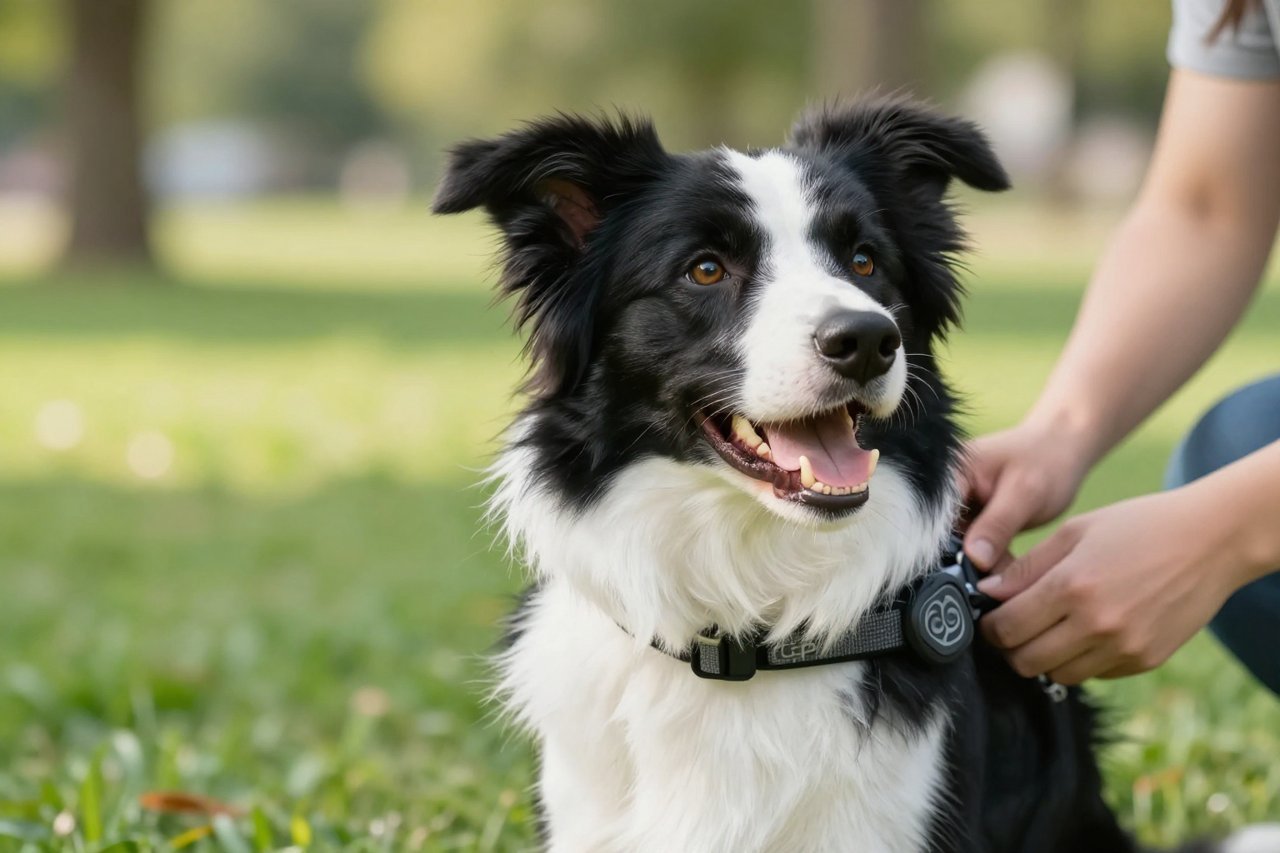
These are the most popular, and for a good reason. A GPS tracker like the Tractive or Whistle Go puts a live map on your phone. You can tap a button and see your dog’s position within seconds, set a virtual fence, and get alerts when he leaves the backyard. Some models add activity monitoring, so you can track sleep and exercise. I also tested six of the most popular names, and I honestly wanted all of them to work.
The good stuff
- Live location on your phone, with an accuracy of 1-15 meters.
- Geofencing alerts that tell you the moment your dog leaves the safe zone.
- No need to point anything. You just look at the app.
The catch
The monthly or yearly subscription is the big one. You’ll pay $5 to $15 per month depending on the plan, and the price often goes up after the first year. Battery life varies wildly. If you use live tracking, some models last only a few hours on a full charge. I’ve seen the Tractive die in less than half a day when you refresh aggressively. On power-saving mode, it can last a few days, but then you’re not getting minute-by-minute updates. And all of that depends on having cellular coverage, which means a dead zone in the hills makes your expensive collar a useless piece of plastic. For more detail than I can fit here, my review of six GPS collars should be your next read: the best tracker for my dog, tested in the field.

Bluetooth Trackers: Cheap, Lightweight, and Limited
I’ll get straight to the point: Bluetooth trackers like Apple AirTags and Tile Tiles were designed for keys and luggage, not animals. Their range is about 10 to 30 meters. If your dog stays within that bubble, you can hear it beep and find it. Beyond that, the tracker only updates when it’s near another Bluetooth device from the network.
In a crowded city, that network is everywhere, and an AirTag on your dog might update every few minutes because people with iPhones are walking past. But if it’s nighttime and your dog is hiding in a hedge, it could be 10 feet away and the phone won’t connect because the signal is blocked by your neighbor’s car. The battery lasts about a year, which is nice, but you can’t count on it for a lost dog. I’d only recommend it as a last resort for a very small dog who doesn’t leave a fenced yard, and only if your dog is microchipped so that someone can return it. It’s not a tracker for my dog in a serious sense.
Radio Trackers (GPRS/RF): The Long-Range Veterans
These have been around for decades, mostly in the hunting world. Brands like Garmin and SportDOG put a heavier collar on your dog and give you a handheld receiver. The receiver tells you the direction of the dog and the distance, using radio waves. Range can be up to nine miles in open terrain, and there’s no subscription at all. You pay once for the hardware and that’s it.
The downside is that you can’t see a map, and you don’t get a “Google Maps” for your dog. Instead, you stand still, watch the signal strength and arrow, and physically walk in that direction. If your dog is moving, it’s a real skill to catch it. It’s also the most expensive way to start, with some bundles hitting $800. But for people who live in areas with no cell signal, this is the only real option. I wrote a field guide about the first 48 hours with a GPRS tracker that explains what to expect. It’s not as intuitive as an app, but it works when nothing else does.
The Real Trade-Offs Nobody Talks About
You can study spec sheets all day, but these are the things that actually matter.
- Battery life. With GPS, you’ll be charging every few days at best. Radio trackers can last a week or more because the handheld unit does the heavy lifting. Bluetooth tags last about a year, but they’re also the least useful.
- Cost over time. Let’s say you keep a tracker for three years. A mid-range GPS device costs $200, plus $120 per year in subscriptions. That’s $560. A radio tracker might cost $500 upfront and nothing after. A Bluetooth tag costs $30 and nothing after. The cheapest isn’t always the worst though, it’s just the least functional.
- Where you walk your dog matters. GPS is amazing in a city with LTE. But if you go off-grid, it’s useless. Radio is the opposite. Bluetooth is only useful in very tight spaces.
- Chew factor. A pricey GPS collar is a fascinating toy. My friend’s Doberman ate her Whistle in a week. Check the warranty and think about durability.
How to Choose the Right Tracker for My Dog, Step by Step
Let’s make it a simple process. Answer these three questions.
- Where does your dog spend time? City or suburbs with cell coverage? GPS. Remote countryside, forests, or mountains? Radio. Mostly inside or a small yard? A Bluetooth tag could be a temporary fix.
- What are you willing to pay per year? If $100 a year for a subscription makes you flinch, skip GPS. If you can handle a bigger one-time spend but no monthly fees, consider radio.
- How much do you trust yourself to charge things? GPS collars need frequent charging, and you’ll need to remember to put it back on. Radio collars have better batteries, but you also have to carry the receiver.
I have a fuller guide on how to choose a tracker for my dog, with specific models and scenarios, that you’ll find helpful as you narrow down.
Before You Buy, Run These Three Home Checks
Once you pick a tracker, don’t wait until your dog escapes to test it. Do these three things.
- Check the cellular map for your regular walking spots. Go to the coverage page for the specific network the tracker uses, and zoom in on the trails you visit. A few dead spots are tolerable, but a false “disconnected” is awful.
- Weigh the collar correctly. The tracker is only useful if your dog will wear it. My 10 kg terrier refuses the bulky ones, so I ended up with a lighter model. Some trackers have a minimum dog weight recommendation. Follow it.
- Set it up and practice. Set a geofence around your house, take your dog to the park, and see if the notification arrives in a reasonable time. If it doesn’t, you’ll want to adjust the settings before you actually need it. Setting up a tracker for my dog is a twenty-minute job if you follow the manual, but it’ll save you a meltdown later. For a no-hassle walkthrough, use this step-by-step guide that actually works, and don’t skip the part about securing the collar.
The One Thing to Remember
The best “tracker for my dog” is the one you will actually use. That means it fits on the collar, holds a charge long enough for your routine, and you don’t resent the subscription cost. Spend fifteen minutes on a Saturday testing it in a familiar place. Go through the setup checklist, set up alerts, and practice finding your dog. When the day comes and your dog bolts after a deer, you’ll be glad you did.


