
Table of Contents
[ad_1]
The factory floor has always been unforgiving. Downtime costs money. Security gaps can have devastating effects. As industrial automation grows more sophisticated, the network connecting every robot, sensor, and conveyor belt becomes the single most critical piece of infrastructure in your plant — one that must be built for industrial conditions, deliver high performance, and stay secure, all at the same time.
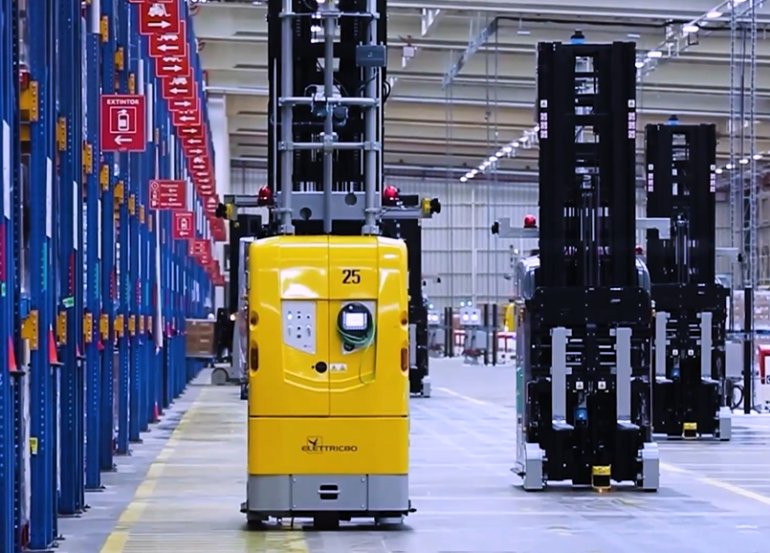
E80 Group knows this better than most. A global leader in automated intralogistics, E80 operates fleets of Autonomous Guided Vehicles (AGVs) across some of the world’s most demanding manufacturing and warehousing environments. Their challenge was not simply one of connectivity — it was one of control, visibility, and OT security at scale. Watch how they solved it:
The Real Problem Behind the Automation Promise
Automating a factory floor is one thing. Keeping it secure and continuously operational is another challenge entirely.
AGVs, robotic arms, and industrial IoT devices are no longer isolated machines. They are networked endpoints — each a potential vulnerability, each dependent on seamless, low-latency connectivity to do its job. When a vehicle loses its network connection mid-operation, production stops. When an unmonitored device is compromised, the consequences ripple across your entire operation.
For plant managers and security teams, this creates a tension that is all too familiar: the pressure to modernize and automate, set against the very real risks that come with connecting operational technology to the broader network. The question is not whether to modernize — it is how to do it without introducing new points of failure or exposure.
The Cisco Approach: Wireless Reliability Meets Built-In Security
Cisco’s answer to this challenge is not a patchwork of bolt-on solutions. It is an architecture purpose-built for industrial environments, where connectivity and security are designed to work together from the ground up.
For E80 Group, two Cisco technologies were central to the solution:
- Cisco Ultra-Reliable Wireless Backhaul (URWB): Designed specifically for mission-critical industrial mobility, URWB delivers deterministic near-zero latency, seamless handoff wireless connectivity across the factory floor. AGVs move freely through the facility staying connected — even at speed, even across large and complex metallic industrial plants subject to radio interferences. This is industrial wireless built for environments where packet loss is not an option.
- Cisco Industrial Ethernet Switches: Onboard every AGV, a Cisco IE rugged switch connects sensors, controllers, drives, and guidance systems into a single, reliable in-vehicle network. Each switch embeds Cisco Cyber Vision, delivering real-time OT asset visibility by continuously monitoring device behavior — no extra hardware required. And with Cisco Identity Services Engine (ISE) integrated into the architecture, the industrial switch automatically enforces security policies, ensuring only authorized communications can access the environment. Every AGV becomes a secured, policy-enforced endpoint on your factory floor.
What This Means for Your Operations
Together, these two capabilities give industrial teams something they have rarely had before: confidence. Confidence that AGVs and automated systems will stay connected and keep moving. Confidence that when a threat or anomaly appears, you will know about it before it becomes a crisis.
For digital transformation leads, this means automation projects can scale without the security architecture scrambling to keep up. For OT/IT security teams, it means operational technology is no longer a blind spot. And for plant managers, it means the factory floor can keep running — reliably, safely, and at the pace modern production demands.
E80 Group’s experience demonstrates what becomes possible when connectivity and OT security are treated not as separate workstreams, but as a unified foundation for industrial automation.
The factory floor is evolving. The network underneath it needs to evolve with it.
If you are ready to explore what secure, reliable industrial networking could look like for your operations, two good starting points are waiting for you:
[ad_2]
Source link


