
Table of Contents
If you’re searching for a “gprs tracker for dogs,” you’ve probably already been handed half a dozen different devices with wildly different price tags. The term itself is outdated—GPRS was the slow mobile data standard from the early 2000s—but the products people actually buy today are a mix of cellular GPS collars, radio transmitters, Bluetooth tags, and “virtual fence” leashing systems. Each one promises to keep your dog safe, but they all make different compromises.
This guide breaks down the main approaches so you can see exactly where one type wins and another falls apart.
What You’re Actually Buying When You Search for a GPRS Tracker
True GPRS no longer exists in consumer pet trackers. What you’re usually looking for is a GPS receiver that gets coordinates, paired with a cellular modem that sends those coordinates to an app. The GPS part works anywhere on Earth; the cellular part decides whether the update actually reaches your phone. That’s why the real choice isn’t one technology—it’s which combination you like more.
Below, I’ll walk through the four main designs you’ll see sold as a “gprs tracker for dogs.” I’ve used or tested most of them, and I’ll give you the honest numbers.

Option 1: Cellular GPS Collars (The All-Rounder)
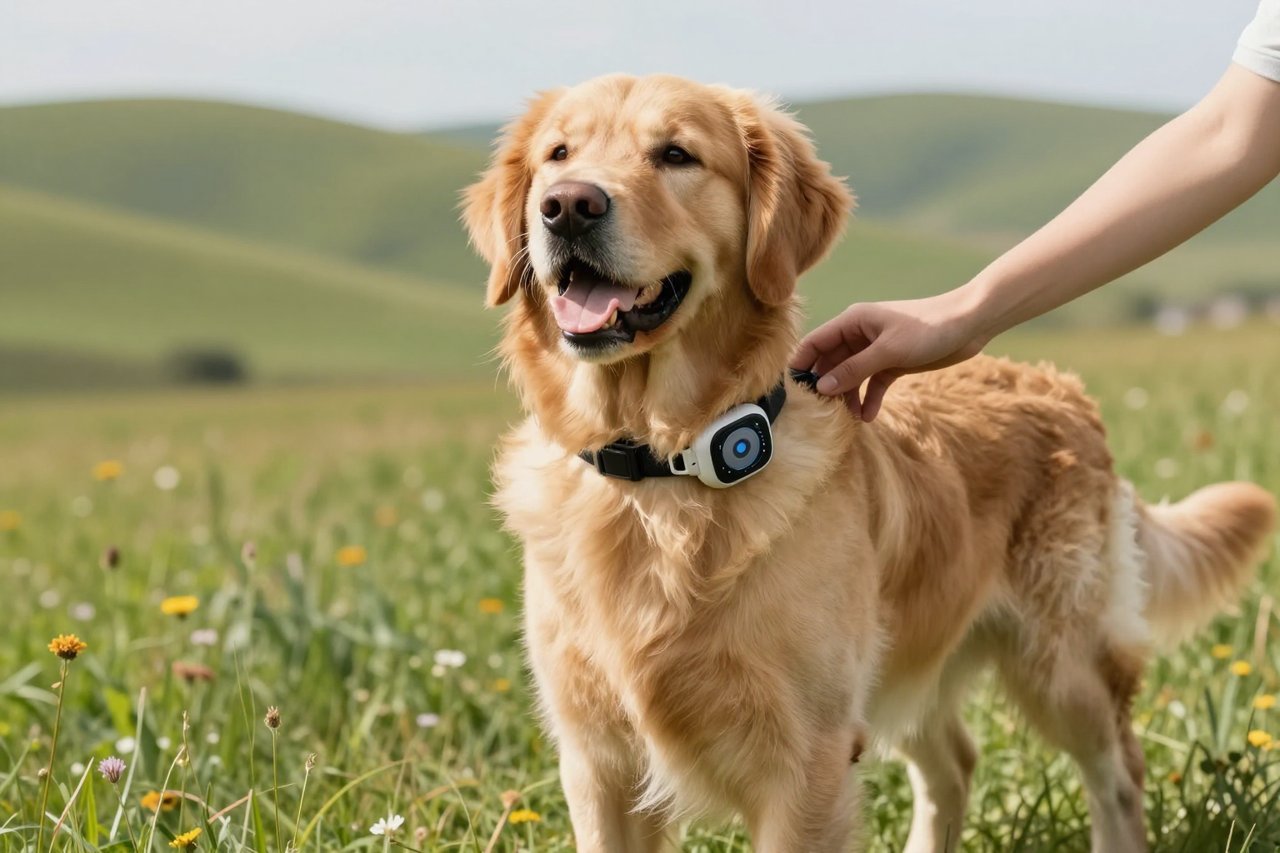
Brands like Tractive and Whistle dominate this category. A small collar module packs a GPS receiver, a 4G LTE modem, and an accelerometer for activity tracking. In the app, you can see live location, set geofences, and get escape alerts within seconds.
Pros:
- Real-time tracking anywhere with cellular coverage
- Geofences and push alerts straight to your phone
- Activity and sleep monitoring built in
- Easy setup – no extra hardware to carry
Cons:
- Monthly or yearly subscription ($50–$150 per year depending on features)
- Battery life ranges from a few days to just hours with 1-second live tracking
- Useless in deep canyons or dense forests with no signal
The battery issue is real. A Tractive with 1-second updates drains in about 8 hours, so most owners use the 1-minute default and charge twice a week. But that still beats going missing. If you’ve just got one of these collars, set it up methodically first. The first 48 hours with a new GPRS dog tracker matter more than any firmware update.
Option 2: GPS Dog Leash Systems (No Subscription, but Big Upfront Cost)
The name sounds odd, but a “GPS dog leash” isn’t a literal leash. It’s a system where the dog wears a GPS transmitter and you carry a handheld receiver that shows distance and direction. Garmin’s Alpha and Astro series are the classic examples, though there are cheaper off-brand models.
Pros:
- No monthly fees after purchase
- Long range in open terrain—up to 9 miles in ideal conditions
- Works everywhere, even with zero cellular signal
- Built for outdoor enthusiasts, not just city pet owners
Cons:
- Expensive: a complete set often costs $500–$900
- The handheld unit is bulky and doesn’t fit in a pocket
- No geofencing or phone notifications; you have to watch the screen
- Battery life varies, but the collar packs tend to use user-replaceable batteries
If you’re curious whether this type is worth it, the GPS dog leash versus every other tracker comparison digs deeper into the long-range options. For a hunter in Montana, this is the only choice that makes sense. For a suburban apartment dweller, it’s overkill.
Option 3: Bluetooth Trackers (Cheap, But Not a Real GPRS Tracker)
AirTags, Tiles, and their clones are often sold as “pet trackers” because they’re cheap. In hardware terms, they’re completely different: no GPS, no SIM card. They only broadcast a Bluetooth signal, typically up to about 100 meters in open air.
Pros:
- Very inexpensive ($25–$35)
- No subscription at all
- Battery lasts a year or more
- Precision finding when you’re close (AirTag’s UWB)
Cons:
- Bluetooth range is roughly the size of a football field
- Outside that range, it relies on other people’s phones to anonymously report the item’s location—so it’s not real-time and can be 15 minutes behind
- Crowdsourced tracking works poorly in remote areas where few people pass
- Not designed for a moving animal; you might see a ping from an hour ago
A Bluetooth tag can work if your dog only escapes into a neighbor’s yard, but it’s a stretch to call it a “gprs tracker for dogs.” The gap between GPS, Bluetooth, and radio is huge, and it’s worth reading whether GPS, Bluetooth, or radio is actually worth it before you settle.
Option 4: Handheld Radio+GPS Units (Garmin and Similar)
This is the older brother of the GPS leash: the dog’s collar contains a radio transmitter that sends location data directly to a handheld device. The Garmin Astro 430 uses MURS frequencies, which don’t require a license and have a strong range of about 4 to 9 miles in the open country.
Pros:
- No cellular network needed, ever
- Works in harsh terrain where phone signals fail
- Live tracking on the handheld screen without any subscription
- Long battery life on the collar (around 2 weeks at a 5-second update rate)
Cons:
- Very expensive, especially when you add training features
- No geofencing, no phone app integration, no escape alerts
- You must actively carry the receiver and watch it
- The antenna on the handheld is fragile for everyday use
These systems are the gold standard for serious hunters and search-and-rescue volunteers. If you just want to know when your dog slips out of the backyard, a Garmin is overkill and won’t notify you anyway.
Which One Fits Your Dog? A Practical Breakdown
Stop staring at spec sheets. Here’s the shortcut based on your lifestyle:
- Backyard escape artist: A Bluetooth tag is the cheapest way to find a dog that’s still within a block. But if the escapes happen daily, upgrade to a cellular GPS collar with geofence alerts.
- Urban hiker: A cellular GPS tracker (Tractive, Whistle) gives you peace of mind, live maps, and escape alerts. The monthly fee is worth it if you ever get separated in a park.
- Hunter or trail runner in remote canyons: You need a radio/GPS unit like the Garmin Astro. No cellular signal, no problem.
- Someone who detests monthly fees: The GPS dog leash costs more upfront but the annual savings add up after two years.
If you’re still torn, get a cellular GPS tracker first. They’re the easiest to understand, set up, and trust. You can always sell it later and switch to a Garmin if you outgrow it.
Don’t Let the Specs Fool You – Test Before You Trust
I’ve seen countless owners buy a high-end tracker, slap it on the collar, and never do a single trial run. Then the day the dog bolts, they discover the app doesn’t load, the SIM isn’t activated, or the battery is at 5%. That’s not the tracker’s fault—it’s a setup failure.
The 7-step setup and trust guide for GPS dog trackers will help you avoid that. Also, do a real-world test: walk your dog in a park, leave the house, and try to track from where your phone has only one bar. That’s the moment you’ll learn if your “gprs tracker for dogs” actually works in your neighborhood.
And if you want the surefire way to keep your pup within reach, remember that no tracker replaces a solid recall command. The technology is a safety net, not a discipline tool.
Choose the option that matches the terrain you walk, the budget you can sustain, and the level of real-time awareness you expect. That’s the only way to keep your dog safe without paying for features you’ll never use.


