
Table of Contents
A dog can slip through a gate latch faster than you can say “stay”. One minute they’re sniffing a dandelion, the next they’re a brown speck heading for the next county. Choosing the right tracker for your dog means deciding which failure mode you’re willing to live with. There are three main approaches: GPS, Bluetooth, and radio frequency. Each asks you to trade something away, so let’s lay the trade-offs out clearly.
The three main tracker types in a nutshell
GPS trackers
A GPS tracker fits on the collar and uses satellites to show your dog’s position on a map. The best consumer examples have a battery life between two and seven days, depending on how often they ping the network. They need a cellular connection to send the position to your phone, so you’ll usually pay a monthly fee – often $5 to $15. In exchange, you get live maps, location history, and a safety net that works across towns, not just your backyard. If you want to see how these behave out in the real world, this guide to canine GPS tracking walks through real-world usage, drop zones, and signal quirks.
Bluetooth trackers
Bluetooth trackers like Apple AirTags don’t include a GPS chip. They depend on your phone’s Bluetooth range, which tops out around 100 meters on a clear day. They’re cheap, small, and run on a coin battery for a year or more. The catch: they only work when your phone is nearby or when a stranger’s phone happens to pass by and relay the location. That’s fine for a garden escape artist, but it’s far less useful if your dog makes a run towards the woods.
Radio frequency (RF) trackers
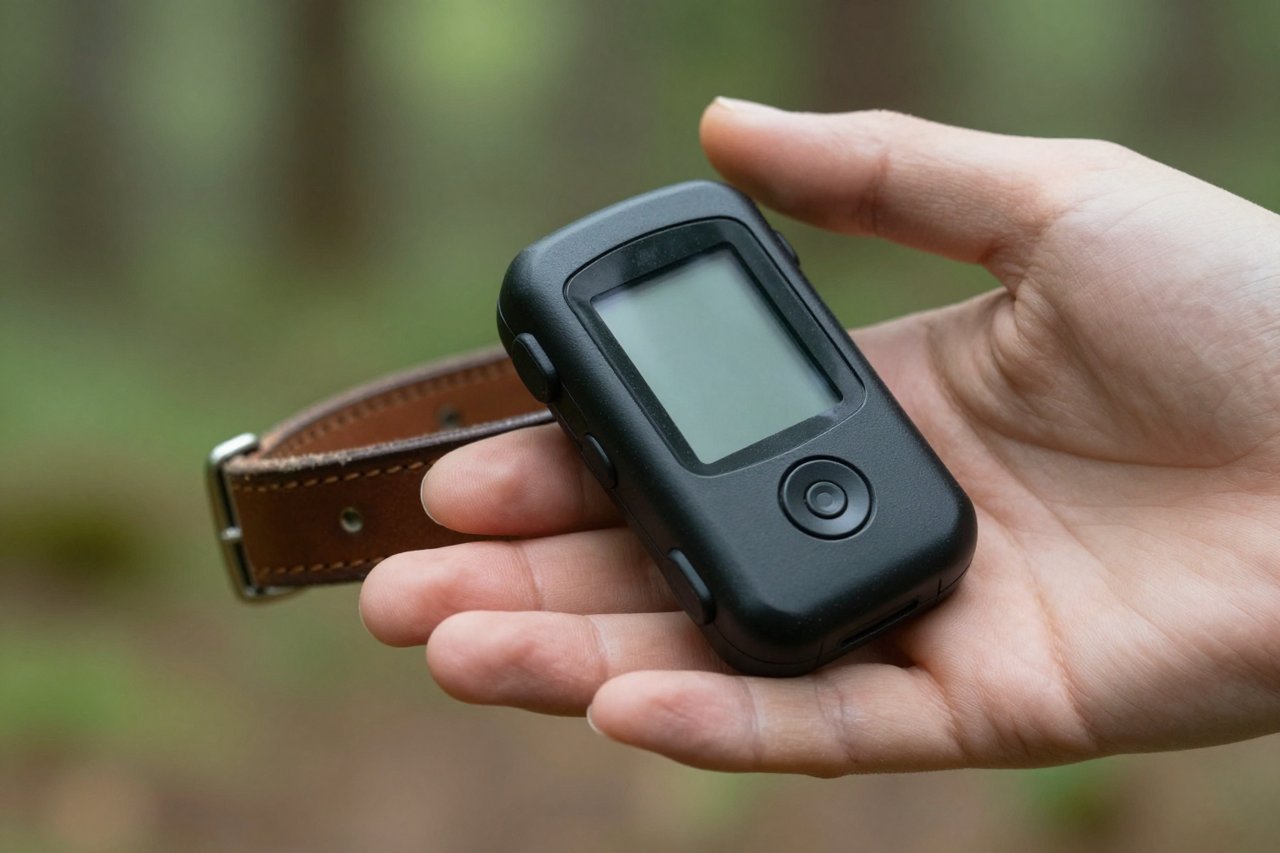
Radio frequency trackers use a lightweight antenna on the collar and a handheld receiver that you hold. You walk outside, point the antenna, and read the signal strength to narrow down the location. There’s no map, no app, and no monthly bill. Hunters swear by them because they work in thick forest where GPS and cellular signals die. Range can stretch to several miles in open ground. The downside is a steeper learning curve and a separate receiver you have to carry with you.

What each type gives up
- GPS: gives up battery life and money for a live map.
- Bluetooth: gives up range and real-time tracking for size and price.
- Radio: gives up convenience and features for reliability and zero fees.
No option is perfect. The right choice depends on where your dog gets loose, how long you expect to search, and whether you want a subscription on your credit card forever.
GPS trackers: the full picture
GPS trackers are the most popular because they answer the scariest question: “Which direction did she go?” The app shows a dot on a map, often updating every few seconds. You can set up a virtual fence that alerts you when your dog leaves a marked area. Some models even log a location history, so you can see the exact route your pup took through a neighbour’s hedge.
But that live map comes at a cost. The battery needs charging every few days, depending on the ping frequency. If you forget to charge it, it’s just a plastic lump on the collar. And the annual subscription can sting. Before you commit, it’s worth understanding the difference between a subscription that includes global coverage and one that only works on a specific cellular network. This article on trackers that don’t let you down covers the common ways cheap models fail, including weak antennas and misleading range claims.
Bluetooth trackers: the cheap option with a short leash
A Bluetooth tracker costs around $30 and uses your phone’s own GPS to help locate your dog. It’s a clever system. When your dog is more than 100 meters away, the tracker pings its signal to nearby phones in Apple’s Find My network. Those phones relay the location to your app. In a busy city, that can feel like magic. In an empty field with no nearby phones, the tracker is useless until you’re back in range.
The other limitation is real-time accuracy. You might see a location that’s 45 minutes old, because that’s when a phone last passed by. For a dog that bolts across a busy road, a delayed location can be dangerous. Bluetooth trackers are best for small yards, flat escapes, or as a backup to a louder approach.
Radio trackers: the underrated choice for rural owners
Radio frequency trackers have been around for decades. The collar unit sends out a beep on a frequency, and the receiver tells you the direction and strength of that beep. It’s a bit like playing hot and cold with a two-mile radius. Forest and hills don’t block the signal as badly as they block GPS, and the battery on a collar can last for weeks.
This type of tracker is not for everyone. You have to learn to read the receiver, and you’ll likely need a training day to interpret the signal properly. But if you live in a rural area with spotty cell coverage, a radio tracker might beat a GPS tracker that depends on the same towers your phone can’t reach. It’s also a good choice if you want to avoid monthly fees entirely. For a deep dive into a no-subscription alternative that still uses cellular infrastructure, check out this overview of GPRS dog trackers.
Subscription costs and hidden expenses
The sticker price of a GPS tracker is only the beginning. Most reputable brands charge an activation fee, then a monthly plan. That plan can range from $8 a month for basic tracking to $15 or more for unlimited location updates and geo-fencing. Over a dog’s lifetime, the subscription will cost more than the tracker itself.
Bluetooth trackers have no subscription but rely on a phone network you already pay for. Radio trackers are a one-time purchase, but you may need to replace lithium batteries on the collar every few months. When you’re comparing prices, do the math over three years. A $50 Bluetooth tracker with a $4 replacement battery might end up being the cheapest overall, while a $150 GPS tracker with a $10 monthly fee could be the most expensive.
How to match a tracker to your dog’s actual routine
Think about the last time your dog got loose. If it was through an open back gate and you found them in the neighbour’s garden, a Bluetooth tracker is hard to beat. If it happened on a hike in a national park with no cell service, a radio tracker is the safer bet. If your dog is a slick escape artist who covers a lot of ground in open country, a GPS tracker with a live map is worth the subscription.
A structured approach helps here. This step-by-step guide to choosing a tracker for your dog breaks down the decision by terrain, distance, and your daily habits. It also covers the mistake of buying a tracker that’s too heavy for small dogs.
Whatever you choose, test it before you trust it
Buying a tracker and never testing it is like buying a smoke alarm and leaving the batteries in the package. A few days after you set it up, take your dog to a park, let them run, and then pretend they’re lost. Try to find them using the app or the receiver. You’ll quickly discover if the signal drops near a pond, in a culvert, or behind a metal shed.
Battery charging is another habit to build. Pick a day of the week and make it your dog tracker ritual. This setup checklist for GPS collars covers proper fit, charging cycles, and what to do when the app goes silent. For a slightly more field-tested routine, the seven-step GPS tracker setup article walks you through a weekend of tests that keep you honest.
At the end of the day, the best tracker is the one that’s charged, fitted properly, and tested. Pick the type that matches your dog’s typical escape route, not the one that sounds most impressive in a store display. The right small sacrifice – a subscription, a second gadget in your pocket, or a shorter range – beats a perfect-sounding tracker that sits in a drawer because it’s too fiddly to use.


