
Table of Contents
Puppies are small, fast, and have the memory of a goldfish when a squirrel streaks across the yard. You can be standing right beside them, and a second later they’re squeezing under the fence. That’s exactly when most people start typing “GPS puppy collar” into a search bar, not because they want to snoop on their dog, but because they want the anxiety to stop.
If you’re new to the idea, the whole subject feels crowded with contradictions. Some collars need a subscription. Some last three days on a charge. Some users say they’re essential while others call them overkill. This guide puts the basics in plain terms so you can decide with a clear head.
What a GPS puppy collar actually is
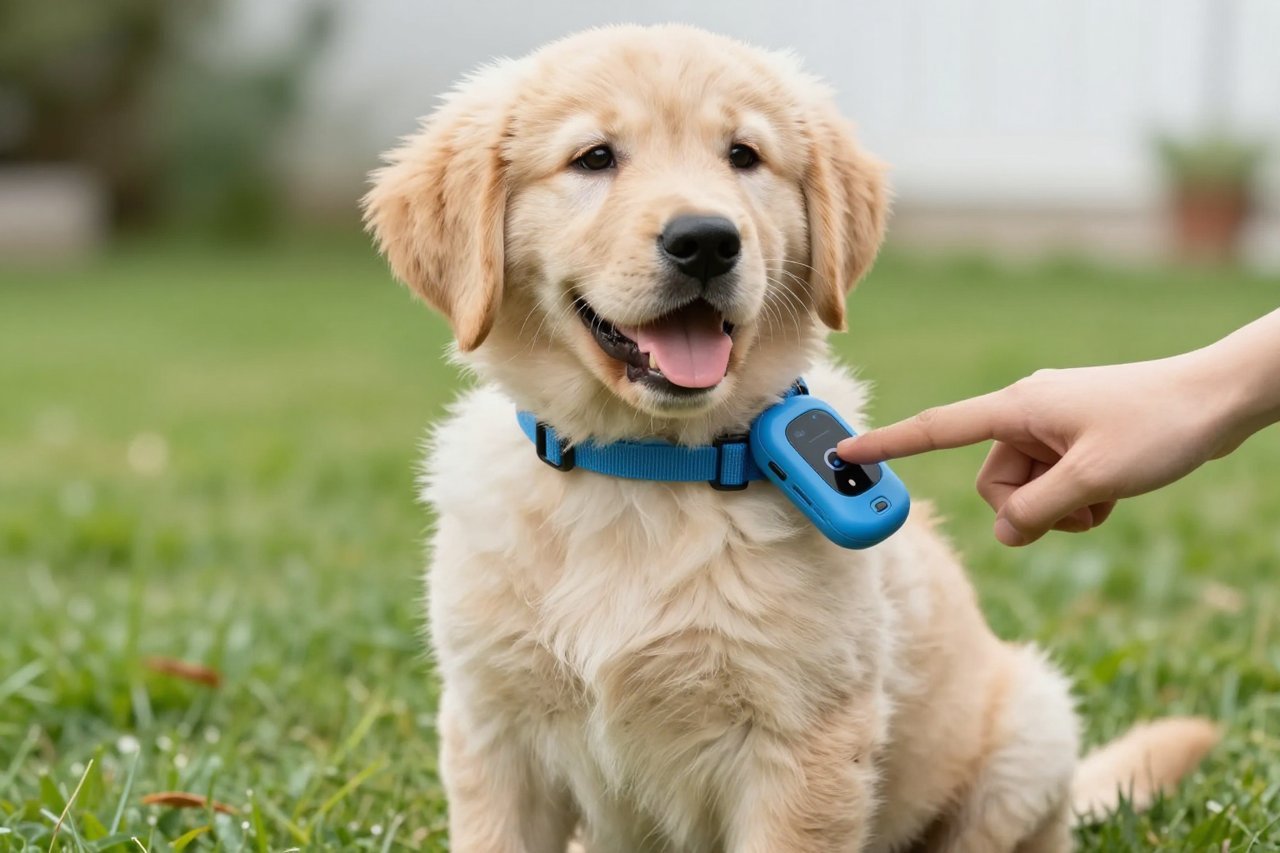
A GPS puppy collar is a lightweight device that hooks onto a regular harness or strap and uses two different networks to show you where your dog is. One is the familiar satellite GPS system that gives your colla’s exact location. The other is a cellular network that sends that location to your phone via an app.
The crucial point: the collar doesn’t know where it is until it receives satellite signals, and it can’t tell you where it is without a nearby cell tower. If you’re somewhere completely off-grid, a GPS collar often becomes a pricey ID tag. In a typical suburb or city, however, it can show your puppy’s position with enough accuracy to locate them in a neighbor’s bushes or behind a shed, usually within about three to five meters.

What your GPS collar is not
It’s not an invisible fence. It doesn’t shock, vibrate, or contain your puppy. It merely tells you where they went. Likewise, it isn’t a two‑way radio or a barking monitor unless the product description specifically says so. Some people confuse GPS collars with “smart” barking collars; those are separate tools with separate jobs.
How a GPS collar is different from a Bluetooth tag and a GPS fence
If you’ve ever bought a smart key finder for your wallet, that little tag uses Bluetooth, not GPS. Bluetooth range is short; in most cases it only works when your puppy is somewhere between 100 and 400 feet away and the phone is also nearby. It’s useful for finding a dog that slipped into a neighbor’s yard, but useless if they’ve made it to the other side of the park. A GPS collar works on a completely different principle, using satellite triangulation and a cellular connection to keep you updated without another point of reference.
Meanwhile, a “GPS fence” usually refers to a system where the receiver stays at home with an antenna, sending alerts when your dog crosses a virtual boundary. It’s not the same as a wearable GPS collar. If you’re torn between these three setups, this real-world comparison of GPS collars, Bluetooth trackers, and GPS fences lays out the practical differences in plain language.
The three pieces of every GPS collar system
Before you shop, understand that a GPS collar isn’t a single gadget. It’s a small system made of three separate pieces: hardware, a service plan, and an app on your phone.
Hardware
This includes the tracker module itself, a strap or collar to attach it, and a charging cable. Hardware weight matters for a puppy. Many trackers weigh between one and three ounces, which is light enough for a six‑month‑old lab but might be bulky for a three‑pound Chihuahua. Look for a counterweight or an adjustable strap that keeps the module from drooping to one side.
Subscription
GPS tracking requires a data connection, which means most companies charge a monthly or yearly fee. Prices range from roughly $5 to $15 a month, with cheaper plans covering limited locations and expensive ones adding lifetime updates or insurance. Some manufacturers hide subscription costs in the fine print, so check that total cost over two years, plus the collar price, before calling anything a bargain.
App
Your phone app is where the magic happens. It’s also the reason you should buy from a company that regularly updates its software. The most reliable apps give you a map view, live movement updates for a few seconds at a time, and alerts when your puppy leaves a safe zone you’ve drawn on a map.
If you’re just starting out, you might prefer a tracker without too many advanced features like heart rate monitoring or activity trends. For a new puppy parent, the basics are simpler: battery life, comfort, and a dependable signal.
What matters specifically when your dog is a puppy
Puppies grow, chew, and lose things. A collar that fits an adult Lab might slip right over a young pup’s head. Before you buy, weigh these factors:
- Strap and harness compatibility: A tracker that clips to a harness is more secure for a fast‑growing neck, and it lets you adjust fit without buying a new collar every month.
- Durability against teeth: Puppies test everything with their mouths. A tracker with a chew‑resistant outer shell or a replaceable band is worth extra money.
- Fast battery recovery: You’ll probably forget to charge it at least once. Look for a model that gets a meaningful charge in under an hour.
- Live vs. location history: For a runaway puppy, you need the collar to refresh every few seconds, not just record where it last was in the morning.
- Size and weight: A good rule is that the collar and tracker together should be less than five percent of the puppy’s body weight.
We go into more of the nuanced issues, like what can silently undermine your cool new gadget, in the guide on GPS puppy collar mistakes people often make.
Battery life tricks for puppy parents
A chip in a collar that runs out of battery at 7 p.m. the very night your puppy hears fireworks is not your friend. Most GPS trackers give you between 24 hours and two weeks of charge, depending on how often they “ping” the satellite. Plan to charge every night during the first few weeks, or buy a second battery pack if your model supports one. Also, turn off live tracking unless you’re actively searching; that alone can double your battery life.
Start before you ever open the front door
Many beginners make the mistake of turning on the collar once and trusting it, then learning later that their neighborhood has a weak signal area at the edge of the yard. Test the system in stages.
First, leave your puppy inside the house, then walk outside and watch the app update on your phone. Next, drop the collar on the grass in various corners of your yard and see if the position appears accurately. Then do a supervised “escape drill” with a friend holding the puppy in a park while you walk a few hundred feet away. The collar should show movement within five seconds of your friend unlocking the harness.
For a friendly, step‑by‑step walkthrough of the actual setup screens, please look at the post on how to set up a GPS puppy collar in real life. That guide covers the parts that usually trip people up, like pairing the module and selecting a safe zone.
House rules come first. The collar is the backup.
The very best GPS collar on the market will not teach your puppy to come when called. It won’t stop a frightened dog from digging under a gate, and it won’t make your backyard escape‑proof. What it does give you is the confidence to let your puppy explore, because you know you can find them quickly if something goes sideways.
Use the tracker in conjunction with crate training and a reliable recall routine. Start by wearing the collar around the house so your puppy gets used to the mild weight. Keep your training bait in your pocket, and let the collar be the safety net behind all those hours of practice. It’s a tool that becomes invaluable on the day your puppy’s instincts outrun your commands.
If you’re evaluating what’s actually necessary, you might also find the practical checklist in the GPS puppy collar essentials for new parents helpful, especially when picking between budget and premium options. And once you’ve used yours for a few weeks, you’ll start to see that the real value isn’t the battery or the satellite; it’s the peace of mind that lets you enjoy the messy, playful puppy months without standing guard over the fence every second.


