
Table of Contents
Ask five people how they hit their daily protein target, and you will get five different answers. One person cooks a tray of chicken thighs. Another blends a shake every morning. Someone else grabs two chocolate-coated bars, and a roommate preps everything on Sunday. They all sound like they are solving the same puzzle, but those meals aren’t interchangeable. A shake is not a slow-cooked stew; a bar is not a plate of salmon, quinoa, and roasted broccoli. High protein meals come in radically different shapes, and choosing the wrong one for your situation is why so many people fall off their goal by Thursday.
The Four Main Ways to Build High Protein Meals
In the wild, you are mostly choosing from four approaches: whole foods cooked from scratch, protein powder blended or baked into food, protein bars and packaged snacks, and batch cooking done on one day. Before picking a winner, compare them along the same lines: time to table, protein per penny, satiety, nutrition, and the chance you will still have the energy to actually make it.
Whole Foods: The Gold Standard, With a Time Tax
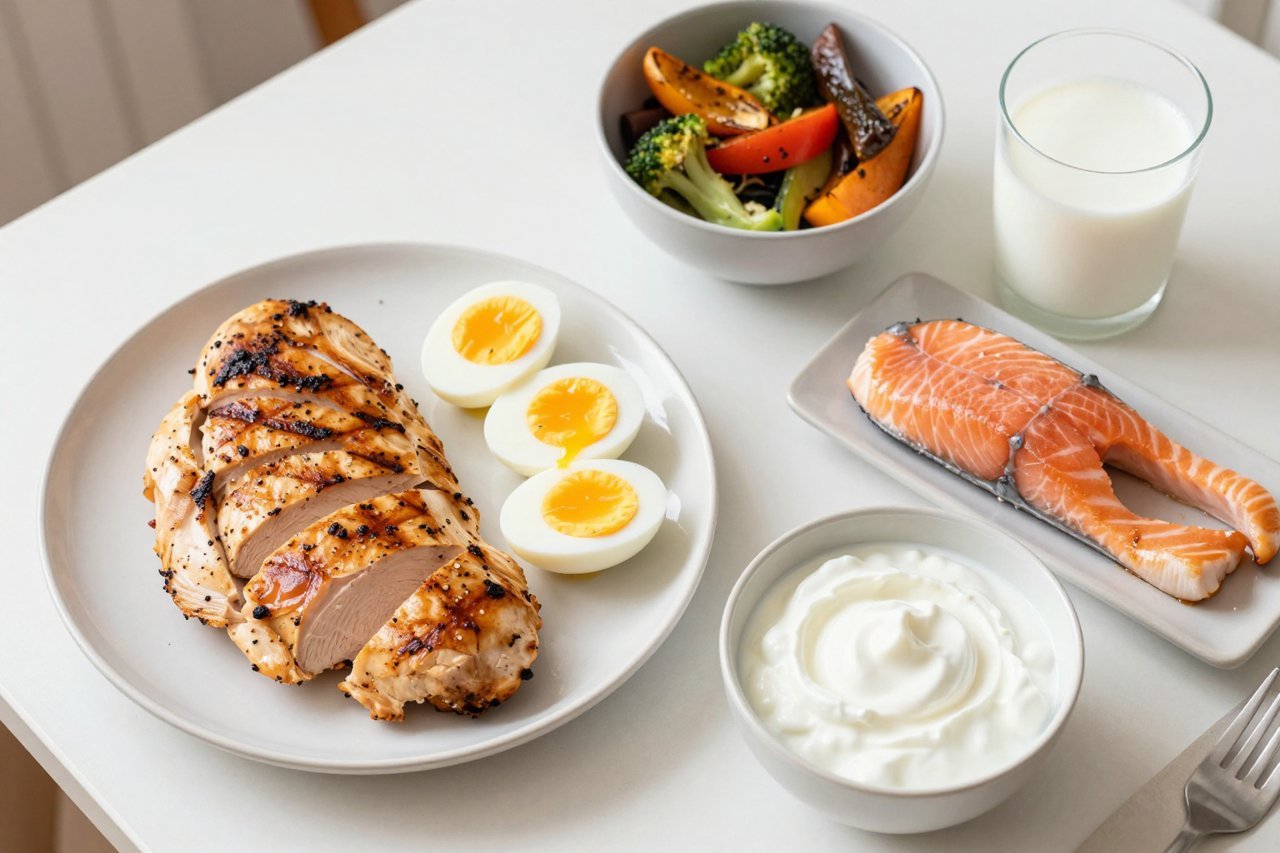
Whole-food meals are the baseline everyone compares everything to. A palm-sized piece of grilled chicken, smoked mackerel on toast, scrambled eggs with spinach, and Greek yogurt with berries are unmatched. They deliver a lot of protein per calorie, a full set of micronutrients, and a level of fullness that no powder replicates. The time tax is the catch. You must buy ingredients, cook, engage a set of pans, and clean up. On a chaotic weekday, that chain often breaks before it starts.
Whole foods are also more forgiving when you prepare them in advance. If you want to move away from sandwiches and cereal, this step-by-step plan for eating more protein-rich foods gives you a simple shopping list and daily structure, starting with the meals you already eat rather than an idealised diet that crumbles on day two.

Protein Powders: Convenience Without the Cheat
Protein powder is not a meal replacement. It is a protein accelerator. A scoop of whey amounts to roughly 25 grams of protein and around 120 calories, a good ratio for a shake or a bowl of overnight oats. The real goal is speed: 30 seconds to prepare, zero cooking, and easy to consume in the car or after a workout. That speed is precisely why it appeals to people with more responsibilities than time.
The downside is that liquid protein leaves a stuffed stomach faster than an emptied one. Chewing is a strong signal for satiety; drinking bypasses part of that. So if you rely on powder for every meal, you will feel hungry an hour later. Powder should sit alongside real food, not replace it. For anyone working to gain muscle rather than simply bump up their daily intake, this guide to high protein meals for muscle gain shows how to combine powder with a plate that still offers texture, fibre, and actual chewing.
Protein Bars and Packaged Snacks: The Emergency Exit
Protein bars are like the spare tyre in your boot. They get you home after a flat, but you would not want to drive on one forever. A decent bar offers 20 grams of protein and requires no fridge, no plate, and no preparation. The payback is a higher price per gram, occasional lumps of sugar and poorly absorbing protein isolates, and a fullness level that comes up short.
Treat bars as insurance, not a building block. If you know an afternoon is going to be a black hole of meetings, a bar beats skipping the meal entirely. But making bars the centre of your diet is how you end up paying $4 for a glorified biscuit. Save the emergency bar for days when it genuinely prevents a bad choice.
Batch Cooking and Meal Prep: The Real-World Compromise
Batch cooking is the way to get whole-food benefits on a modern schedule. Spend 90 minutes on a Sunday roasting a large tray of chicken breast, cooking ground beef, steaming rice, and cutting raw vegetables. Then during the week, you are simply assembling plates from containers that already exist. The method keeps the whole-food satiety and lets you cook far less frequently.
Keep It Simple, Skip the Recipe
You do not need a recipe for meal prep. Just combine a cooked protein with a starch, a vegetable, and a sauce, and the number of combinations is huge. The formula in this 10-minute approach to high protein meals without a recipe does the thinking for you, so you never stand in front of the fridge hoping for inspiration.
If you would rather cook from exact quantities, check out five dinners that hit 40 grams of protein per plate; each recipe is straightforward, uses ingredients you can buy at a normal supermarket, and gives you a reason to look forward to Tuesday’s leftovers.
Choosing the Best Strategy for Your Current Week
Your best bet is to refuse the false choice between these four approaches. Each one has a job. Whole food can anchor your dinner, powder can anchor your post-gym shake, a bar can hold a gap in the car, and meal prep can carry you through the busiest Tuesdays and Wednesdays. Match the method to the day in front of you.
If you eat more than half of your protein from whole food and let powder fill only a 20 to 30 gram gap, you will probably stay satisfied. Cover the rest with prepared meals when you know you are going to be short on time. On the rare day when everything falls apart, a bar is an honest safety net. When you combine the tools, staying consistent is less about motivation and more about removing friction.
The strongest high protein diet is not the one that looks pure on Instagram. It is the one you can keep using without a revolt, a plan where no single method has to be perfect. Choose the technique that fits the next 24 hours, and you are already on the right track.


