
Table of Contents
Start with a trial run before the real trip
You wouldn’t book a client into a week-long conference without a test day, so don’t do that to your dog. Boarding facilities are overwhelming places with new smells, strange dogs barking, and unfamiliar routines. A single night of exposure teaches your dog that this place is safe.
Book a short stay first
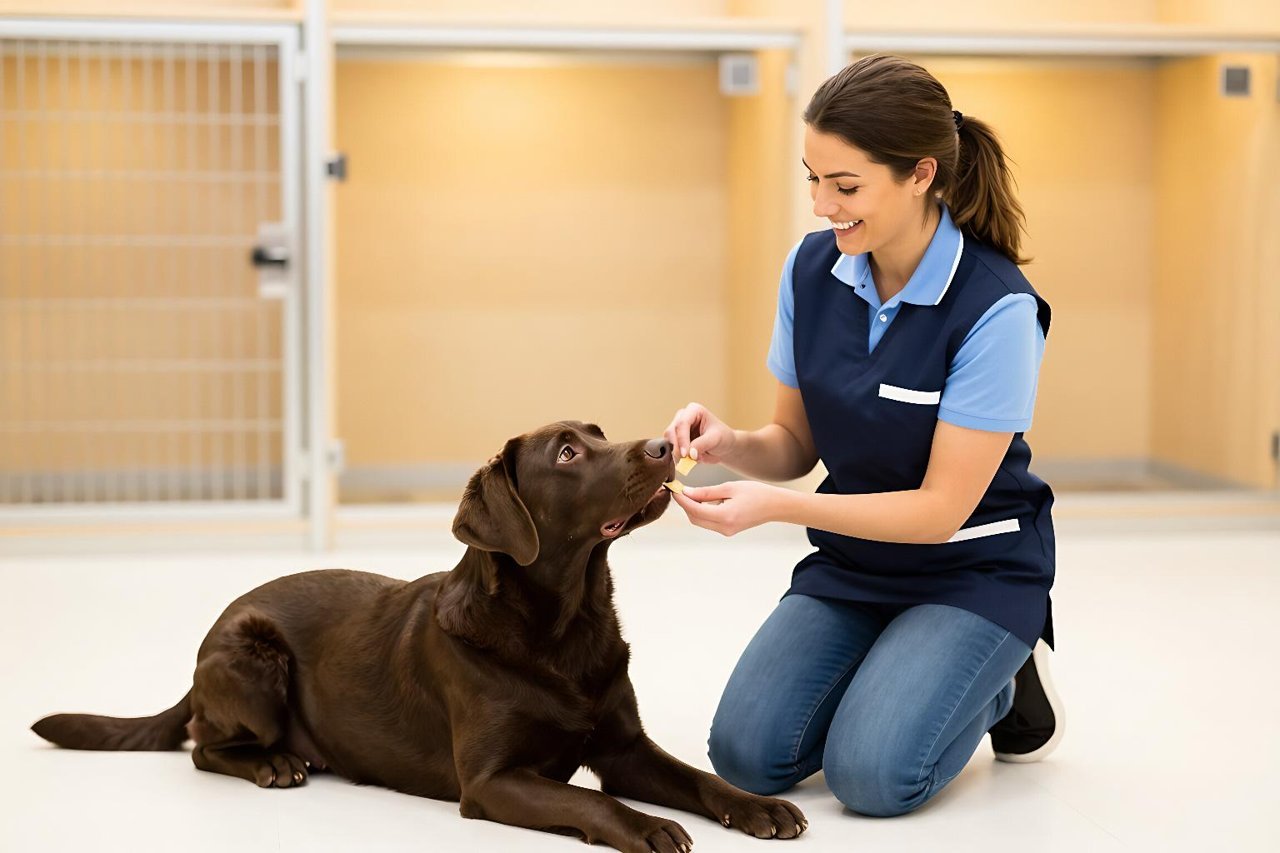
When I first adopted my lab mix, I booked her into a facility for one afternoon of daycare. That cost me $28 and told me everything I needed to know. The staff sent photos, she played well, and she came home exhausted rather than panicked. Then I booked one overnight stay before a long weekend trip. That one night was the real test.
If this is your first time doing any of this, take a look at these 10 tips for your dog’s first boarding experience to know what to expect.
Watch for signs of stress
After the trial stay, watch your dog’s behaviour for the next 24 hours. Did they eat their dinner straight away? Did they sleep through the night? Or were they pacing, hiding, or acting jumpy? A little weariness is normal. A dog that refuses food for two days or seems terrified the next morning is telling you this facility isn’t right. Trust that message.

Get the paperwork done before you pack
Most good boarding kennels require up-to-date vaccinations, including rabies, DHPP, and Bordetella (kennel cough). Some also ask for a fecal test result within the last year. You’ll normally email or upload these when you book, but it’s worth double-checking the exact requirements.
If you’re not 100% sure the place you’ve chosen is a good fit, review the key questions to ask before boarding your dog before you commit. It’ll save you from surprises later.
Then, create a one-page information sheet. Include your vet’s phone number, your contact details, an emergency backup contact who isn’t on the trip with you, your dog’s daily feeding schedule, and any medications. I also add a note about odd behaviours, like ‘Bella hates men in hats’ or ‘Bailey needs his dinner in a puzzle bowl or he wolves it down.’ These small details make a huge difference.
Pack a bag that keeps familiar scents close
You don’t need to bring your entire house. In fact, bringing too much can stress out the staff and clutter their workspace. My dog’s boarding bag contains exactly five things: a small bag of her regular kibble, her favourite soft toy, a cheap cotton blanket, a packet of treats for the staff to use, and her medication.
- Food: pre-portion each meal in a labelled zip-lock bag. Staff don’t have time to measure from a large sack.
- Medication: in the original bottle, plus a written schedule.
- Comfort items: one toy and one blanket with your scent on it. Skip anything you’d be heartbroken to lose.
- Contact details: a laminated emergency card (even if they already have your info on file).
- A spare lead and collar, in case theirs gets damaged.
Notice what’s not there: a bowl (facilities have their own), a huge bed (your dog might shred it from anxiety), and food they’ve never eaten before. Changing food suddenly upsets most dogs’ stomachs, so stick to their usual brand.
Master the drop-off (and don’t linger)
Drop-off is the moment that makes or breaks the whole stay. I learned this the hard way. With my first dog, I stood at the kennel door delivering a tearful speech for five minutes. My dog picked up on my anxiety and started trembling. The staff member finally took her from my arms and said, ‘The more you hang around, the harder this is. Just go.’ She was right.
The best move is to show up with a dog that’s already had a good walk and a potty break. Hand the leash to staff, give your dog a quick treat, say ‘Bye, see you soon’ in a cheerful voice, and walk out without looking back. Practise a calm exit even if you’re the one feeling like a wreck. Dogs read your body language, not your words.
Know when boarding isn’t the right call for your dog
Dog boarding works brilliantly for many dogs, but not all. If your dog is reactive around other dogs, very old, or recovering from surgery, being crammed into a kennel environment might cause more harm than good. I have a senior terrier with arthritis, and I don’t board her. Instead, I hire a house sitter.
Check out our side-by-side comparison of pet sitting versus dog boarding to weigh the options. And if you’d rather keep your dog at home, our guide on how to find a dog sitter you’ll trust is a good starting point.
The pick-up isn’t the end of the process
When you collect your dog, expect a greeting that suggests you’ve been gone for a decade. They may jump, cry, or act aloof. That’s all normal. Give them a quiet ride home, offer small sips of water, and feed a light meal. A full bowl right away can cause vomiting after a stressful stay.
Over the next 24 hours, monitor them for signs of illness: diarrhoea, coughing, or a lack of appetite. Dogs can pick up respiratory bugs at boarding facilities even with vaccinations, so don’t hesitate to ring your vet if anything seems off. Also let the boarding facility know how they did. That feedback helps them improve and helps you decide whether to book again.
For our lab mix, the first pick-up was chaotic and loud. By the third, she came out floppy-tailed, gave me a lick, and fell asleep in the car. That’s the sign that the whole system works. Your goal is to keep refining the process until the experience is as easy for your dog as it is for you.


