
Table of Contents
Walking down the skincare aisle, you’ll find eye creams that promise to erase dark circles, others that pump in caffeine, some that lean on retinol, and a dozen that drop the word “peptide” like a magic spell. The truth is, there is no single best eye cream for everyone. But there is one that’s best for you—and you can find it in about seven practical steps. Whether you’re starting from scratch or just want to stop wasting money on jars that don’t deliver, this method will help you pinpoint what your skin actually needs.
If you’d rather begin by looking at proven options, the best eye creams for 2024 list is a handy starting point. But if you want to truly understand why you’re buying what you’re buying, read on.
Step 1: Name Your Number One Under-Eye Concern
Before you read a single ingredient label, you need to identify the problem. Different concerns demand completely different ingredient families. Grab a mirror and look under natural light.
- Dark circles: If the shadows look bluish-purple, they’re likely vascular—blood vessels showing through thin skin. Brownish shadows usually mean pigment, more common in deeper skin tones.
- Puffiness: If you wake up with swollen lids that settle later in the day, that’s fluid retention. It’s often worse after salty dinners or a poor night’s sleep.
- Fine lines and crepiness: If you see wrinkles that disappear when you gently pull the skin taut, those are dynamic lines. Textured lines that stay even when the skin is stretched are signs of collagen loss.
A quick reference like the best eye cream for every under-eye concern in 2024 can help you match the visual clues to the right formula. But don’t jump to buying yet—you still have to nail the details.

Step 2: Match Ingredients to the Concern You Just Named
Once you’ve identified your target, look at the ingredient list like you’re reading a prescription. Here’s what the real research points to:
- For dark circles, caffeine (at 3–5%) constricts blood vessels and reduces shadows. Vitamin K and niacinamide help brighten, and a bit of vitamin C tackles pigment. A deep dive into eye creams for dark circles will give you more specific formulas.
- For puffiness, caffeine is still a friend, but peptides are the workhorses. They stimulate circulation and firm the skin over time. Cold-based applicators also help constrict vessels on contact.
- For fine lines, retinol (in tiny doses, typically 0.1–0.2% for the eye area) stimulates collagen. Peptides like Matrixyl and copper peptides help rebuild structure, and hyaluronic acid smooths and plumps lines instantly by holding water.
Pay attention to percentages. A caffeine eye cream with 0.5% caffeine won’t do much; you want it higher up the list. Retinol near the bottom? Probably a marketing sprinkle. If you’re new to active ingredients, see how the 5-step method for finding the best wrinkle cream applies a similar logic to the whole face.
Step 3: Pick the Right Texture and Packaging
You could have the perfect ingredients in a jar you can’t open without a lever. Eye products come in several textures, and the right one is a matter of your skin type and your schedule.
- Gels and gel-creams: These absorb quickly, sit beautifully under makeup, and feel cooling in the morning. They’re ideal for oily skin and for puffiness if they contain caffeine.
- Rich creams: Heavier formulas work better at night, especially if you have dry skin or fine lines. They feel luxurious but can take a few minutes to sink in.
- Serums: Very light, often with high concentrations. They’re a good layering piece under moisturizer but might not seal in hydration on dry skin.
Packaging matters more than people think. Retinol and vitamin C degrade with light and oxygen. A pump or tube keeps them stable; a wide-mouth jar lets air in every time it’s opened. Also, if you’re prone to milia (those tiny white bumps), avoid creamy, occlusive formulas with heavy shea butter or coconut oil. A gel formula is your friend.
Step 4: Do a Patch Test Before You Get Over-Excited
The skin around your eyes is about 40% thinner than the rest of your face, so it reacts faster and more visibly. This is not the place to be brave. Patch test first.
Take a tiny drop of the eye cream and apply it to the inside of your forearm or behind your ear. Wait 24 hours. If there’s no redness, itching, or bumps, try a small amount under one eye only—not both—for two or three days. This is the same general protocol used in skincare testing, and it applies just as much to eye creams as it does to acne spot treatments. Yes, your one eye will look lopsided for a moment, but it’s better than a nasty rash on both.
Step 5: Use It Correctly (Because Half the Results Are in the Technique)
Even the best eye cream will fail you if you’re slathering it on like you’re moisturizing your legs. Here’s the exact method:
- Use a pea-sized amount total for both eyes. That’s roughly the size of a rice grain–not a chickpea.
- Warm it between your ring fingers. Your ring finger has the lightest touch, so it’s ideal for fragile tissue.
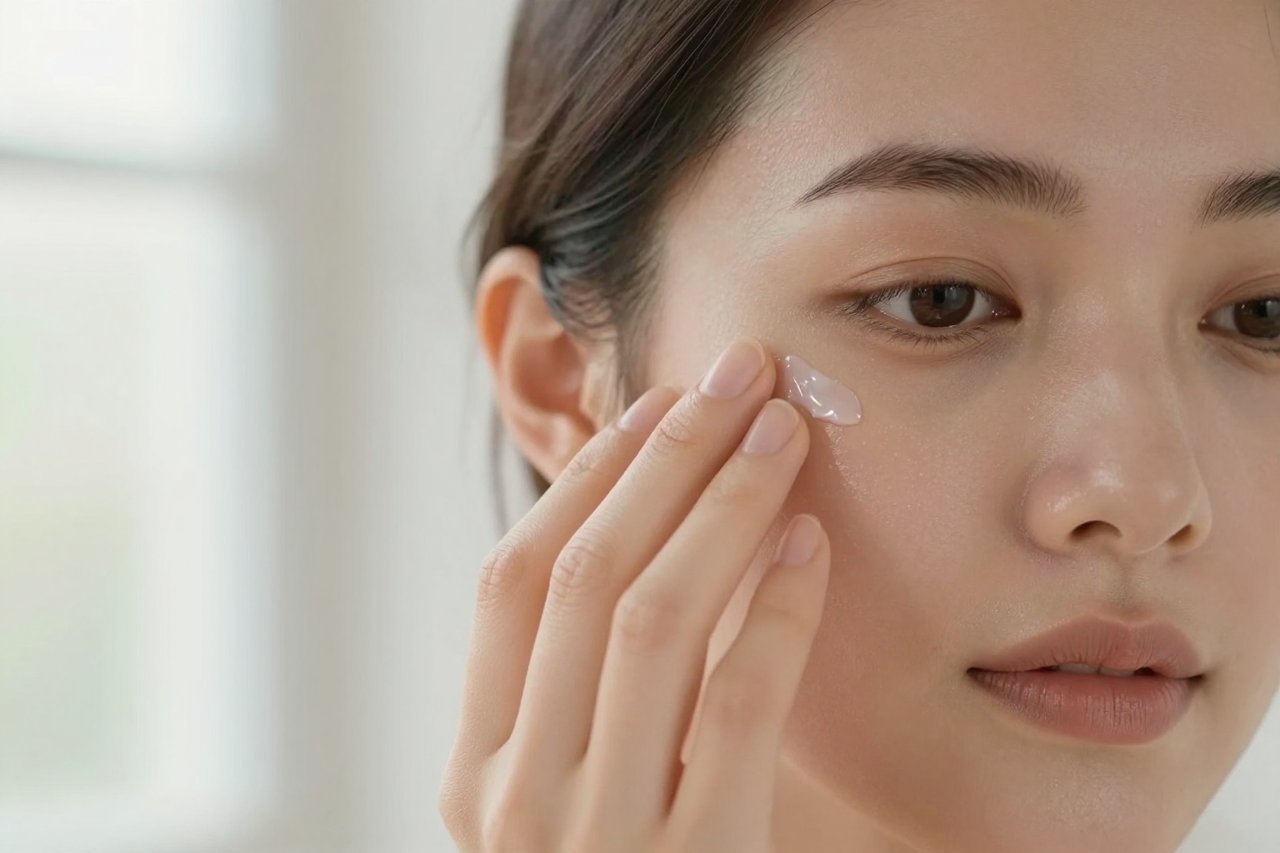
- Press (don’t rub) the product along your orbital bone, moving from the inner corner outward. Keep it at least a few millimetres away from your waterline.
- Apply it after serums, before moisturizers—unless the eye cream is thick and acts like a final barrier. Wait two to three minutes between layers so each one soaks in.
If you’re using a roller-ball applicator, be gentle. The metal or ceramic tip helps depuff, but pressing too hard can tug the skin. And never pull your finger edge taut while applying; that’s precisely how you train the skin to wrinkle.
Step 6: Give It Time and Track Progress Like a Scientist
Most eye creams need at least four weeks to produce visible changes. Retinol formulas may take eight to twelve. That’s not your imagination; skin turnover and collagen production are slow.
Here’s how to know if it’s actually working: Take a photo every Sunday morning in the same room, under the same light, with your face at the same angle. Keep the camera at eye level, no filters. Sometimes, subtle changes in fine lines don’t show up in the mirror, but they do in a side-by-side comparison.
If you’re using a peptide-based formula, you’ll usually notice smoother texture and less puffiness within a month. For ingredients like these, a curated list can help you skip the flops—check out these 7 best peptide eye creams to see what’s actually worth trying.
Step 7: Pair It With the Lifestyle Habits That Actually Move the Needle
No eye cream works in isolation. If you’re eating a massive salt-heavy meal at 9 PM, you’ll wake up puffy no matter how much caffeine is in your cream. If you never wear sunglasses, UV exposure will keep breaking down collagen, undoing your peptide efforts.
Here are the habits that genuinely amplify eye creams:
- Sleep on your back if you can. Sleeping face-down squeezes your under-eyes and accelerates wrinkles.
- Stay hydrated, especially if you drink coffee—for each cup, add a glass of water.
- Eat fewer than 2,000 mg of sodium daily if puffiness is your concern. Watch out for hidden salt in bread and sauces.
- Wear sunglasses that wrap around, and reapply sunscreen around the eye area carefully with a mineral filter to avoid stinging.
- Give up the 2 AM phone scroll. Built-up fluid literally pools under your eyes when you’re in a high-salt, low-sleep cycle.
Once you’ve narrowed things down to the right ingredient, texture, and application, you can stop guessing. The best eye cream isn’t the one with the fanciest ad campaign or the highest price tag. It’s the one you look forward to using every morning and night because it actually works for your specific skin.
Start with your main concern. Use the ingredient list as your map. Test it, apply it methodically, and give it a good solid month on your nightstand before you judge it. You’ve got a method now—use it.


