
Table of Contents
Knowing which foods are high in protein is only half the battle. The other half is figuring out how much to eat and how to turn them into meals you’ll actually want to eat. So let’s stop staring at lists and start building plates. This step-by-step guide walks you through the seven highest protein foods (yes, we’re counting down), then shows you exactly how to use them to hit your daily target.
Step 1: Set Your Protein Number
Before you load up your fork, calculate how much protein you actually need. A simple starting point: multiply your bodyweight in pounds by 0.7 to 1. For a 160-pound person, that’s 112–160 grams per day. Athletes and anybody doing serious strength training should aim for the higher end. Write that number down, and divide it by three to five meals. That gives you a per-meal target. If you need 150 grams across four meals, that’s roughly 37 to 40 grams per meal.
This isn’t about “clean eating” perfection — it’s about giving your body a steady supply of the building blocks it uses for muscle repair and recovery. Once you know the target, the 7 highest protein foods to add to your plate become the simplest way to get there.
Step 2: Meet the 7 Highest Protein Foods
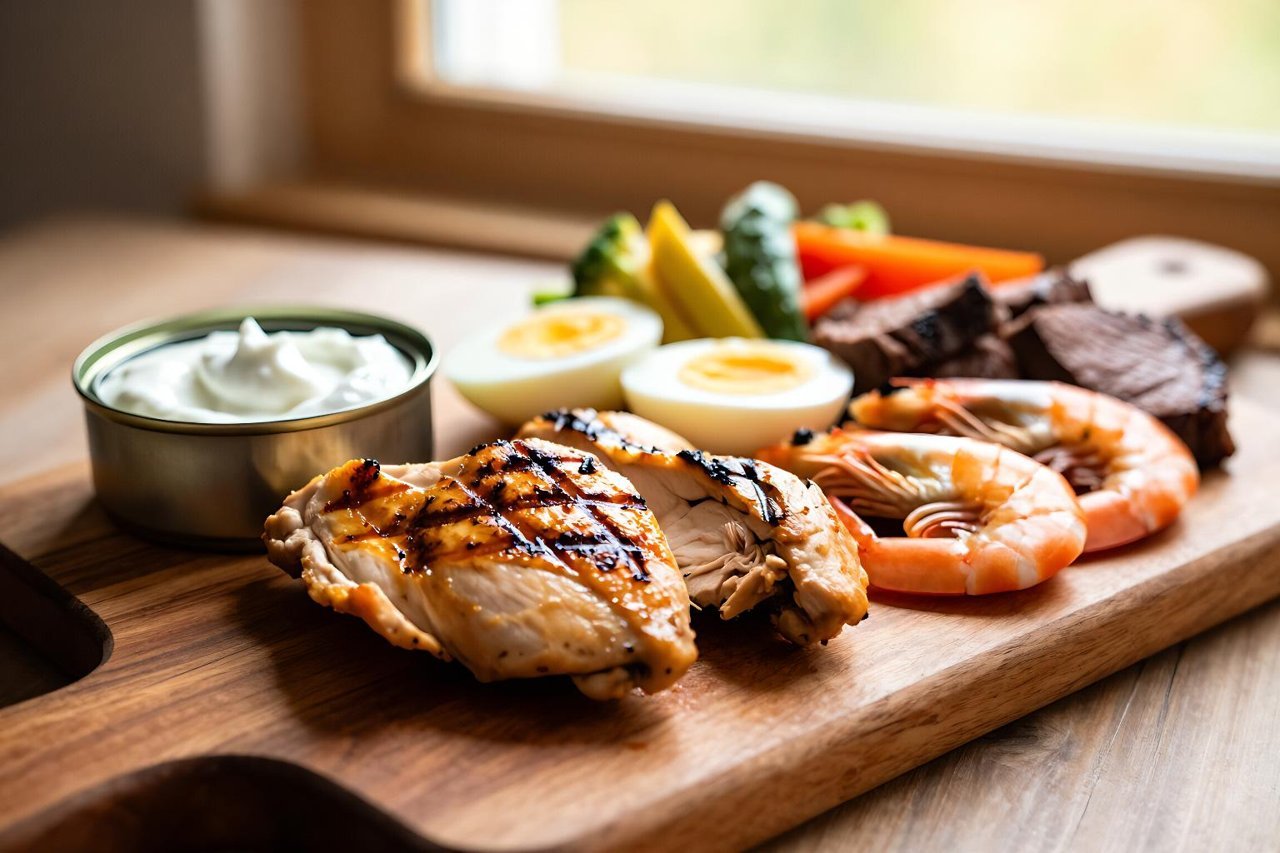
These seven foods — chicken breast, turkey breast, lean beef, tuna, shrimp, eggs, and Greek yogurt — are your building blocks. They’re not the only protein sources out there, but they’re the most practical and versatile for everyday cooking. Here’s what each one offers, based on typical cooked or prepared serving sizes.

Chicken Breast
A 120-gram cooked chicken breast packs about 37 grams of protein. It’s lean, neutral-tasting, and takes less than 15 minutes to grill or bake. You can slice it over salads, dice it into stir-fries, or simply eat it with a side of vegetables.
Turkey Breast
Ground turkey or turkey breast delivers roughly 34 grams in a 120-gram serving. It’s a great swap for beef in chili, taco filling, or meatballs. The flavour is slightly richer than chicken, which helps when you’re eating high-protein meals day after day.
Lean Beef
Top sirloin or 93% lean ground beef gives you about 33 grams per 120-gram cooked portion. Beef is also high in iron and zinc, two nutrients that support energy and immunity. Keep portions in check and pair it with plenty of vegetables.
Tuna
One 150-gram can of drained tuna has around 32 grams of protein. It’s ready to eat straight from the can, which makes it perfect for lunches when you don’t feel like cooking. Mix with olive oil, lemon juice, and a little paprika instead of heavy mayonnaise to keep it light.
Shrimp
170 grams of cooked shrimp (about 10–12 jumbo shrimp) gives you 30 grams of protein. Shrimp cook in two or three minutes, making them the quickest protein on this list. Toss them into pasta, rice bowls, or a hot skillet with garlic and olive oil.
Eggs
Three large eggs provide about 18 grams of protein. They’re cheap, shelf-stable, and incredibly flexible. Boil a batch at the start of the week to add to salads, snacks, or a quick breakfast sandwich.
Greek Yogurt
One 200-gram cup of plain Greek yogurt contains about 20 grams of protein. Choose a plain (2% or full-fat) option with no added sugar. Use it as a smoothie base, a sour cream substitute, or a topping for savoury bowls.
- Chicken breast: 37g per 120g serving
- Turkey breast: 34g per 120g serving
- Lean beef: 33g per 120g serving
- Tuna: 32g per 150g can
- Shrimp: 30g per 170g cooked
- Greek yogurt: 20g per 200g cup
- Eggs: 18g per 3 large eggs
If you’re looking for more ideas on feeling full and satisfied, these are also some of the top 7 highest protein foods to keep you full and fueled.
Step 3: Use the One-Palm Rule for Simple Portions
Forget weighing everything down to the gram. A practical shortcut is to use your palm as a portion guide. For most adults, a palm-sized portion of meat, poultry, or fish weighs about 100–120 grams and delivers 25–35 grams of protein. For something like shrimp, a palm-full works out to roughly 10 pieces.
The plate formula is simple: one palm of protein, one fist of vegetables, and one cupped hand of a carb like rice, potatoes, or fruit. That gives you a balanced meal without a food scale. If you’re following a heart-healthy eating pattern, choosing lean cuts from this list is a smart first move — you can learn more in this science-backed grocery guide for heart health.
Step 4: Build a Sample High-Protein Day
Now let’s put everything together with a sample day. This plan gets you to roughly 150 grams of protein using several of the foods above. You don’t need to eat all seven in one day — rotate them across the week to keep things interesting.
Breakfast: Greek Yogurt + Eggs
Have 2 scrambled eggs (12g) with a 170g serving of Greek yogurt (17g). That’s around 29 grams to start your day. Add berries or a sprinkle of cinnamon for flavour without protein loss.
Lunch: Tuna Salad Wraps
Mix one 150g can of tuna (32g) with lemon, olive oil, and sliced cucumber. Wrap it in a whole-grain tortilla or serve it over a bed of greens. Lunch total: about 32 grams.
Dinner: Grilled Chicken Breast + Lean Beef
For dinner, grill a 120g chicken breast (37g) and cook 100g of lean ground beef (27g) as a side. Add roasted broccoli and a small baked potato. That’s 64 grams in one meal, bringing your day to roughly 125 grams.
Snack: Shrimp Cocktail
Eight jumbo shrimp (about 24g protein) with a little cocktail sauce makes a satisfying snack. That puts you at 149 grams for the day — right on target.
This is a flexible framework. Swap the chicken for turkey breast, the tuna for a steak, or the shrimp for an extra egg or two. The top 7 foods for longevity are built around this same approach: whole, nutrient-dense foods eaten in consistent portions.


