
Table of Contents
Start with the week you actually have
A week of decent meals usually starts with a blunt question: what does this week look like? Not the idealized week where you cook every night and lunch is always homemade. The real one, with late meetings, gym bags, and a Thursday that always goes sideways.
Open your calendar before you choose recipes. If Tuesday ends at 7:30, that is not the night for a 45-minute risotto. Put a 15-minute meal there, or plan leftovers. If Sunday is quiet, use it for a bigger cook. Planning nutritious meals for the week works best when it bends around your schedule instead of pretending it doesn’t exist.
Most people don’t need seven unique dinners. Aim for three or four dinners, plus one ‘flex’ night for leftovers or something from the freezer. Breakfast and lunch can run on a two-option rotation: yogurt with fruit and nuts, eggs on toast, batch soup, or a big grain bowl. Fewer decisions, better follow-through.
If strict plans have failed you before, it’s usually not a willpower issue. A meal plan that actually works leaves space for real life, repeats meals you like, and doesn’t require a new ingredient every day.

Build meals from components, not recipes
Recipe-first planning gets expensive and exhausting. Component planning is faster. Pick a protein, a vegetable or two, a starch, and something that adds flavor or fat. Mix and match through the week.
- Protein: chicken thighs, eggs, tofu, lentils, Greek yogurt, canned tuna, beans.
- Produce: broccoli, spinach, peppers, carrots, tomatoes, frozen peas.
- Starch: rice, potatoes, pasta, couscous, tortillas, bread.
- Flavor and fat: olive oil, tahini, pesto, salsa, lemon, cheese, avocado.
A Tuesday plate might be roast chicken, couscous, roasted peppers, and lemony yogurt. Wednesday could be lentils, spinach, rice, and a spoon of pesto. Different meals, same shopping list. This is also the easiest way to understand what makes a nutritionally balanced meal: enough protein to satisfy you, fiber-rich carbohydrates, vegetables, and some fat for flavor and staying power.
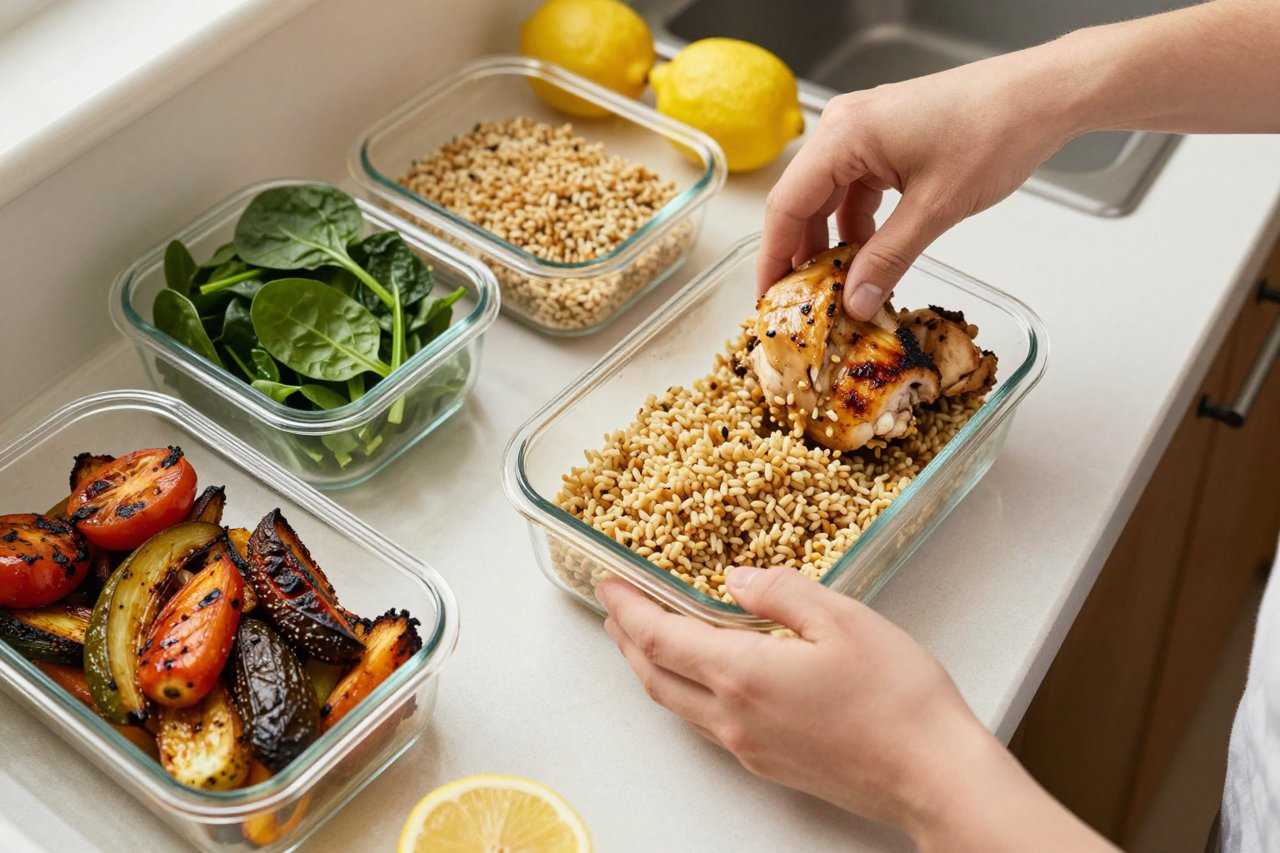
Keep one or two ‘hero’ components in the fridge. A tray of roasted vegetables and a pot of grains can become a bowl, a side, or a packed lunch. Cook once, eat three ways. That is not boring; it is efficient.
Shop with a short, boring list
The grocery store is where loose plans collapse. A list built from your actual meals keeps you focused. Check the fridge first. You probably already have rice, pasta, oil, and three half-used jars of something.
Write the list in store order: produce, protein, dairy, pantry, frozen. Add quantities, not just names. ‘Spinach’ is vague. ‘2 bags spinach: one for eggs, one for soup’ is a plan.
Buy for the meals you will genuinely cook. If you buy three bunches of kale with good intentions and eat one, you haven’t saved money. You’ve composted it. People who eat healthy on a budget tend to repeat ingredients across meals, use frozen vegetables, and keep a few cheap protein sources on hand. Canned beans, eggs, oats, and frozen peas do a lot of quiet work.
A sample short list
For four dinners and four lunches: chicken thighs, eggs, canned chickpeas, Greek yogurt, spinach, broccoli, peppers, onions, carrots, rice, tortillas, potatoes, lemons, tahini, and frozen peas. That’s not glamorous. It is flexible, affordable, and covers a lot of meals.
Do a 45-minute prep session, not a Sunday marathon
You do not need matching containers and a full day in the kitchen. A short prep session handles the friction points: washing produce, cooking a grain, roasting a tray of vegetables, and making one protein. Set a timer. When it goes off, stop.
Here’s a realistic order: oven on at 220°C. Chicken thighs or tofu on one tray. Chopped peppers, onions, and broccoli on another. Rice or potatoes on the stove. While those cook, wash spinach, mix a yogurt-lemon sauce, and boil six eggs. In 45 minutes you have the start of several meals and no heroic effort.
Leave some components plain. Roasted vegetables can go into a curry on Monday, a grain bowl on Tuesday, and an omelette on Wednesday. Plain rice becomes fried rice or a quick soup. Cooked chicken can be sliced cold for lunch or warmed in a sauce. If you need faster options, these high-protein meals in 10 minutes are a useful backup for the nights when prep didn’t happen.
Make room for leftovers and a night off
Plan at least one leftover night. Cook a double batch of chili, soup, or traybake on Sunday or Monday, then eat it again on Wednesday. That isn’t laziness; it’s a buffer. If the week goes well, you have lunch. If it falls apart, you have dinner.
Also plan a ‘whatever’ night. Takeout, freezer pizza with a bag of salad, eggs on toast. A weekly plan that has no slack becomes fragile. One unplanned meal doesn’t ruin the week. Five rigid meals and a meltdown does more damage.
If you follow a specific pattern, keep it flexible. Even a well-designed Mediterranean diet meal plan can fail when it’s too strict, too repetitive, or built on ingredients you don’t actually enjoy. The best plan is the one you can repeat on a random Wednesday.
Check the nutrition without turning it into homework
Nutrition doesn’t need a spreadsheet. Use a few simple checks. Does each main meal have a palm-sized portion of protein? Is there produce on the plate, even frozen? Are you getting fiber from beans, whole grains, fruit, or vegetables? Is there enough fat to make it taste good and keep you full?
That is most of it. A plate of pasta with tomato sauce and a little cheese is fine. Add lentils or chicken and a handful of spinach and it becomes sturdier. Toast is fine. Add eggs and fruit and it lasts longer. Eating for longevity is not about chasing a single superfood; it’s about repeating a pattern that includes plants, protein, and meals you don’t dread.
Review on Friday, not Sunday
Spend five minutes on Friday or Saturday reviewing the week. What did you actually eat? What went soft in the fridge? Which meal did you skip because it felt like work? Keep the wins and change one thing. Maybe you need two lunch options, not four. Maybe chopping vegetables on Sunday is useless because you’d rather do it on Tuesday. Maybe the chicken thighs were better than the fish you never cooked.
Write next week’s plan from that evidence. Keep three meals in rotation, add one new recipe, and leave two nights open. Planning nutritious meals for the week gets easier when you stop treating it as a test of discipline and start treating it as a small system you adjust. The goal is not a perfect fridge. It’s a Tuesday dinner that happens without a takeout app and a decision spiral.


