
Table of Contents
Most meal plans fail not because you lack discipline, but because they’re built like a prison sentence. The same boring chicken and broccoli every day? That works for about four days. Then you cave, order pizza, and tell yourself you’ll start again Monday.
The truth is, a meal plan works best when it works for you. It should be a flexible framework that makes decisions easier — not a rigid script that steals your joy. In this guide, we’ll walk through the exact steps to build a meal plan that fits your goals, your schedule, and your wallet. You’ll learn how to create templates, prep smart, and adjust on the fly, so you can actually stick with it long-term.
A Meal Plan Is a Framework, Not a Sentence
The most common mistake people make is treating a meal plan like a contract. They write out seven days of breakfasts, lunches, dinners, and snacks, buy a specific list of groceries, and then life happens. A last-minute meeting kills Tuesday’s dinner. The grocery store is out of the salmon you planned for Thursday. You’re just not feeling the quinoa salad.
A sustainable meal plan is built on a simpler idea: you decide your meals by category, not by specific ingredients. You pick a few rotating breakfasts, lunches, and dinners you know you’ll enjoy. Then you use your plan as a shortcut to decide what to cook tonight, not as a test of willpower.

Step 1: Get Clear on Your “Why”
Before you start choosing recipes, ask yourself what you want this meal plan to do. Are you trying to lose body fat? Build muscle? Manage a cholesterol issue? You might still be eating the same foods, but your priorities and portion sizes will shift.
Your goal determines your approach. If you want to build lean mass, you’ll need to hit a daily protein target with every meal. The Ultimate Guide to High Protein Meals for Muscle Gain (That Actually Taste Good) breaks down how to do that without surviving on dry chicken breast. If your goal is fat loss, you’ll want to focus on volume and satiety. The 10 Best Healthy Meals for Weight Loss are proof that you can eat a lot, feel full, and still be in a healthy calorie range.
Step 2: Start With Templates, Not a Perfect Menu
A template is a formula you can repeat with endless variations. Eggs + toast + fruit is a breakfast template. A protein + roasted veggies + a carb is a dinner template. When you have three or four templates per meal, you stop needing to search for a new recipe every night.
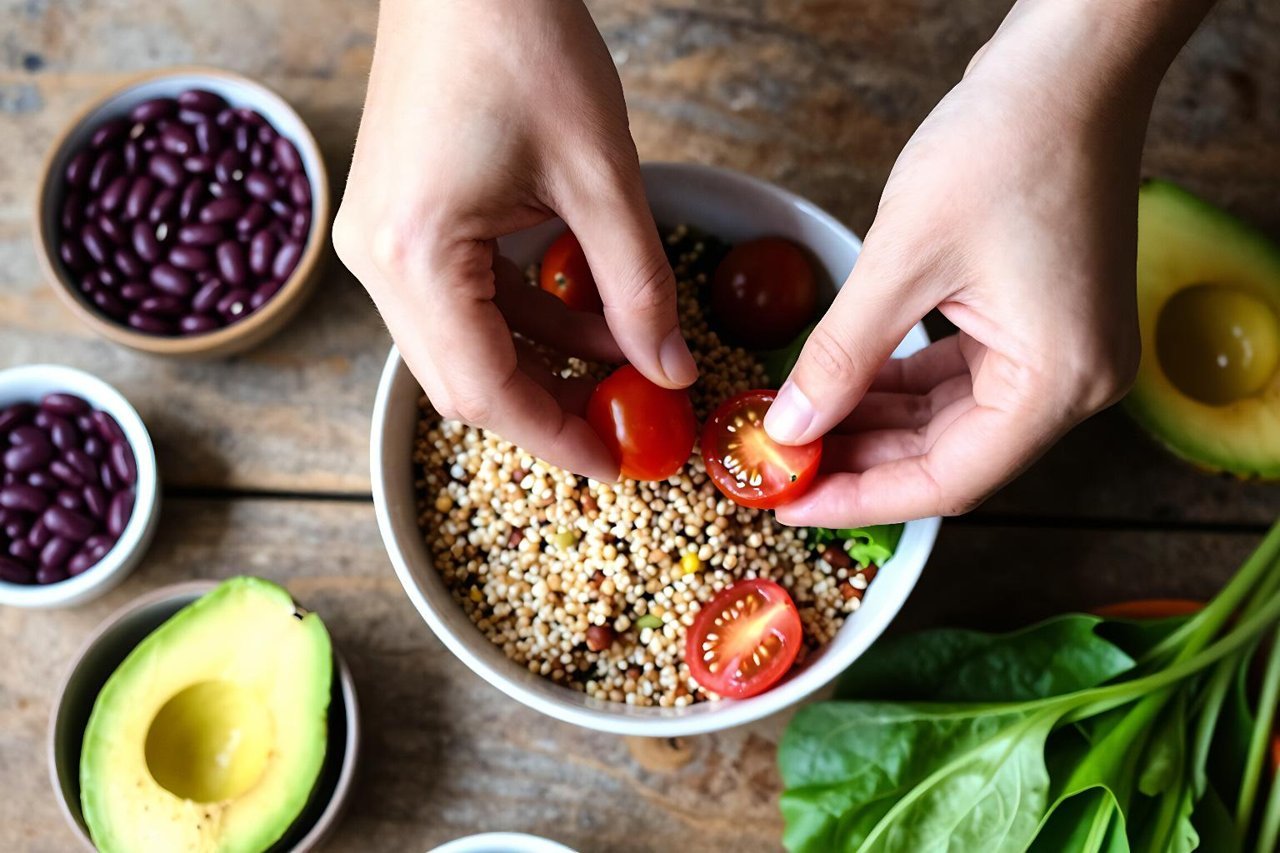
Here’s an example. For lunch, keep it simple: a grain bowl with beans, a crunchy vegetable, and a tahini or vinaigrette dressing. Swap the beans for lentils, the vegetables for whatever’s in season, and the sauce for pesto on a Tuesday. That’s five different lunches without any new planning.
The same logic works for dinner. You might cycle between stir-fry, sheet-pan dinner, and a soup night. That’s three templates that can handle a rotating cast of proteins and vegetables.
Step 3: Stock the Right Staples
You can’t improvise a meal plan with an empty pantry. But you also don’t need to stock forty exotic ingredients. Here are ten staples that make almost any template work:
- Cooked or canned beans and lentils
- Eggs
- Frozen vegetables (broccoli, spinach, peas)
- Quinoa or rice
- Oats
- Canned tuna or chicken
- Plain Greek yogurt
- Nut butter
- Olive oil and vinegar
- Herbs and spices that you actually like
With those in your kitchen, you’re never more than fifteen minutes away from a decent meal. That alone will keep you on track more than any detailed plan.
Step 4: Prep, but Keep It Real
Meal prep doesn’t have to be a Sunday-in-the-kitchen photo shoot. It can be twenty minutes on a Wednesday, making a pot of rice and something to throw on top.
The key is to prep components, not full meals. A batch of roasted sweet potatoes. A big container of protein. A jar of dressing. When you have those in the fridge, assembling a meal is faster than leaving the house to buy one.
Don’t overcomplicate it. Start by prepping one or two things per week, and build the habit from there.
Step 5: Build in Flexibility
Plans that forbid everything collapse by Friday night. You’re going to have the odd restaurant meal, a party, or a day when you just want takeout. Your meal plan should account for that.
Allow yourself one or two ‘flexible’ meals each week. It could be a set night for a burger, or a blank space on the calendar. When you know that space exists, you won’t feel deprived, and you’ll actually follow the plan more closely.
You can also use this strategy on a smaller scale. If you’re not hungry for a heavy lunch, swap it for a lighter version. Your plan is a guide, not a master.
A Sample Day on a Simple Meal Plan
Let’s see what this looks like in practice. Here’s a realistic day that uses templates and staples, without anyone levitating:
Breakfast
Greek yogurt with berries, a drizzle of honey, and a spoonful of nut butter. It’s high in protein, takes two minutes, and keeps you full until lunch.
Lunch
A grain bowl with quinoa, roasted sweet potatoes, chickpeas, spinach, and a lemon-tahini dressing. If you’ve already cooked the quinoa and sweet potatoes, you just assemble.
Snack
Apple slices with peanut butter, or a handful of almonds with a string cheese.
Dinner
Pan-seared salmon with a side of steamed broccoli and half a baked potato. It’s a proper meal that takes twenty minutes, but you could also use the same template with chicken or tofu.
This isn’t a gourmet meal program, but that’s the point. It’s easy, repeatable, and nutritious.
Meal Plans for Specific Health Goals
Sometimes you need more than a general framework. If you’re managing a condition like high blood pressure or fatty liver, the food choices themselves matter more than any template. That doesn’t mean meal planning gets harder — it just gets more specific.
For example, a heart-friendly plan emphasizes potassium-rich foods and limits sodium. Our Foods for High Blood Pressure guide gives you a practical list of ingredients and swaps without sacrificing flavor. If your doctor has mentioned fatty liver, the Foods for Fatty Liver guide walks you through what to emphasize, like leafy greens, whole grains, and lean proteins, and what to avoid, like sugary drinks and processed snacks.
If you’re feeling overwhelmed by the whole topic, step back. Healthy Eating Without the Overwhelm: A Practical Guide to Fueling Your Body cuts through the noise with a simple, sustainable approach that works alongside any meal plan. It’s a good reminder that the goal isn’t a perfect plan — it’s a better one than yesterday.


