
Table of Contents
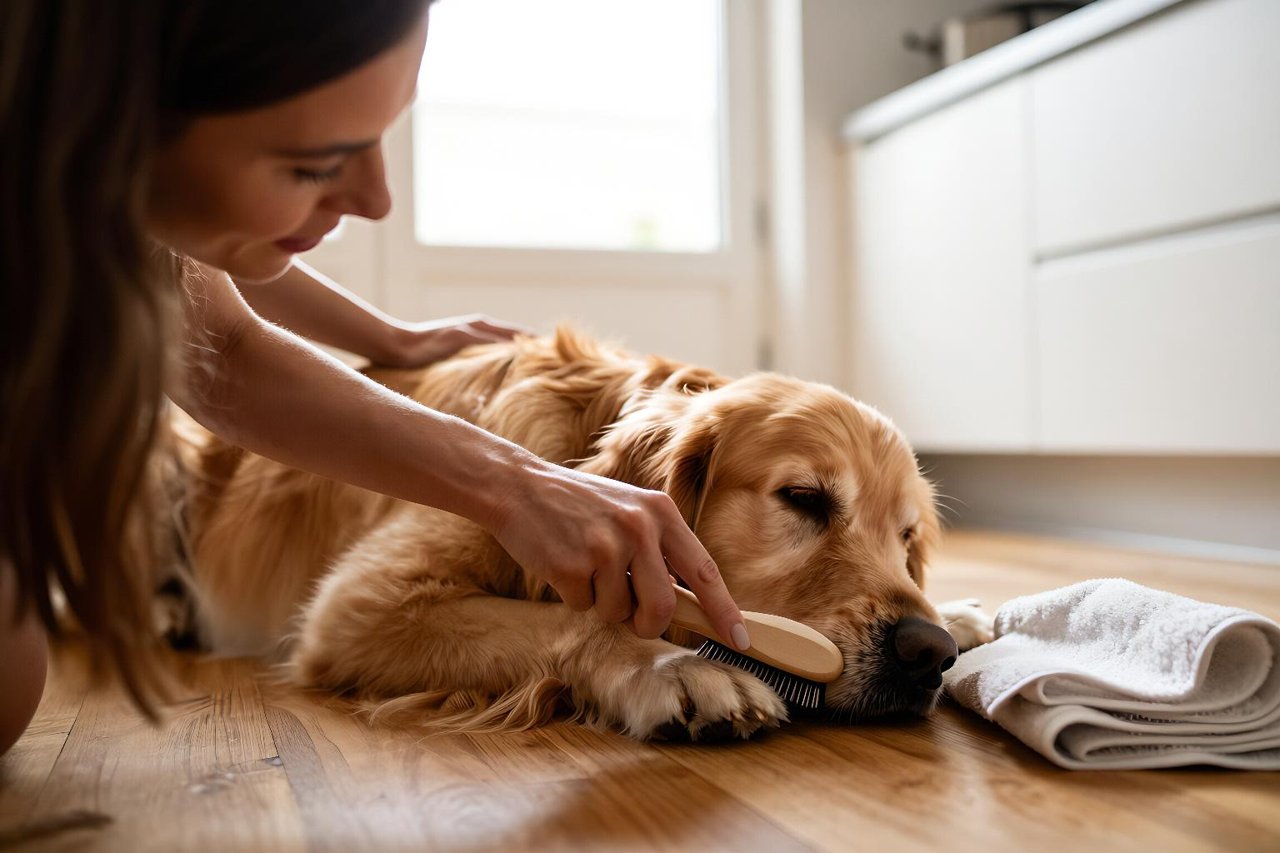
Grooming a dog at home looks effortless in the videos: calm dog, neat nails, not a single hair on the floor. Real life is closer to wrestling a wet otter with a hairdryer. It is still worth learning. A groomer session costs £40 to £70 in the UK, and a dog that only gets handled by a professional every eight weeks usually learns to dread it. A dog brushed on your kitchen floor three times a week learns that being touched is normal.
Most of home grooming is not technical. It is consistency, half-decent tools, and knowing which parts to leave alone. Here is the whole job, in the order you would actually do it.
Before You Start: The Kit Worth Buying
You can spend a fortune on grooming equipment. You do not need to. A basic kit covers 90 percent of dogs:
- A metal comb with coarse and fine teeth. This finds the mats a brush glides straight over.
- A slicker brush for everyday coat work on medium and long hair.
- An undercoat rake if your dog has a double coat. Skip it for poodles and other single-coated breeds.
- Nail clippers or a grinder, plus styptic powder for the day you nick the quick.
- A dog shampoo, ideally diluted 1:10 with water so it spreads and rinses out properly.
- Ear cleaner and cotton pads, a dog toothbrush and enzymatic toothpaste.
- A non-slip mat for the bath or table. Most grooming wobbles are just feet sliding.
Leave human shampoo in the cupboard. Dog skin sits at a different pH, and the perfumes that smell great on you can leave a dog itchy for days.

Brush First, Bathe Second
Never bathe a coat that has not been brushed. Water tightens tangles into felt, and a mat that takes two minutes to comb out on a dry coat can become a shave-down once it is wet. Brush first, every time.
Short, smooth coats
Beagles, boxers, staffies, most terriers. A rubber curry brush or a soft slicker once or twice a week is plenty. Use a damp cloth or a rubber glove to lift loose hair, and check armpits and behind the ears where the coat is thinner and mats start quietly.
Double coats
Huskies, German shepherds, corgis, retrievers. These dogs blow coat twice a year and the undercoat comes out in handfuls. Work an undercoat rake in sections, then follow with a metal comb to check for anything missed. Never shave a double coat: it grows back patchy and the dog loses the insulation that keeps it cool. If the hair itself is the problem, there are dog breeds that shed very little, though most of them trade shedding for regular clipping.
Long and curly coats
Poodles, spaniels, doodles. This is where line brushing matters. Lift the hair in sections and brush from the skin outward, not just over the top layer. Finish with the metal comb. If it snags, there is a mat underneath, and brushing over the surface only tightens it.
Trimming Nails Without the Standoff
Nails clicking on hard floors means they are too long. On most dogs the quick, the pink blood supply inside the nail, ends a couple of millimetres from the tip. Cut in small slices rather than one big chop and look at the cut face after each one. A grey or pink dot means you are close. Stop there.
Dark nails are the hard ones. Take thin slivers and check the underside of the nail, where the quick shows as a soft chalky oval. If you are nervous, ask your vet nurse to demonstrate once. Most will do it for the price of a consultation.
Small breeds often need nails done every two weeks rather than monthly, because they do not wear them down on walks. If you have one of the little breeds that stay small, check weekly with a thumb test instead of waiting for the clicking to start.
Two things make nail trimming easier: a grinder instead of clippers for dogs that panic at the snip sound, and a treat after every single nail. Not after the paw. After each nail.
Bathing a Dog at Home Without Flooding the Kitchen
Bathing frequency depends on the coat and the lifestyle, and the honest answer is usually less often than people think. A healthy dog with a normal coat does fine on a bath every four to eight weeks, while an itchy-skinned dog needs a vet-approved schedule rather than guesswork. There is a full breakdown of how often to bathe a dog by coat type and skin condition if you want the numbers.
The mechanics matter more than the frequency:
- Water at roughly 37 to 38°C, warm enough to wash your own hands in comfortably.
- Wet the coat down to the skin, then work shampoo in with your fingers or a rubber brush.
- Rinse for at least twice as long as you shampooed. Leftover shampoo causes the scratching people blame on sensitive skin.
- Dry properly. A damp double coat holds moisture against the skin and can lead to hot spots. Towel first, then a cool hairdryer or a dog dryer on low.
Put a towel on the floor before you start, keep a jug handy for rinsing the face, and skip the ears entirely. Water trapped in the ear canal is a vet visit waiting to happen.
Ears, Eyes and Teeth: The Bits That Get Skipped
Ears
Flop-eared dogs need more attention than prick-eared ones. Once a week, squeeze dog ear cleaner onto a cotton pad and wipe the visible folds. Never push a cotton bud into the canal. If an ear smells sour or the dog yelps when you touch it, that is a vet problem, not a grooming one.
Teeth
Brushing three times a week is a realistic target, daily is better. Enzymatic dog toothpaste only, in poultry or malt flavour, with a soft brush or finger brush. Some human toothpastes contain xylitol and all of them contain fluoride; neither belongs in a dog’s mouth.
Eyes
White-haired breeds get tear staining. Wipe gently with cooled boiled water once a day and keep the hair around the eye trimmed so it stops wicking moisture onto the skin. Anything green or yellow coming from the eye needs a vet, not a wipe.
Paws and the Small Jobs
Trim the hair between the paw pads if it grows long enough to collect mud, and check pads for cracks in winter after walks on salted roads. Dewclaws, the ones set higher up the leg, grow in a curve and can curl into the skin if nobody trims them. They are easy to forget precisely because they never touch the ground.
Handling: The Part That Makes Everything Else Easier
If your dog hates grooming, the problem is rarely the brush. It is that the only time anyone touches their paws is to do something unpleasant. Fix that with two minutes a day: lift each paw and put it down, look inside an ear, lift a lip, then treat. No grooming, just handling. After a fortnight, nail clipping gets noticeably less dramatic.
Dogs bred to be close to people usually tolerate handling better, which is worth knowing if grooming tolerance is part of your breed decision. The most affectionate dog breeds tend to lean into a brush rather than away from it.
When to Put the Clippers Down
Some jobs genuinely belong to a professional. Stop and book a groomer or a vet if:
- The coat is matted close to the skin. Dematting hurts and can tear skin, so shaving is often the kinder option.
- Your dog snaps or freezes when you go near the face, feet or rear end.
- You find a lump, a hot spot, a cut or anything that bleeds.
- You have nicked the quick twice and cannot get the bleeding to stop.
A Weekly Routine That Actually Happens
Forget the marathon session. Fifteen minutes spread across the week keeps a dog genuinely clean and makes the occasional full groom easy.
- Daily, 2 minutes: brush to the skin, glance at the ears and eyes.
- Weekly, 10 minutes: nails on one paw, a full comb-through, teeth brushing on three of the seven days.
- Monthly: bath, ear clean, hair between the pads, dewclaws.
- Every eight weeks: a professional groom if your breed needs shaping or clipping.
Set it as a repeating reminder on your phone and keep the whole kit in one box you can reach without moving furniture. The dogs that look well groomed are rarely the ones with the fanciest tools. They are the ones whose owner does ten boring minutes a week, every week, whether the dog looks like it needs it or not.


