
Table of Contents
A jar of ground cumin can outlive a car, a job and a landlord, and still sit in the cupboard smelling faintly of dust. That is the quiet problem with herbs and culinary spices. They cost very little, they last almost forever in theory, and they quietly decide whether dinner tastes alive or beige. Cooks who happily spend money on good beef and ripe tomatoes will season both with decade-old paprika and then wonder what went wrong.
You do not need a bigger spice rack. You need to know which jars are doing real work, which ones are decoration, and how a few seconds of heat can turn a teaspoon of seeds into something that smells like an entire kitchen in another country.
Herbs Are Leaves, Spices Are Everything Else
The botanical split is clean. Herbs are leaves: basil, parsley, thyme, mint, dill, coriander leaf. Spices come from bark, seed, root, bud, fruit or stigma: cinnamon, cumin, ginger, cloves, pepper, saffron.
The practical difference matters more than the definition. Fresh herbs are basically a vegetable, so they go in by the handful and go in late. Ground spices are a concentrate, so they go in by the teaspoon and often go in early, into hot fat.

Dried herbs sit somewhere awkward in between
Oregano, thyme and bay hold up well when dried because their oils are sturdy. Basil, parsley, dill and chives do not. A dried basil leaf tastes like paper with a memory, so keep those fresh or leave them out.
The Two-Minute Test Your Spice Rack Probably Fails
Take a pinch of anything you have owned for more than a year, rub it hard between your fingers and smell. If the answer is vague, the jar is filler. Ground spices lose their punch in about six months once opened. Whole seeds and peppercorns hold two to three years. Cinnamon sticks and nutmeg keep far longer, partly because you break them open when you need them.
Colour is the other giveaway. Paprika should be brick red, turmeric should stain your fingers, sumac should be purple-red. If it is beige, it is done.
What Earns a Place in the Cupboard
You can cook most of the world’s food with a dozen jars. Start here:
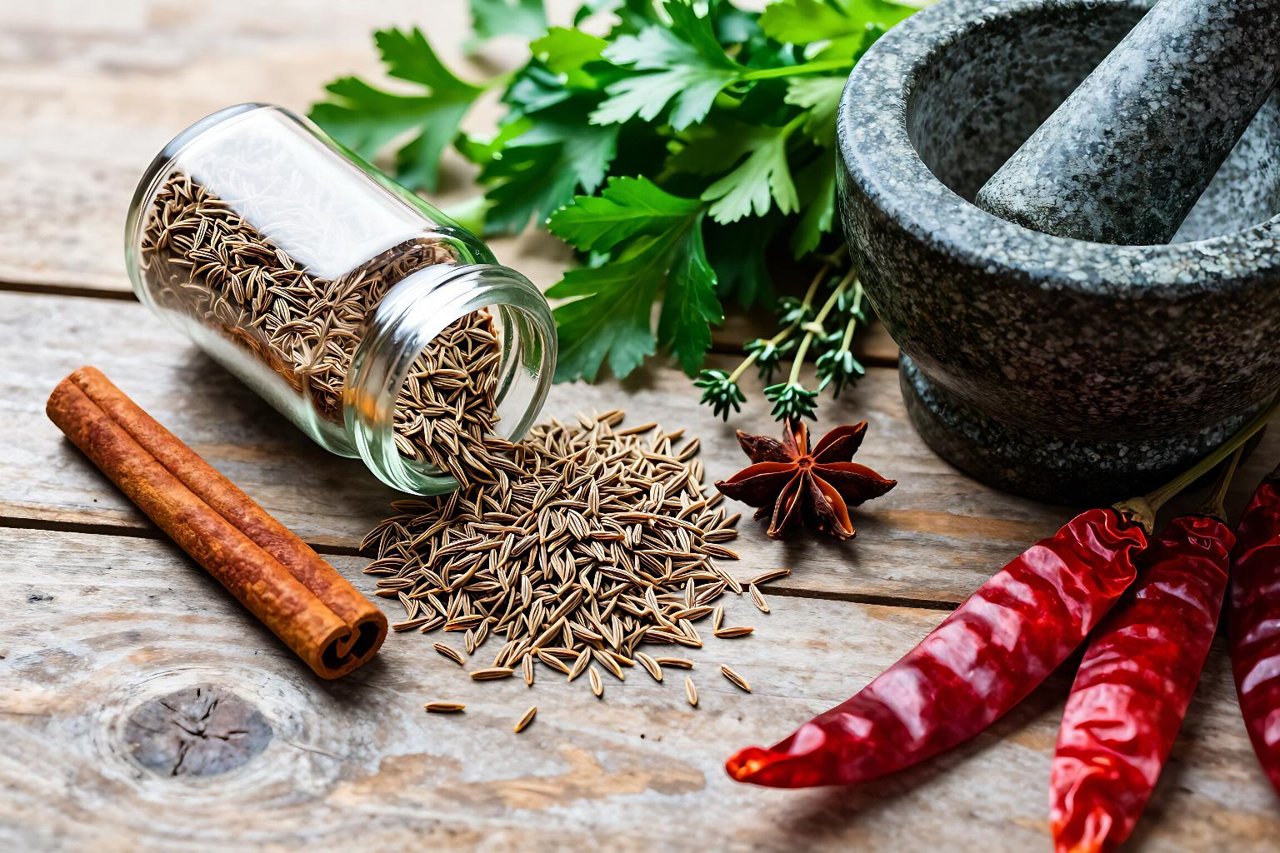
- Whole cumin seed. The backbone of Mexican, Indian, Middle Eastern and North African cooking. Toast it and it smells like toasted bread and warm earth.
- Whole coriander seed. Citrusy and slightly floral. Pairs with cumin at roughly one-to-one.
- Black peppercorns. Buy them whole and grind to order. Pre-ground pepper is sawdust with ambitions.
- Smoked paprika. Adds campfire depth to beans, eggs, potatoes and anything with chickpeas.
- Turmeric. More colour and bitterness than aroma, so treat it as a base note, not a hero.
- Cinnamon sticks and whole nutmeg. Both keep for years and both are far better than the ground versions.
- Dried oregano and bay leaves. Cheap, sturdy and hard to get wrong.
- Chilli flakes or whole dried chillies. Whole lasts longer and lets you control the heat.
Buy small amounts from a shop that refills often, preferably a bulk store or an ethnic grocer where the turnover is fast. The big supermarket jar is often the slowest-moving product on the shelf.
Toast, Bloom, Crush
Three techniques cover almost everything, and none takes more than a minute.
Toast whole spices in a dry pan
Set a pan over medium heat, add cumin or coriander seeds and keep them moving for 60 to 90 seconds, until they darken a shade and smell like themselves but stronger. Pull them off the heat a moment before you think you should, because they go from fragrant to acrid fast. Tip them onto a cold plate to stop the cooking.
Bloom ground spices in fat
Ground spice is fat-soluble, not water-soluble. Drop a teaspoon of paprika or curry powder into warm oil, butter or ghee and stir for 20 to 30 seconds. The flavour spreads through the whole pot instead of sitting in gritty specks. Water does not do this. That is why a spoon of cumin dumped into a simmering stew tastes so much duller than the same spoon bloomed first.
Crush late, not early
Every crack in a peppercorn or cardamom pod releases aroma into the air rather than the food. Grind spice blends the day you use them if you can, and crush peppercorns directly over the plate.
Pairings That Travel Well
Most great food cultures landed on the same move: a warm seed, a sweet spice, something aromatic and something sour. The proportions change, the logic does not. Comparing how different traditions balance those four notes is a genuinely useful exercise, and this breakdown of the strengths and flavour tradeoffs of the world’s major cuisines is a decent place to see the pattern laid out side by side.
Some pairings worth memorising:
- Cumin, coriander and garlic, the base of countless Indian and Mexican dishes
- Caraway, rye and salt, the smell of northern Europe
- Fennel seed and pork, whether in Italian sausage or Chinese dumplings
- Cinnamon and tomato, a trick in Greek and Middle Eastern stews that makes the sauce taste deeper without tasting sweet
- Dill and yoghurt, from Persian kitchens to Scandinavian ones
Chillies Deserve Their Own Notebook
Mexico treats dried chillies less as heat and more as seasoning, and the difference is enormous. An ancho is sweet and raisin-like. A guajillo is bright and slightly tannic. A chipotle is smoky because it was smoked. Toast them briefly, soak them in hot water for 20 minutes, then blend with garlic and a little of the soaking liquid and you have a sauce that tastes like a long afternoon of cooking. Walking through the markets and taquerias of Mexico City’s Miguel Hidalgo district makes the range obvious in a way that a supermarket shelf never will.
Fresh Herbs: Use the Stems Too
Coriander stems carry more flavour than the leaves and are perfectly edible. Parsley stems belong in stock. Mint stems can go into a jug of water with cucumber and lemon. Soft herbs like basil and dill should be added off the heat or right at the end, because cooking flattens them into green hay.
If you have more herbs than dinner needs, steep them cold instead. Mint, lemon verbena, basil and thyme all work in fruit and herb infused sun tea, which is a far better use for a wilting bunch than watching it turn brown in the drawer.
Salt, Heat and the Order of Operations
Seasoning is not one step. Salt early to draw moisture and build structure. Add spices in fat at the start. Add delicate herbs at the end. Taste at three points: after the base is built, after the liquid goes in, and just before serving.
Herbs also belong after the cooking is finished, especially with vegetables. A pinch of chopped dill or parsley over something cooked properly tastes completely different from the same herb boiled for ten minutes, which is one more reason how you steam vegetables matters as much as what you put on them. Overcooked greens swallow seasoning.
Storing the Stuff So It Lasts
Keep jars airtight, out of direct light, and away from the stove. The warm shelf above a cooker is the worst place in the kitchen for a spice rack, even though it is where every spice rack gets installed.
Write the month you opened each jar on the lid with a marker. Whole seeds can go in the freezer if you buy in bulk. Never scoop with a wet spoon, and never shake spice over a steaming pot, because the steam that rises back into the jar is what turns powder into a brick and kills the aroma.
One last habit pays for itself quickly. Smell before you pour. If the jar does nothing, the dish will do nothing, and a thirty-second trip to the shop is cheaper than a whole meal that tastes like the inside of a cupboard.


