
Table of Contents
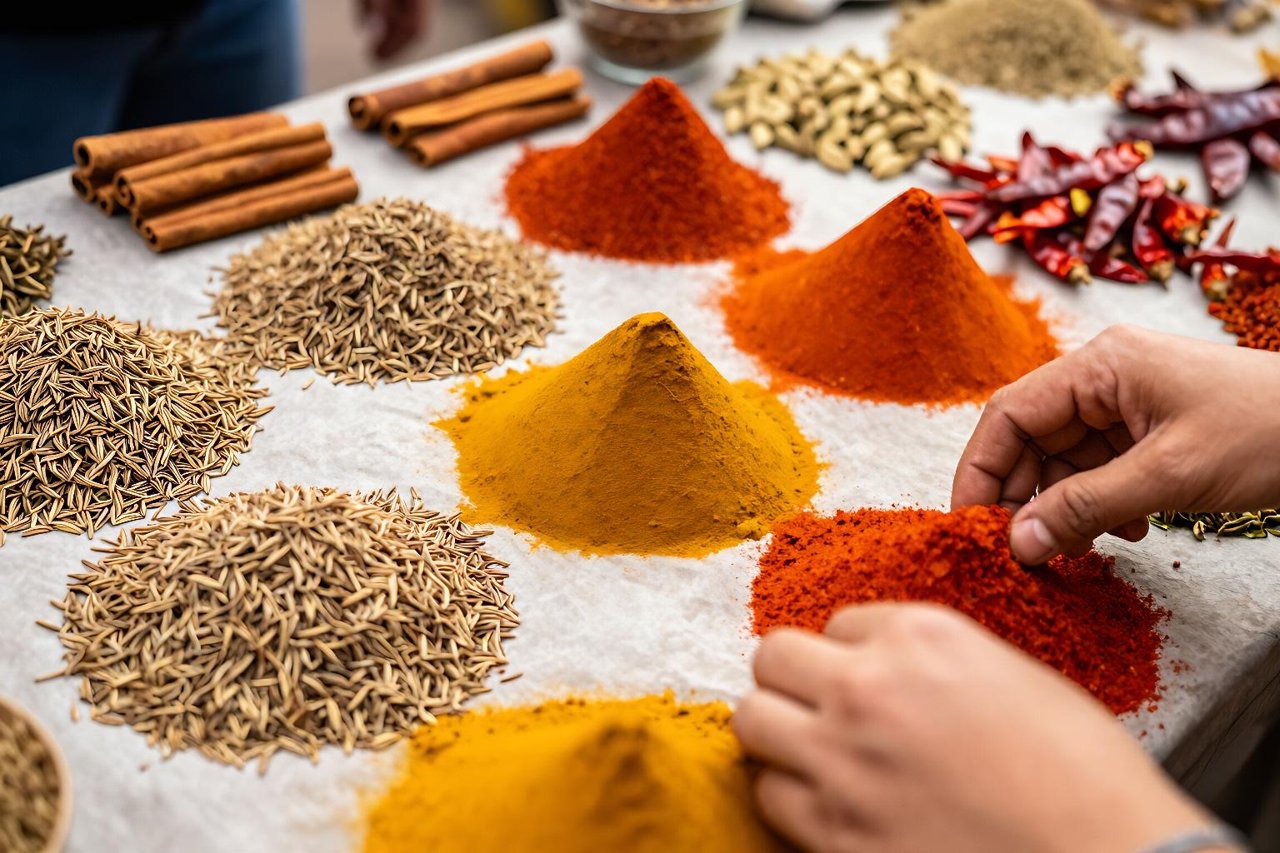
Walk through a market in Oaxaca, Marrakesh, or Kochi and you can smell the answer before you see it. The top 7 spices used in traditional cuisines around the world are not simply the hottest or the most expensive. They are the quiet workhorses that give a region its signature: cumin in a bowl of Mexican frijoles, turmeric in a Gujarati dal, paprika in a Hungarian goulash. A spice stall can also jog a memory as quickly as a photograph, much like the travel story about a feeling that resurfaced on a trip. Here are seven spices worth knowing by name, with the dishes that show what they do best.
1. Cumin: The Warm, Earthy Backbone
Cumin is the warm, earthy note that makes a cuisine feel grounded. In Mexico, it shows up in taco seasoning, refried beans, and the broth for birria. In the Middle East, it seasons falafel and hummus. In India, whole seeds sizzle in ghee before dal or rice is added. The flavor is nutty with a slight bitterness, and a little goes far: 1 teaspoon of ground cumin can season a pan of black beans for four people.
Buy whole seeds if you can. Toast them in a dry pan for 30 seconds, just until they smell warm, then grind or crush them. That short step gives you more aroma than a jar of pre-ground cumin that has sat open since last winter.
2. Coriander: Citrusy Seed, Bright Herb
Coriander seed tastes citrusy and floral, with none of the soapy reputation that fresh cilantro has for some people. It is the other half of the cumin-coriander pair in Indian cooking, often used at a 2:1 ratio in spice blends. In Latin American kitchens, ground coriander finds its way into stews and rice. In North African harissa, it adds a lemony edge.

Toast whole seeds and grind them in small batches. A coffee grinder reserved for spices works well, and you can clean it with a spoonful of raw rice between batches.
3. Turmeric: Color With a Bitter Edge
Turmeric is the deep gold in South Asian and Southeast Asian cooking. It brings color and an earthy, slightly bitter flavor. A half teaspoon is enough for a pot of dal; more can turn food harsh. In Indonesia, it joins coconut milk and lemongrass in rendang and turmeric-based rice dishes. In Indian kitchens, turmeric often meets greens, including lesser-known Indian leafy vegetables that add substance to dals and sabzis.
Fat and black pepper help the flavor settle into a dish. Add turmeric early with oil or ghee, then taste before adding more.
4. Paprika: Sweet, Smoky, and Deceptively Mild
Paprika is ground Capsicum pepper, and it ranges from sweet to hot depending on the variety. Hungarian goulash relies on sweet paprika by the tablespoon; Spanish chorizo gets its color and smoke from pimentón. Smoked paprika is a different tool: use 1 teaspoon in roasted potatoes or chickpeas and it reads like bacon without the meat.
Keep the heat low when you bloom paprika. It scorches quickly and turns bitter, so add it to onions or oil that is warm rather than screaming hot.
5. Cinnamon: Bark That Bridges Sweet and Savory
Cinnamon is bark, and the type matters. Ceylon cinnamon is softer and more layered; cassia is stronger and more common in supermarkets. In Morocco, cinnamon goes into tagine with lamb and apricots. In Mexico, it appears in mole and hot chocolate. In India, it is part of garam masala. Add a stick to rice or a pot of stock and let it infuse for 15 minutes.
6. Cardamom: Floral, Cooling, Expensive
Cardamom is floral and cooling, almost minty. Green cardamom is the one in chai, Arabic coffee, and Scandinavian cardamom buns. Black cardamom is smoky and used in Indian meat curries. The pods hold the flavor, so crush three or four for a cup of coffee or a pot of rice. It is one of the most expensive spices by weight, which is why a little goes a long way.
7. Chilli: The Heat That Carries Flavor
Chilli is less a single spice than a family. Mexican salsas use dried guajillo and ancho chiles; Korean kimchi uses gochugaru; Thai curries use fresh bird’s eye chiles. The heat level varies wildly, so taste before you add. A good rule: start with one dried chile in a pot of soup, remove it before serving, and adjust next time.
How to Pair These Spices Without a Recipe
You do not need a cabinet of twenty jars to cook with these flavors. Four or five good spices can cover a lot of ground. Try these combinations:
- Cumin, coriander, and chilli: beans, lentils, roasted carrots, or a quick tomato sauce.
- Paprika, garlic, and olive oil: potatoes, chickpeas, fish, or grilled bread.
- Cinnamon, cardamom, and black pepper: coffee, rice pudding, roasted squash, or apples.
- Turmeric, mustard seeds, and curry leaves: dal, cauliflower, or any sturdy greens.
Use 1 teaspoon of ground spice for a dish serving four, then taste. Whole spices need a little more time, so add them at the start of cooking and give them 30 seconds in hot oil before the onions go in.
Buying and Storing Spices That Actually Taste Like Something
Buy whole spices when you can, especially cumin, coriander, and cardamom. Ground spices lose their punch faster, so purchase 50g to 100g at a time rather than a giant bag that will sit for years. Write the date on the jar with a marker. Store jars away from the stove, where heat and steam do quiet damage. Replace ground spices after about 6 months if the aroma has faded.
A small jar of cumin you can smell across the kitchen is worth more than a cabinet full of dusty bargains. Start with one spice, cook two dishes with it, and let the habit build from there.


