
Table of Contents
Why is everyone suddenly snacking on protein? Because most of us eat two or three meals a day and then run out of steam in the afternoon. A protein snack bridges that gap, and if it’s high in quality it can also stop you from raiding the vending machine at 4pm. The tricky part isn’t the why, it’s the which. Do you grab a bar? Shake a scoop into a flask? Or sit down with a bowl of cottage cheese?
Those three approaches are the three big players in the protein-snack game, and they’re more different than their protein counts suggest. If you just want a list of easy combinations to try, our 19 easy high-protein snack ideas covers the creative side. But if you’re trying to figure out what’s actually best for you day after day, it helps to see the trade-offs side by side. That’s what we’re doing here.
The Three Main Types of Protein Snacks
- Protein bars, bites, and packaged snacks are shelf-stable and instantly portable.
- Shakes and smoothies made from protein powder are fast to prep but require a liquid, a container, and cleaning up.
- Real-food snacks like eggs, Greek yogurt, cheese, nuts, and seeds are less processed but demand more storage and often some assembly.
Each has a place. The difference is which one you honestly have time for and which one your stomach actually appreciates.
Protein Bars: The Ultimate Grab-and-Go Shortcut
The convenience factor
The first time you stood in the protein bar aisle you probably noticed a shelf filled with fifty types that all claim to be healthy, only some are. A typical bar costs between $1.50 and $3.50 and supplies 15 to 25 grams of protein. That convenience is real: you can keep a bar in your car, your work drawer, or your gym bag for weeks. You need no plate, no blender, no refrigerator.

The hidden cost of a quick bar
But the trade-off is that most bars are heavily processed. To make a bar taste good enough to eat without an ice-cold drink, manufacturers add sugars, sugar alcohols, syrups, and saturated fats. A bar with 22 grams of protein may also contain 30 grams of carbohydrates and a long list of ingredients, many of which you wouldn’t find in a kitchen. There is also a psychological issue: a bar looks like candy and goes down fast, so your hunger signals may not switch off properly.
If you’re comparing bars with higher-protein meal replacements, then the whole-food-versus-powder-versus-bars face-off for high-protein meals offers useful tips that apply directly to snacks: bars are fine if you match the ingredients, but don’t expect real-food satiety. Look for bars with at least 15 grams of protein under 250 calories, and fewer than five ingredients if you can manage it. That narrows the field considerably.
Protein Shakes: Fast Fuel, but for How Long?
The value proposition
Protein shakes are the second heavy hitter. A scoop of whey or plant powder generally costs between $0.50 and $1.50 per serving, which is half, or even a third, of what you’d spend on a premium snack bar. Shakes mix in 20 seconds with water, milk, or a splash of kefir, so the actual prep time is brutally short. For someone with serious muscle goals, a shake is the most direct way to land a solid 25 to 30 grams of protein without stuffing calories.
Why a shake might not be enough
Here’s the problem: liquid protein skips the chewing phase. It hits the bloodstream fast, but it doesn’t do much for your physical need to bite into something. You can drink a whey shake and feel full for an hour, then feel hungry again before the next meeting. The solution is to use a shake as a complement rather than a complete snack, or blend it with fruit, oats, and a nut butter for more staying power. If you don’t track your calories, the extra fruit and peanut butter will sneak up quickly.
It’s worth pinning down a protein target first, and a step-by-step guide to using a protein intake calculator will help you set that baseline in less than five minutes. Whether you decide to drink shakes or eat a pound of eggs, a target gives you a reason to choose.
Whole-Food Snacks: The Satiety Champions
What real snacks give you
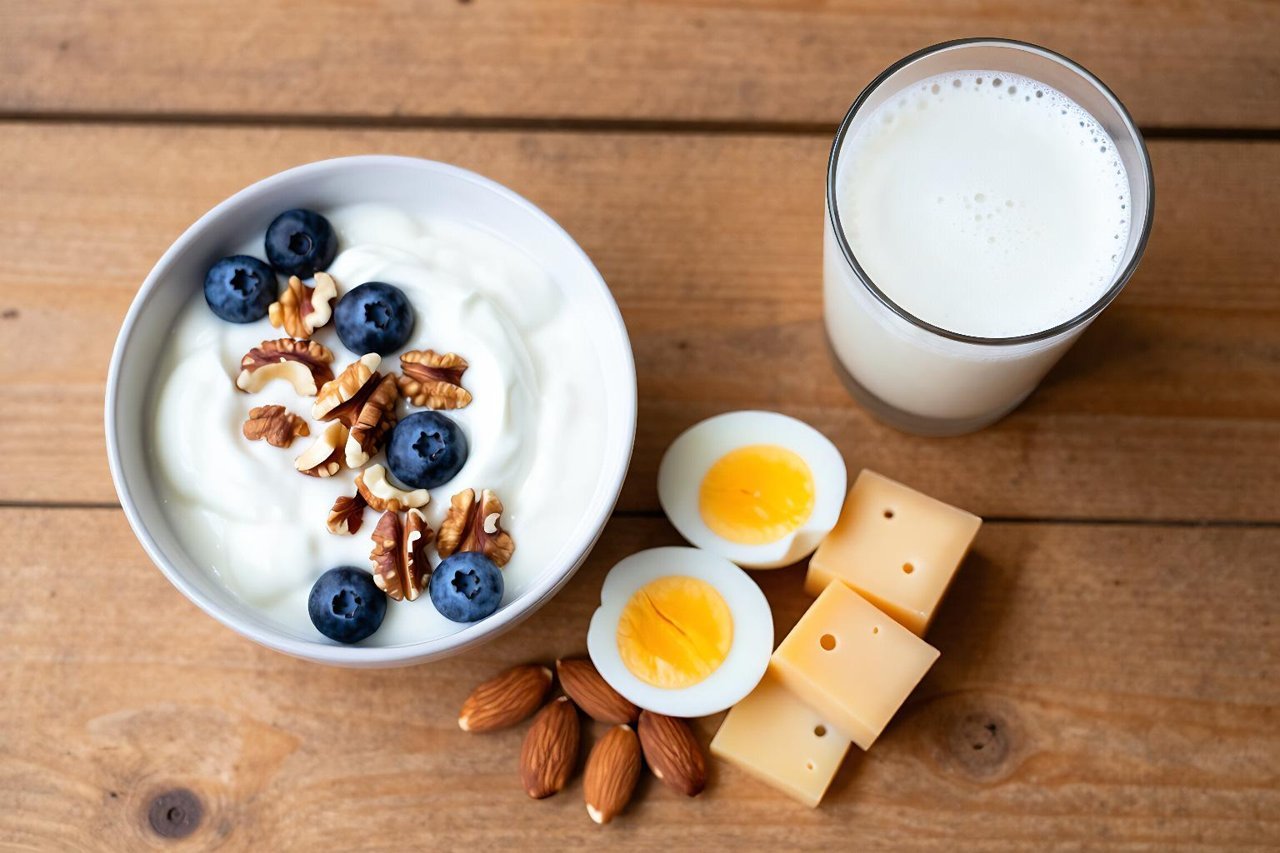
The third category is the one your grandmother probably recommends: yogurt, eggs, tuna, cheese, almonds, and roasted chickpeas. A 170g tub of plain Greek yogurt costs roughly $1.20 and has around 17 grams of protein, plus live bacteria and no additives. Two boiled eggs cost about fifty cents and supply 12 grams of protein, all from a food that biologically makes sense to your body. Cottage cheese, slices of turkey, hummus with carrots, and a few walnuts are similarly satisfying.
The beauty of whole-food snacks is that they’re built to digest slower than powders or processed bars. The combination of protein, fat, and fibre triggers stomach stretching and ghrelin suppression, which tell your body you’ve had a meal. If you suffer from hunger between lunch and dinner, whole foods are almost always the more effective option.
The practical trade-off
The downside is logistics: they need a fridge, often cooking, and you can’t fall asleep with one in your pocket. If you want an elegant way to eat whole-food snacks, especially when you’re hosting or sharing, try making a snack board. A well-built board can include turkey rolls, hard-boiled eggs, sharp cheddar cubes, plain yogurt dip, and handfuls of pistachios. The step-by-step protein snack board guide gives you a full plating example, and once you see how it comes together, it’s simpler than it sounds.
So Which One Should You Actually Snack On?
Stop looking for a single winner. The fit depends on your situation.
- If you need something to survive a six-hour flight or a long commute, a solid bar is the safest bet. You don’t have to worry about it getting cold or messy.
- If you just came out of a workout and your fridge is empty, a shake is the fastest way to get recovery protein without chewing food that might upset your stomach.
- If you’re eating because you’re legitimately hungry and not just bored, whole foods should anchor your snack. Pair a protein source with fruit or vegetables to make it feel more substantial.
Remember that no snack works if you’re eating one simply to cram in protein you missed at breakfast. For most people, it is easier to first fix your real meal structure. The same principles behind ten-minute high-protein meals, which have nothing to do with recipes, apply directly here: leftovers, deli meat, and pre-cooked grains can fill your snack gap with almost no planning.
Many people also discover that once they stop relying on bars and shakes, they don’t snack as much. There is a big difference between snacking because you are bored and snacking because you missed a meal. If you use a protein intake calculator, you’ll notice that your daily target often does not require a 300-calorie snack. So choose a bar or a shake when time is the boss, but don’t ignore whole-food snacks. They keep you fuller, feed your gut, and make your snack time feel like a legitimate meal. The best protein snack for you may change from week to week, and that’s fine. Just keep the trade-offs straight: bars are expensive but convenient, shakes are cheap protein but fragile satiety, and whole foods are a little work that your body recognises. That’s the whole game.


