
Table of Contents
Fiber is one of those nutrients that quietly does a ton of heavy lifting. It keeps your digestion running smoothly, helps control blood sugar, lowers cholesterol, and even supports weight management by making you feel full longer. While many people reach for bran flakes or supplements, the real fiber powerhouses are often hiding in plain sight at the produce section. Vegetables, especially the ones with the highest fiber content, are some of the most effective (and affordable) ways to hit your daily target.
So which vegetables should you load into your cart? Here’s a breakdown of the top contenders, along with easy ways to work them into your routine.
The Heavy Hitters: Vegetables with the Most Fiber
When we talk about fiber in vegetables, we’re looking at grams per cooked cup or per 100 grams. These numbers vary depending on preparation, but the general ranking holds. Let’s start with the star players.
Artichokes
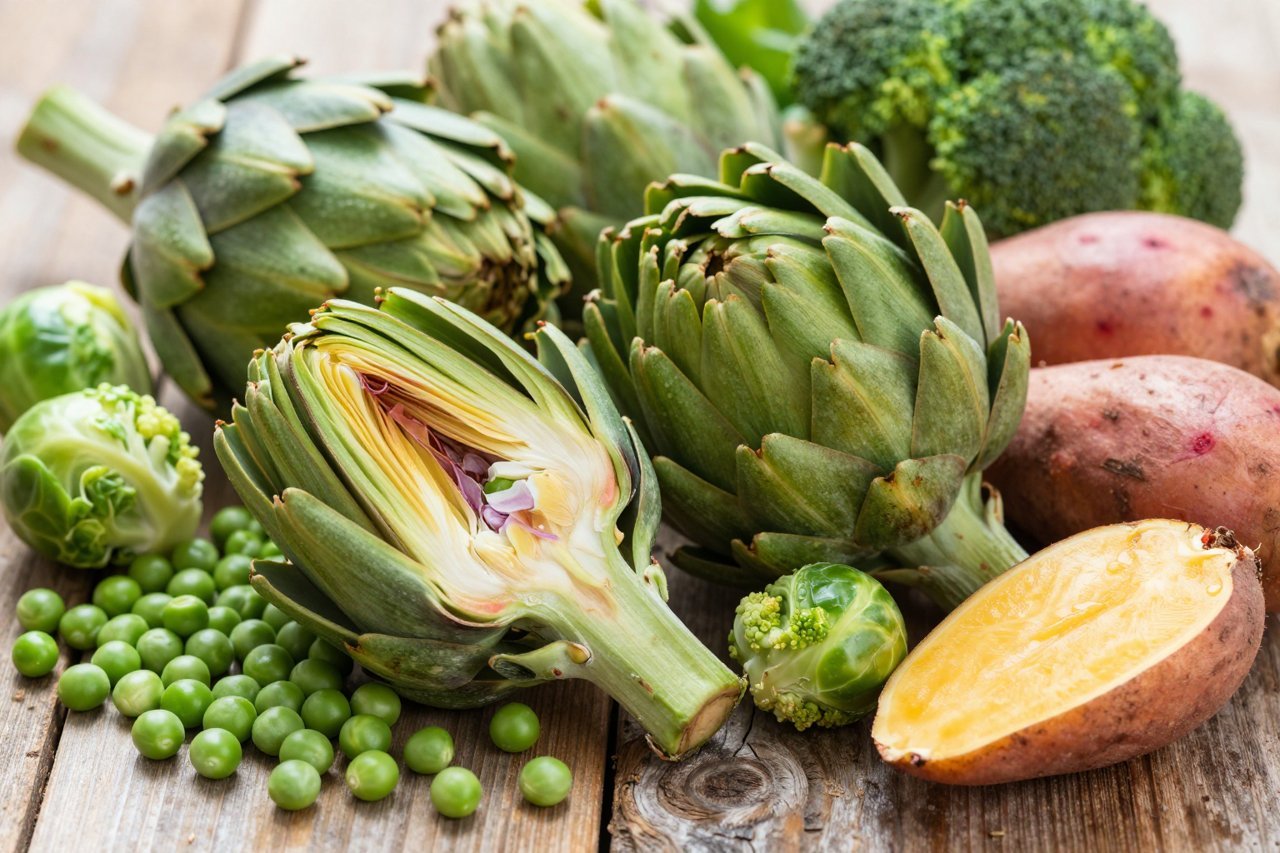
One medium artichoke (cooked) delivers about 10 grams of fiber. That’s nearly half the daily recommendation for women and a third for men. Most of that fiber comes from the leaves and the heart. Artichokes also contain a unique type of prebiotic fiber called inulin, which feeds beneficial gut bacteria. Enjoy them steamed with a dip, or scrape the leaves after roasting.

Green Peas
Frozen peas are often overlooked, but they are a fiber legend. One cup of cooked peas has around 9 grams of fiber. They’re also packed with plant protein and micronutrients like vitamin K and manganese. Add them to soups, pasta dishes, or mash them into a spread.
Brussels Sprouts
These mini cabbages bring 4 grams of fiber per cup (cooked). When roasted until crispy, they become almost addictive. The outer leaves contain much of the fiber, so don’t peel them off. Try halving and tossing them with olive oil and salt before roasting at 400°F.
Broccoli
A cup of chopped cooked broccoli provides about 5 grams of fiber. Both the florets and the stems count. The stems are especially fibrous and often discarded, but they’re perfectly edible. Slice them thin and stir-fry or roast alongside the florets. For more insight into why eating vegetable skins (and stems) matters, check out our guide to 16 fruit and veggie skins you can eat.
Sweet Potatoes
A medium sweet potato with the skin on offers about 4 grams of fiber. The skin itself contributes almost a third of that, so eat it. Sweet potatoes are also rich in beta-carotene and taste great baked, mashed, or turned into fries. Just avoid peeling if you want the maximum fiber hit.
Carrots
One cup of raw carrots has around 3.5 grams of fiber, but cooked carrots have slightly less due to water content. Still, they’re a solid source. Carrots are also loaded with vitamin A from beta-carotene. Eat them raw for crunch, or cook them to enhance sweetness.
Kale and Other Leafy Greens
Cooked kale delivers roughly 4 grams of fiber per cup. Raw kale has less by volume because it’s airy. Other greens like collard greens, spinach, and Swiss chard also contribute but contain more water. For maximum fiber, opt for heartier greens like kale or collards and cook them down.
How to Incorporate More High-Fiber Vegetables into Your Diet
Knowing which veggies are richest in fiber is only half the battle. The real challenge is eating enough of them consistently. Here are some practical strategies that go beyond the usual “eat more salad” advice.
- Start your day with veggies. Add spinach or kale to smoothies, or sauté leftover Brussels sprouts with eggs. Even a handful of peas stirred into oatmeal (surprisingly good) can boost your morning fiber.
- Use vegetables as the base. Instead of pasta, try spiralized zucchini or roasted sweet potato as a base for sauces. Swap rice for riced broccoli or cauliflower (though cauliflower has lower fiber, you can mix it with lentils for more).
- Snack on whole vegetables. Keep raw snap peas, baby carrots, or radishes handy with hummus or guacamole. Avoid peeling when possible—the skins contain concentrated fiber.
- Double up in soups and stews. Add extra artichoke hearts, peas, and chopped kale to any soup. Puree half the beans or lentils to thicken without cream.
Cooking Tips to Preserve Fiber (and Boost It)
How you prepare vegetables can affect their fiber content—but not always in the way you think. Cooking doesn’t destroy fiber, but it can make some vegetables easier to eat, which means you might consume more. For instance, raw Brussels sprouts are tough, but roasting softens them so you can eat a whole cup. A few tips:
- Don’t over-peel. Many vegetables have edible skins that are rich in insoluble fiber. Potatoes, carrots, and even kiwis (yes, the fuzzy skin is edible) can be eaten unpeeled. Check our list of 16 fruit and veggie skins you can eat for more ideas.
- Cook al dente. Overcooking can soften fiber, making it less effective for satiety, but the total amount stays. However, vegetables boiled for a long time may lose some soluble fiber into the water. If you boil, use the cooking liquid in soups or sauces.
- Add legumes. Mix beans or lentils with vegetables to boost fiber even more. For example, peas and lentils together create a fiber powerhouse.
Fiber and Your Gut: Beyond Regularity
We all know fiber helps prevent constipation, but its role in gut health runs deeper. Soluble fiber feeds the beneficial bacteria in your colon, which produce short-chain fatty acids that reduce inflammation and support immune function. Vegetables like artichokes, peas, and Brussels sprouts are particularly rich in prebiotic fibers that encourage good bacteria to thrive. If you’re curious about how fruits compare, our ultimate guide to the highest fiber fruit covers fruit options that complement these vegetables.
Fiber, Satiety, and Weight Management
High-fiber vegetables are voluminous and take time to chew, which signals your brain that you’ve eaten enough. Studies show that people who increase their fiber intake without changing anything else tend to eat fewer calories throughout the day. The mechanism is simple: fiber absorbs water and forms a gel that slows digestion, keeping you satisfied longer. That’s why starting a meal with a salad or roasted vegetables can help you eat less of calorie-dense foods later. For anyone trying to manage weight, piling on peas, artichoke hearts, and broccoli is a smart move.
Potential Pitfalls: Too Much Fiber Too Fast
Going from a low-fiber diet to high-fiber overnight can cause bloating, gas, and cramping. Your gut bacteria need time to adjust. The key is to increase fiber gradually over a couple of weeks and drink plenty of water—fiber works by absorbing water, so without enough fluid, it can actually cause constipation. Also, if you have certain digestive conditions like IBD or small intestinal bacterial overgrowth (SIBO), you may need to be selective about high-fiber vegetables. For most people, though, the benefits far outweigh the adjustment period.
It’s also worth noting that a diet rich in plant fiber has been linked to better cognitive health and lower risk of chronic diseases. In contrast, a diet heavy in ultraprocessed foods can negatively impact attention and overall health. To learn more about that connection, read about how ultraprocessed foods are linked to measurable drops in human attention span. Shifting your fiber intake toward whole vegetables is a direct way to counter those effects.
At the end of the day, the vegetables with the highest fiber aren’t exotic or expensive. Artichokes, peas, Brussels sprouts, broccoli, and sweet potatoes are all readily available and versatile. The challenge isn’t finding them—it’s remembering to eat them regularly. Start by adding one extra serving of a high-fiber vegetable to your dinner each night. Your gut—and your waistline—will thank you.


