
Table of Contents
The Mediterranean diet isn’t a single rigid plan. It’s a flexible way of eating that emphasizes fresh vegetables, whole grains, healthy fats, and lean proteins. And it’s consistently ranked by nutrition experts as one of the best diets for long-term health. But here’s the thing: reading about the diet and actually planning your meals are two different tasks. That’s why a Mediterranean diet meal plan makes such a difference. It turns good intentions into daily, repeatable choices.
Whether you’re just starting out or you’ve been eating this way for years, having a loose weekly plan helps you stay on track without feeling deprived. Below, you’ll find a sample 7-day Mediterranean diet meal plan, along with the core principles behind it and some tips for making it work in your real life.
What Makes a Mediterranean Diet Meal Plan Unique?
Before we get to the food, it helps to understand what sets this eating pattern apart. Most diet plans obsess over macronutrient ratios and forbidden foods. The Mediterranean diet takes a simpler approach: fill your plate with plants, use olive oil generously, choose fish over red meat, and enjoy meals with people you love. It’s about lifestyle, not just nutrition.
- Olive oil is the primary fat, replacing butter, margarine, and other processed oils.
- Vegetables and fruits appear at every meal, and legumes are a regular staple.
- Whole grains like farro, quinoa, oats, and whole wheat pasta provide fiber and energy.
- Fish and seafood are eaten at least twice a week. Fatty fish like salmon and sardines are especially prized.
- Dairy, poultry, and eggs appear in moderate portions, while red meat is reserved for occasional treats.
It’s not a strict program, which is why so many people find it sustainable. If you want a deeper look at the origins and science, this guide to the Mediterranean diet covers the broader picture, including how it promotes longevity.

A Simple 7-Day Mediterranean Diet Meal Plan
Here’s a week of meals to get you started. Portions will vary based on your appetite and activity level, but the key is to listen to your body and stop when you’re comfortable. Each day includes three meals and a snack. You can swap meals around or adjust them to suit your preferences.
Day 1
- Breakfast: Greek yogurt with sliced strawberries, walnuts, and a drizzle of honey.
- Lunch: Quinoa bowl with roasted chickpeas, cucumber, cherry tomatoes, kalamata olives, crumbled feta, and olive oil-lemon dressing.
- Dinner: Grilled salmon with a side of sautéed spinach, brown rice, and a handful of cherry tomatoes.
- Snack: Apple slices with almond butter.
Day 2
- Breakfast: Two boiled eggs, a slice of whole-grain toast with avocado, and a small orange.
- Lunch: Lentil soup with a side of whole-wheat pita and a simple green salad.
- Dinner: Chicken skewers with grilled vegetables and a yogurt-tzatziki sauce.
- Snack: A handful of mixed nuts and a few olives.
Day 3
- Breakfast: Overnight oats made with rolled oats, chia seeds, milk, and topped with raspberries and pecans.
- Lunch: Tuna salad made with olive oil, celery, red onion, and lemon, served over a bed of leafy greens.
- Dinner: Whole-wheat pasta with cherry tomatoes, garlic, spinach, and a light sprinkle of Parmesan.
- Snack: Carrot and cucumber sticks with hummus.
Day 4
- Breakfast: Whole-grain toast topped with smashed avocado, a poached egg, and chili flakes.
- Lunch: Mediterranean chickpea salad with bell peppers, red onion, parsley, feta, and a red wine vinegar dressing.
- Dinner: Baked cod with roasted asparagus and a side of wild rice.
- Snack: A small bowl of fresh fruit and a handful of pistachios.
Day 5
- Breakfast: Greek yogurt parfait with granola, mixed berries, and a drizzle of honey.
- Lunch: Whole-grain wrap with hummus, roasted red peppers, cucumber, lettuce, and feta.
- Dinner: One-pan shrimp with garlic, cherry tomatoes, white beans, and a side of crusty whole-grain bread.
- Snack: Blueberries with a sprinkle of cinnamon.
Day 6
- Breakfast: Vegetable and feta omelet with a side of whole-grain toast.
- Lunch: Grilled vegetable and mozzarella panini with a small side of mixed greens.
- Dinner: Lamb and vegetable skewers with a side of couscous and lemon-yogurt sauce.
- Snack: Roasted chickpeas with olive oil and smoked paprika.
Day 7
- Breakfast: Smoothie made with frozen berries, oat milk, spinach, a scoop of protein powder, and a spoonful of almond butter.
- Lunch: Mediterranean quinoa salad with cucumber, tomato, parsley, mint, and a lemon-olive oil dressing.
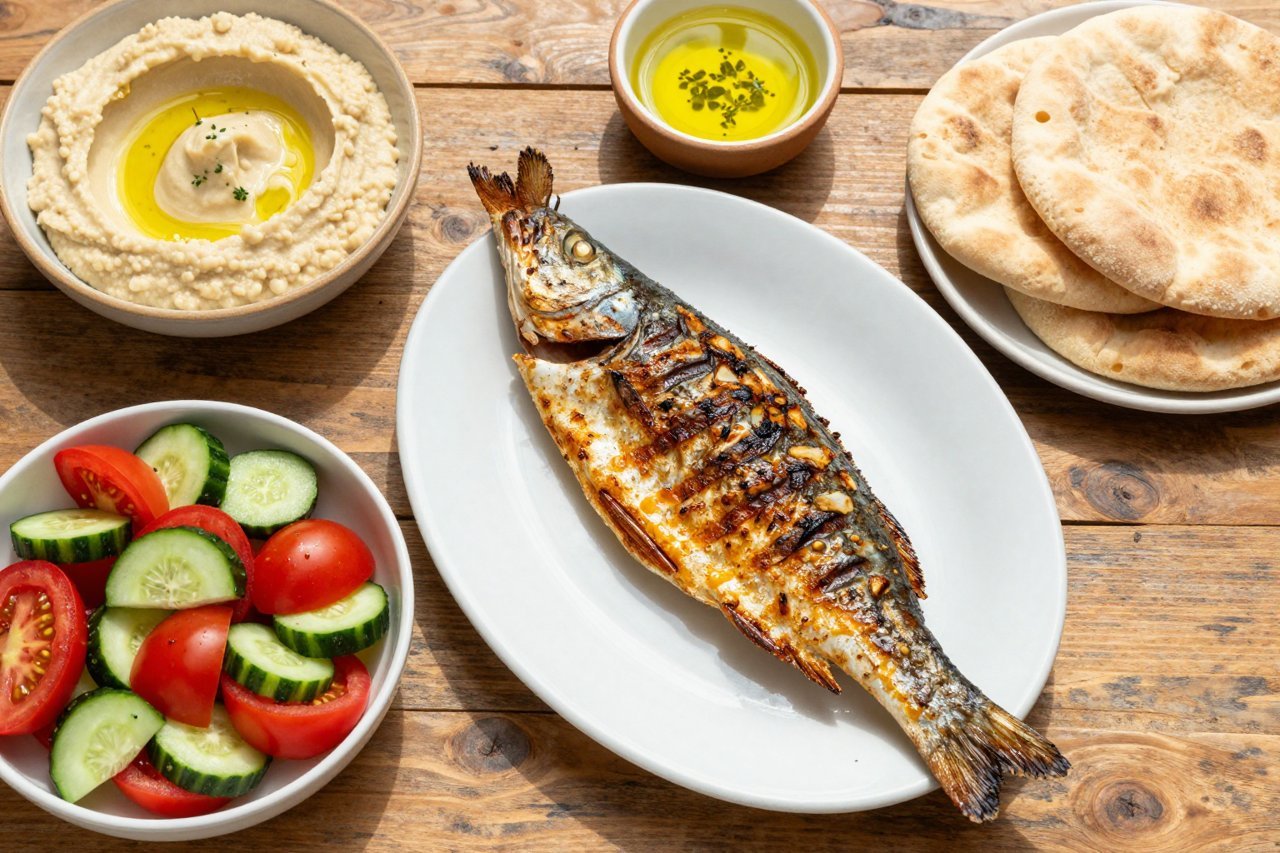
- Dinner: Grilled sardines with a colorful salad of tomatoes, cucumbers, red onion, and olives.
- Snack: A few squares of dark chocolate and a handful of walnuts.
This plan covers a wide range of flavors and textures, and it uses ingredients that are easy to find in most grocery stores. You’ll likely notice that many of these meals are rich in vegetables, legumes, and healthy fats, which makes this way of eating great for overall wellness. In fact, a Mediterranean diet meal plan like this is packed with foods that lower cholesterol, thanks to the olive oil, nuts, and fiber-rich produce.
Stock Your Kitchen for Mediterranean Meals
One reason Mediterranean eating is so popular is that it doesn’t require fancy, hard-to-find ingredients. There are a few staples worth keeping on hand, so you can throw together a satisfying meal in minutes.
- Extra-virgin olive oil – the backbone of the diet. Use it for cooking, dressing salads, and drizzling over finished dishes.
- Legumes – canned or dried chickpeas, lentils, white beans, and black beans.
- Whole grains – farro, quinoa, brown rice, whole-wheat pasta, and rolled oats.
- Canned fish – tuna, sardines, anchovies, and salmon are quick protein sources.
- Nuts and seeds – almonds, walnuts, pistachios, chia seeds, and sesame seeds.
- Olives and sun-dried tomatoes for bursts of flavor.
- Fresh produce like leafy greens, tomatoes, cucumbers, peppers, and lemons.
- Herbs and spices – oregano, basil, thyme, rosemary, cumin, and paprika.
With these basics, you can improvise. Many of these ingredients also happen to be excellent choices for your heart, and you can see more about the specific benefits in this guide to heart healthy foods.
Tips for Sticking With Your Mediterranean Meal Plan
Starting a new way of eating is easier when you have a plan, but maintaining it long-term requires a few practical habits. Here are some pointers that keep things simple and enjoyable.
Cook in Batches
Spend an hour or two on the weekend preparing grains, roasting vegetables, or making a big pot of soup. That way, you have ready-to-go pieces to assemble lunch or dinner during the week.
Make Breakfast Ahead
Overnight oats, hard-boiled eggs, and yogurt parfaits can be prepared the night before. If you’re someone who skips breakfast, you might find some fresh ideas in this collection of healthy breakfast ideas that are both quick and satisfying.
Use the Dinner Leftovers
Cook extra salmon or chicken and turn it into a lunchtime salad or wrap. Leftover grilled vegetables are fantastic cold with a drizzle of lemon and olive oil.
Give Fish a Regular Spot
If fish isn’t your favorite, start with milder options like cod or tilapia, and make liberal use of spices, garlic, and lemon. You can also try canned sardines or anchovies in salads and pasta.
Keep It Seasonal
Fruits and vegetables taste best when they’re in season, and they’re usually cheaper too. Visit a local farmers market if you can, and let whatever looks good inspire your menu.
Following a Mediterranean diet meal plan doesn’t have to be complicated. It’s about choosing fresh, flavorful ingredients most of the time, and giving yourself room to enjoy meals with friends and family. Over time, those habits add up to better heart health, a sharper brain, and a longer, more vibrant life. For more on how diet influences cognition, take a look at these foods for brain health.


