
Table of Contents
You’re at the trailhead, leash in one hand, phone in the other, wondering why the phrase “gps dog leash” feels both obvious and vague. You expect a simple product, but the term gets slapped on everything from an integrated tracking leash to a collar you wear while walking. The real issue isn’t whether a GPS leash works; it’s which version of the technology actually fits how you and your dog move. So this isn’t a list of “best” products. It’s a breakdown of the five main ways to track a dog on a walk, with the trade-offs that actually matter.
So What Is a GPS Dog Leash, Exactly?
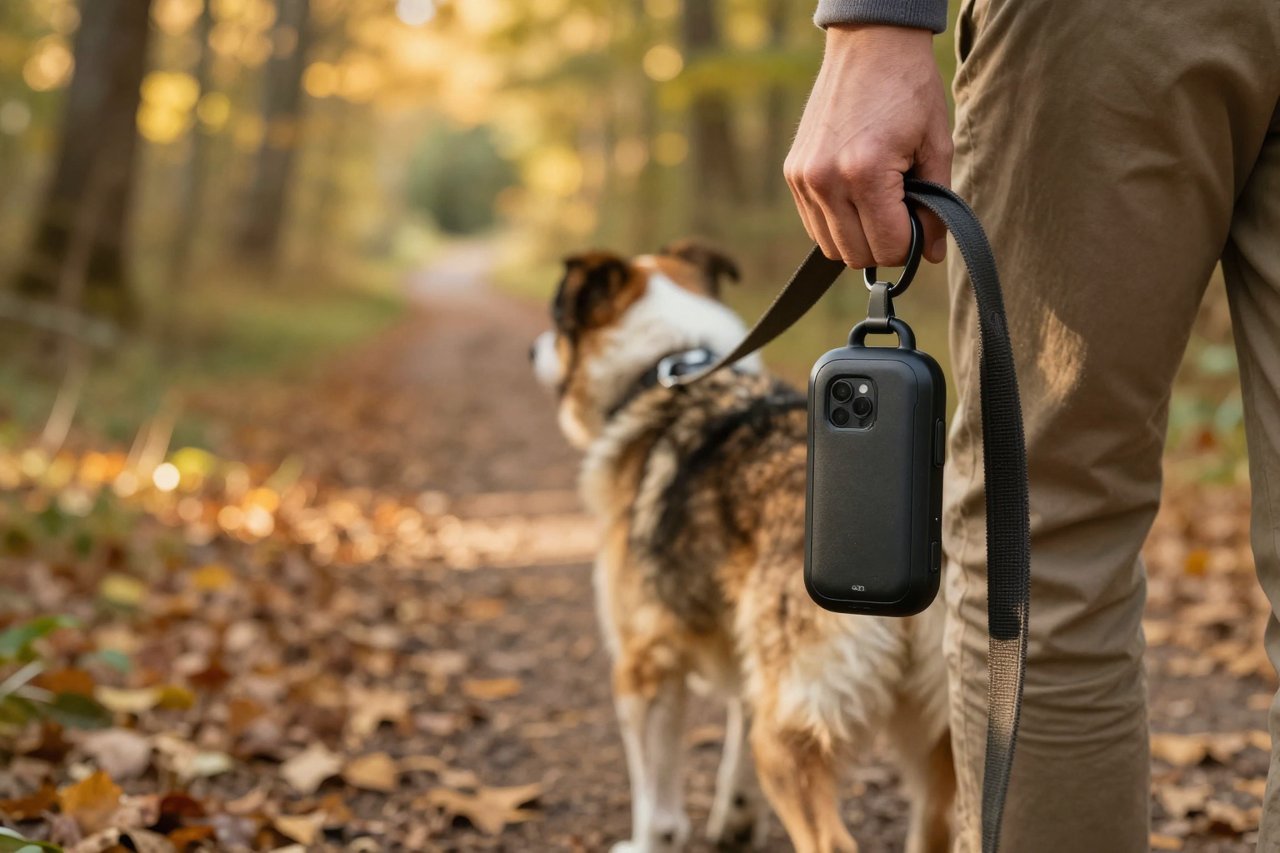
Most products sold as a GPS dog leash are one of two things: a leash with a tracker module built into the handle or webbing, or a regular leash bundled with a separate tracking device. The difference matters because it changes how you charge it, how you wash it, and what happens when the leash gets gouged by a tree branch. Before comparing, it helps to know what you’re actually buying when you see “GPS dog leash” on a box.
The integrated version keeps everything in one unit. You grab it, clip it, and go. The bundled version is often just a collar tracker plus a standard leash in the same retail package. The latter is almost always the better value, but it’s not a real “leash” product. That confusion is the first trade-off: simplicity versus flexibility.
The Five Ways to Track a Dog on a Walk
1. The Dedicated GPS Dog Leash
This is the literal GPS dog leash – a leash with a GPS unit embedded near the handle. Think of it like a smartwatch for the leash. Pros: one product, no collar to remove, and you can see the dog’s location on a small screen or phone app. Cons: the battery is physically small, so you’re charging every day or two. The module is exposed to water, dirt, and chewing, and if it fails, the whole leash is useless. Range is usually tied to either a phone over Bluetooth (short) or a cellular connection (covered but with fees).

2. GPS Collar (with a Regular Leash)
This is the most common real-world setup. A tracker like a Tractive or Fi clips onto the collar, and you use any standard leash for the actual walk. A well-made GPS collar gives you peace of mind beyond the walk – it can tell you if a dog digs out of the yard, and it supports geofencing. The trade-off is that the dog wears the tracker all day, which means more volume on the neck, a battery that may not survive a long weekend, and the recurring cost of a cellular plan. If you’re curious about the different collar options, the canine GPS collar comparison breaks down each type in detail.
3. Bluetooth Tracker (AirTag, Tile, SmartTag)
People often shove these into a leash pocket and call it a GPS dog leash. They cost $25 to $40 and last months on a coin battery. But Bluetooth is not GPS. It only works within roughly 30 to 100 metres of your phone, unless you’re in a dense city where other phones relay the signal to Apple’s Find My network. In a forest, you’re out of luck. For a dog that stays close, it’s a cheap backup. For a flight risk, it’s a false sense of security. The differences between these technologies are worth reading before you choose, especially GPS, Bluetooth, or radio: which tracker for your dog is actually worth it.
4. Radio Frequency (RF) Tracker
RF trackers, like the Garmin Alpha or SportDog systems, use a dedicated handheld unit and a receiver on the dog’s collar. No subscription, no cell towers, no Bluetooth. They’re the standard for hunters and off-trail hikers. Range is typically 3 to 10 kilometres in open terrain, with latency measured in seconds. The downsides are price – easily $300 to $800 – and the fact that you’re carrying a separate handheld screen. It’s overkill for a suburban walk, but invaluable for wilderness.
5. Cellular GPS Tracker (GPRS/LTE)
This is the modern dog tracker: a small module that records GPS location and reports it over a 4G/5G network. Tractive, Fi, and similar devices use app-based mapping, geofences, and activity tracking. They give you precise location as long as there’s a cell signal, and they work beyond Bluetooth range. But they need a subscription – usually $5 to $15 a month – and the battery life is poor compared to RF. If you plan to rely on one, you need to charge it nightly, just like your phone. For a step-by-step look at getting a cellular tracker up and running, check the first 48 hours with a GPRS tracker for dogs.
The Trade-Offs That Actually Matter
All five options can tell you where your dog is. The differences show up once you look at the numbers and habits.
- Battery life: Bluetooth tags run for months on a coin cell; RF collars last a week or more; GPS cellular trackers give you one to three days; integrated GPS leashes are the worst, typically under 24 hours.
- Coverage: RF works everywhere, including no-service wilderness; cellular depends on the nearest tower; Bluetooth only works near your phone or a strong crowd network.
- Accuracy: GPS gives 5-10 metre accuracy in the open; RF is often better but at short range; Bluetooth is more “nearby” than precise.
- Subscription: none for Bluetooth and RF; $60-180 a year for cellular. An integrated leash may use either, so check the fine print.
- Comfort: collar-mounted trackers are worn 24/7; leash-mounted modules add weight to the handle, not the dog.
- Durability: a dedicated leash tracker is exposed to rain, mud, and chewers; a collar tracker is built to be worn by the dog.
Of all these, people are usually surprised by battery life. A GPS dog leash sounds non-invasive, but a tiny module can’t hold a big power cell. That’s why many integrated leashes end up dangling with a dead battery after the first month.
Real-Life Scenarios: Which Tracking Tech Actually Wins?
Urban walks and escape artists
Picture a 25-kilogram Labrador that slips his collar whenever a squirrel appears. A Bluetooth tag attached to a collar does nothing once the dog is more than a block away. A cellular GPS collar with geofencing will ping you the moment he leaves a 50-metre radius, and you can follow the dog on the app even if he’s scared into a bush.
Off-leash hiking in the mountains
Cellular trackers die in remote valleys and tree cover. An RF tracker – the kind with the long antenna and the bulky handheld – is the only option that gives real-time, off-grid data. It’s expensive, but if you hike beyond the reach of cell towers, a GPS dog leash is a liability.
Everyday neighbourhood walks
I’d rather see most people buy a lightweight GPS collar and keep their normal leash. The collar costs about as much as a dedicated GPS leash, but you can use it for training, backyards, and dog-sitter visits. It also gives you a consistent location history. A dedicated leash only helps while you’re holding it.
Match the Tool to the Walk
There’s no universal winner. The best device for a dog that never leaves your side is a Bluetooth tag hidden in a collar. The best device for a dog that bolts in an unfamiliar park is a cellular GPS collar with a geofence. The best device for a wilderness hiker is a radio-frequency tracker. And the dedicated GPS dog leash? It’s for the person who wants one product that lives on the hook by the door, comes fully assembled, and doesn’t require leaving anything on the dog’s collar between walks.
If that sounds like you, look for an integrated leash with a removable tracker module. That way you can take the tracker out for washing and charge the module. Don’t settle for a leash that claims GPS but only uses Bluetooth when you’re near it – that’s a scam. Check the specs, set up the app, and do a neighbourhood test walk before you trust it. The next few hours of setup are the true test, and the step-by-step field guide on how to use a GPS dog leash covers exactly how to handle it.
If you just want peace of mind without a collar-mounted device, a GPS dog leash is a legitimate option. If you want a dog that’s tracked through the yard, on walks, and when you’re away, a good GPS collar is the better spend. Match the tool to your dog’s behaviour, not the other way around.


