
Table of Contents
The first thing I noticed was the way my mother poured her morning tea: one hand hovering over the mug, fingers stiff, the movement slow. She had been diagnosed with osteoarthritis, and her doctor had talked about medication and rest. But after a few months of small dietary changes, her morning stiffness shrank from about an hour to roughly fifteen minutes. It wasn’t a miracle cure. It was a series of practical, repeatable swaps. That is the point of this guide. Instead of another list of magical “superfoods,” here is a step-by-step plan to find out which foods for arthritis actually work for your body.
Start with a Three-Day Food and Joint Diary
Before changing anything, you need a baseline. For three consecutive days, write down everything you eat and drink, and rate your joint pain on a scale of 1 to 10 at morning, noon, and night. Keep it simple: a notebook, a notes app, even a voice memo.
Here is what my mother’s three days looked like:
- Breakfast: two slices of white toast with margarine and a glass of orange juice
- Lunch: a turkey sandwich on white bread, a bag of pretzels, sweet tea
- Dinner: spaghetti with bottled red sauce, a side salad with ranch dressing
- Snacks: a cinnamon roll, a second cup of coffee with sugar
Do you see the pattern? Refined carbohydrates, added sugar, and omega-6 heavy oils. No fatty fish, no berries, very few leafy greens. This is not a diagnosis, but it shows exactly why her joints felt the way they did. For a broader list of which foods to focus on, check out this practical guide to foods for arthritis. Once you see your own pattern, move on to step two.

Make These Three Swaps in the First Week
Don’t overhaul your whole diet in one day. Pick three swaps and stick with them for seven days.
- Swap your breakfast cereal for Greek yogurt with berries and walnuts. A 170-gram serving of plain Greek yogurt has about 17 grams of protein and probiotics. Berries bring anthocyanins, and walnuts are one of the best plant sources of omega-3s. It takes two minutes to assemble.
- Swap your regular cooking oil for extra-virgin olive oil. EVOO contains oleocanthal, a compound that acts on inflammatory enzymes in a way that resembles ibuprofen. Use it on salads and for gentle cooking.
- Swap your salty afternoon snack for a handful of almonds or baby carrots with hummus. Almonds give you vitamin E, and hummus adds plant protein and a little garlic.
These three swaps are the core of the larger anti-inflammatory foods guide, but you don’t need the full list yet. Just start with three.
Build a Simple Plate Formula for Every Meal
Once the three swaps feel normal, level up. Instead of counting every gram, build each lunch and dinner using this formula:
- Fill half your plate with non-starchy vegetables: broccoli, spinach, bell peppers, zucchini, cauliflower
- Fill a quarter with lean protein: chicken breast, fish, tofu, or lentils
- Fill the last quarter with a complex carbohydrate: quinoa, brown rice, sweet potato, or whole grains
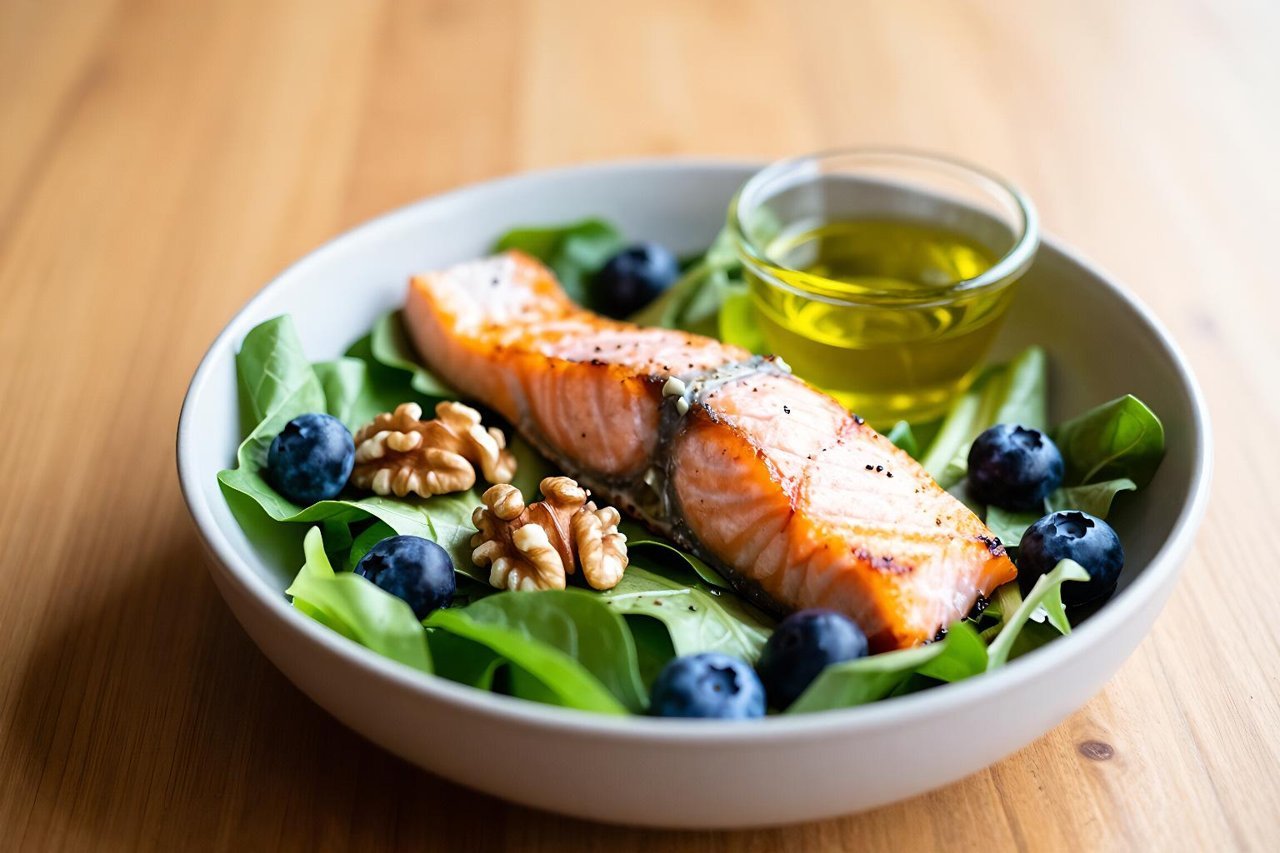
Example: cook a salmon fillet in a little olive oil, steam a large handful of broccoli, and serve it over half a cup of quinoa. That is a complete anti-inflammatory meal. This same structure appears in the step-by-step Mediterranean diet meal plan, because it is naturally rich in vegetables, healthy fats, and fiber.
Build Your Week with These Target Foods for Arthritis
You can eat the same meals every day, but variety keeps it interesting and covers gaps. Try to include these five on a regular rotation:
- Fatty fish (salmon, mackerel, sardines) at least twice a week. A 100-gram serving of salmon contains about 1.5 to 2 grams of omega-3s.
- Extra-virgin olive oil: one to two tablespoons a day
- Berries: about one cup a day, fresh or frozen
- Leafy greens: spinach or kale at least four times a week
- Turmeric plus black pepper: a quarter teaspoon of turmeric with a pinch of black pepper on eggs, soups, or roasted vegetables
A Sample Day That Uses All Five
- Breakfast: Greek yogurt with one cup frozen blueberries and one tablespoon chopped walnuts.
- Lunch: large spinach salad with sliced chicken breast, cherry tomatoes, cucumber, and a dressing made from two tablespoons olive oil and one tablespoon lemon juice.
- Snack: one apple and ten almonds.
- Dinner: 120 grams of baked mackerel, half a sweet potato, and a big mound of steamed broccoli with lemon, a pinch of turmeric, and black pepper.
Track What Your Body Tells You and Adjust
After ten days, look back at your food and pain diary. Did your morning pain rating drop from a 7 to a 5? Did afternoon energy improve? Keep the changes that line up with improvement. If something didn’t help, it’s not a failure. It’s a signal to try a different meal structure.
If you want to test a specific trigger, remove one food group for two weeks, then reintroduce it. Watch your joints for 24 hours. We are all different; the goal is to find your personal pattern, not to follow a universal rule.
One reminder: food is only part of the plan. Supplements can support you, but they don’t replace real food. The research on collagen supplements for joints suggests modest benefit for some people, but a processed diet will overpower any pill.
What to Do When You Slip Up
Real life interrupts every plan. A birthday party, a business trip, a week where cooking feels exhausting. That’s normal. One high-pain day does not erase a week of decent choices.
Use an 80/20 pattern. Make 80 percent of your meals from the anti-inflammatory template described in the full anti-inflammatory diet overview, and let the other 20 percent be flexible. That keeps the plan realistic and still yields measurable relief.
When you slip, don’t fast or punish yourself. Rehydrate, drink a tall glass of water, and make your next meal a big salad with grilled fish and olive oil dressing. One satisfying meal is enough to bring you back.
The next time you pour your morning tea, notice how your fingers feel. Small changes compound. After three weeks, the way you pour might be different.


