
Table of Contents
Ask ten dietitians to name the healthiest foods to eat every day and you’ll hear the same names: vegetables, fruit, beans, whole grains, nuts, fish, olive oil. Nothing trendy. Nothing expensive. The list has barely changed in thirty years because the evidence behind it keeps holding up.
That consistency is useful. It means you don’t need a new superfood every month, or a supplement stack, or a diet with a name. You need a short list of foods that do a lot of nutritional work, and a routine that gets them onto your plate most days.
What earns a daily spot on the plate
A food makes the daily list when it clears three hurdles at once. It delivers a lot of nutrients per calorie. It provides something genuinely hard to get elsewhere, whether that’s fibre, omega-3 fats, potassium or polyphenols. And it has been studied in real populations over years, not just in a lab dish.
Taste and cost matter too. The best daily food is one you can afford, prepare on a Tuesday, and still want to eat in March.

Leafy greens are the best value in the shop
A cup of cooked spinach gives you about 5 grams of protein, 4 grams of fibre, and far more vitamin K than you need in a day. Kale, chard, collards and rocket bring similar packages. They also carry lutein and zeaxanthin, two pigments that concentrate in the retina and are linked with slower age-related eye damage.
Frozen spinach costs a fraction of fresh and keeps its nutrients. Throw a handful into eggs, pasta sauce, curry or soup near the end of cooking. Raw greens in a salad are fine, but cooked greens let you eat far more of them in one sitting, which is the point.
Beans and lentils do more than most people realise
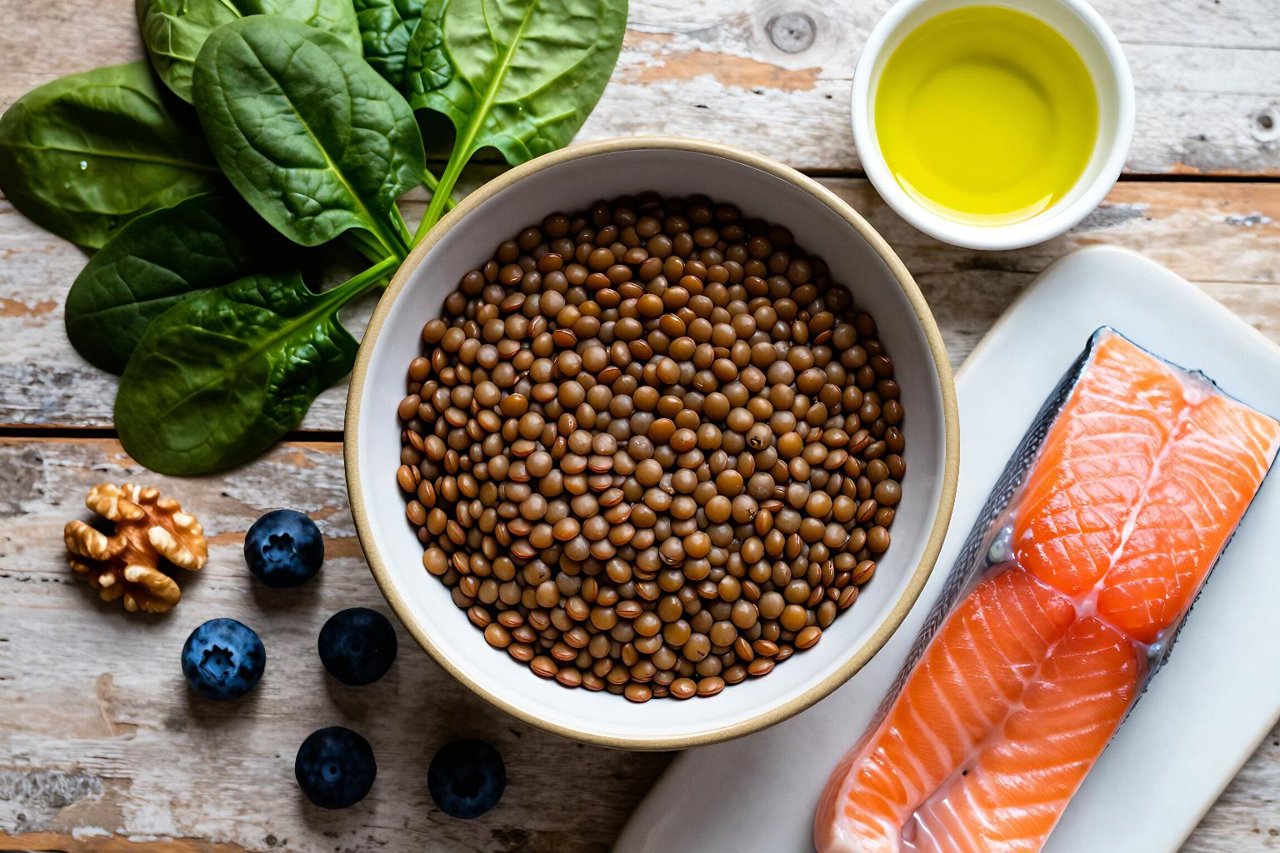
Half a cup of cooked lentils supplies around 8 grams of fibre and 9 grams of protein, plus folate, iron and potassium. Black beans, chickpeas and kidney beans are close behind. People who eat legumes regularly tend to have lower LDL cholesterol and steadier blood sugar after meals, partly because the fibre slows digestion.
Canned beans are a legitimate shortcut. Rinse them for ten seconds and most of the added sodium goes down the drain. Keep two cans in the cupboard and dinner stops being a problem.
Whole grains, especially oats and barley
Oats and barley contain beta-glucan, a soluble fibre that binds cholesterol in the gut. Health agencies in Europe and the US recognise a specific claim: roughly 3 grams of oat beta-glucan a day lowers LDL cholesterol. That’s about 70 grams of dry oats, or one generous bowl.
Brown rice, quinoa, buckwheat and whole wheat pasta all beat their refined counterparts on fibre, magnesium and B vitamins. Swapping white rice for brown at two or three meals a week is a change most people barely notice.
Berries punch above their weight
A cup of blueberries has around 4 grams of fibre and a deep load of anthocyanins, the pigments tied to better blood vessel function in several trials. Strawberries, raspberries and blackberries offer similar benefits. Frozen berries are picked and frozen at peak ripeness, so they often match fresh on nutrients and cost about half as much.
Fatty fish is the gap most diets have
Salmon, sardines, mackerel and herring are the richest sources of EPA and DHA, the long-chain omega-3 fats your body uses for heart and brain function. A 3-ounce fillet of salmon carries roughly 1.5 grams of them. Most guidelines suggest two servings, about 8 ounces in total, each week. Plenty of people get none.
Canned sardines are the quiet bargain here. A single can delivers omega-3 plus around 325 milligrams of calcium if you eat the soft bones.
Nuts and seeds, one small handful a day
An ounce of walnuts provides about 2.5 grams of plant omega-3 (ALA). The same amount of almonds gives 6 grams of protein and 3.5 grams of fibre. Large cohort studies consistently link a daily portion of nuts with lower rates of heart disease, and the calories are less of a problem than people fear because nuts are filling.
Seeds count too. Pumpkin seeds are loaded with magnesium, ground flaxseed brings fibre and lignans, and chia thickens into pudding with nothing but milk and time. Grinding matters with flax: whole seeds tend to pass straight through you.
Plain yoghurt and fermented foods
Plain Greek yoghurt has roughly 20 grams of protein per cup and live bacterial cultures. Fermented foods like kefir, kimchi, sauerkraut and miso support a more diverse gut microbiome, which is turning out to matter for immunity and mood as well as digestion. Read the label, pick versions without added sugar, then sweeten them yourself with fruit.
Eggs, one of the easiest wins
One large egg has about 6 grams of high-quality protein, plus choline, lutein and vitamin D in the yolk. For most people, the cholesterol in eggs has far less effect on blood cholesterol than saturated fat does. A boiled egg with fruit, or a vegetable omelette, makes a fast breakfast that holds you until lunch.
Extra virgin olive oil
In the PREDIMED trial, people eating a Mediterranean diet supplemented with extra virgin olive oil had roughly 30% fewer major cardiovascular events than the control group. The polyphenols in unrefined oil appear to do part of that work. Use it as your default cooking and dressing fat, and don’t panic about the calories in a single tablespoon.
Colourful vegetables: tomatoes, sweet potatoes, peppers
Cooked tomatoes deliver lycopene, which the body absorbs better after heat and a little oil. One medium sweet potato covers well over a day’s vitamin A as beta carotene. Red peppers hold more vitamin C than an orange. Aim for two or three different colours at dinner and you’ll close most micronutrient gaps without counting anything.
What a day of daily staples actually looks like
- Breakfast: oats with milk, a spoon of ground flax, blueberries and a few walnuts.
- Lunch: lentil or chickpea salad with spinach, tomatoes, olive oil and a slice of whole grain bread.
- Snack: plain yoghurt with fruit, or a boiled egg.
- Dinner: salmon or sardines with roasted sweet potato and greens wilted in olive oil. Beans on the side if you’re hungry.
That adds up to roughly 35 grams of fibre and more than ten different plants in a single day. Most adults in Western countries get around 15 grams of fibre daily, so the gap this closes is a big one.
Foods that don’t need a daily slot
This isn’t about banning anything. It’s about frequency. Processed meats such as bacon, ham and salami are classified as carcinogenic to humans by the World Health Organization’s cancer agency, and the risk rises with how often you eat them. Sugary drinks, white bread, deep-fried snacks and most packaged cakes sit in the same category: fine occasionally, poor foundations.
The practical rule is simple. Build the day from the staples above and let everything else be occasional.
Your best daily diet is one you’ll still be eating next year
Nobody eats perfectly every day, and the research doesn’t ask you to. What shows up in long-lived populations is a pattern: beans most days, greens most days, fish a couple of times a week, nuts in the drawer. Dull, repeatable and largely unglamorous.
Start with one change instead of ten. Add a can of chickpeas to whatever you already cook. Swap the morning cereal for oats. Put a bag of frozen spinach in the freezer and use it twice this week. Small defaults beat willpower, and after a month or two they stop feeling like decisions at all.


