
Table of Contents
Most homemade iced herbal tea fails for one boring reason: it gets brewed like hot tea and then cooled down. The result tastes like a memory of tea — thin, faintly bitter, and watery by the second glass. Fix the ratio and the temperature and the whole thing changes.
Below is the process I use for a pitcher that lasts three or four days in the fridge door, plus the small adjustments that stop it going dull, cloudy, or grassy.
Start with the right ratio
Use roughly 1 heaped tablespoon of dried herb per 250 ml (1 cup) of finished tea. That’s stronger than the instructions on most tea boxes, and deliberately so — herbal leaf is bulky and gives up flavour slowly in cold water. If you plan to pour it over ice, push it to 1½ tablespoons per cup, because melting ice will dilute everything within ten minutes.
Fresh herbs are far weaker by volume. A loose handful of fresh mint or lemon verbena, about 10–15 g, stands in for roughly one tablespoon of dried leaf.

- Light leafy herbs (peppermint, lemon verbena, chamomile, rose): 1 tbsp dried per cup
- Dense herbs and petals (hibiscus, rosehip, dried ginger, cinnamon bark): 2 tsp per cup — they release colour and acidity fast and turn harsh if overdone
- Seeds and spices (fennel, cardamom, star anise): crush lightly first, 1 tsp per cup
- Serving over ice: multiply every quantity above by 1.5
Cold brew: the gentle method for delicate herbs
Combine your herb and cold filtered water in a jar or pitcher, lid on, and refrigerate. Eight to twelve hours is the window for most leaf. Chamomile, lemon verbena, rose petals and fresh mint land closer to eight; hibiscus, ginger and rooibos want twelve to eighteen. Strain through a fine sieve, pressing the spent leaf gently with the back of a spoon.
Cold water pulls out aroma compounds without dragging out the tannins that make a long-steeped tea feel drying on your tongue. It also means you can leave the jar overnight and forget about it, which is genuinely the appeal.
Water matters more than you’d think
Chlorinated tap water flattens herbal aroma noticeably. If your tap water tastes of anything at all, filter it or fill a jug and leave it uncovered on the counter for an hour before brewing. Hard water makes a hibiscus or rosehip brew turn cloudy and slightly soapy; a squeeze of lemon usually clears it.
Flash-chill: full flavour in ten minutes
When you want iced tea now, not tomorrow morning, brew it hot at double strength and dump it straight onto an equal volume of ice. Two cups of hot infusion plus two cups of ice gives you four cups of cold tea at drinking strength.
Use 2 tablespoons of dried herb per cup of water, pour water at 95°C or just off the boil, cover the cup with a saucer to trap the volatile oils, and steep five to seven minutes. Then strain directly over ice and stir until the ice has gone. This method handles woody and rooty material best — dried ginger, cinnamon bark, rooibos, fennel seed, hibiscus. Delicate flowers scorch and go bitter this way, so keep them for cold brewing.
Herbs that still taste good over ice
Peppermint, spearmint, lemon verbena, lemongrass, hibiscus, rosehip, ginger and rooibos all hold their character when cold. Chamomile is the exception that surprises people: cold-brewed chamomile is honeyed and clean, while hot-brewed-then-chilled chamomile tastes like wet hay.
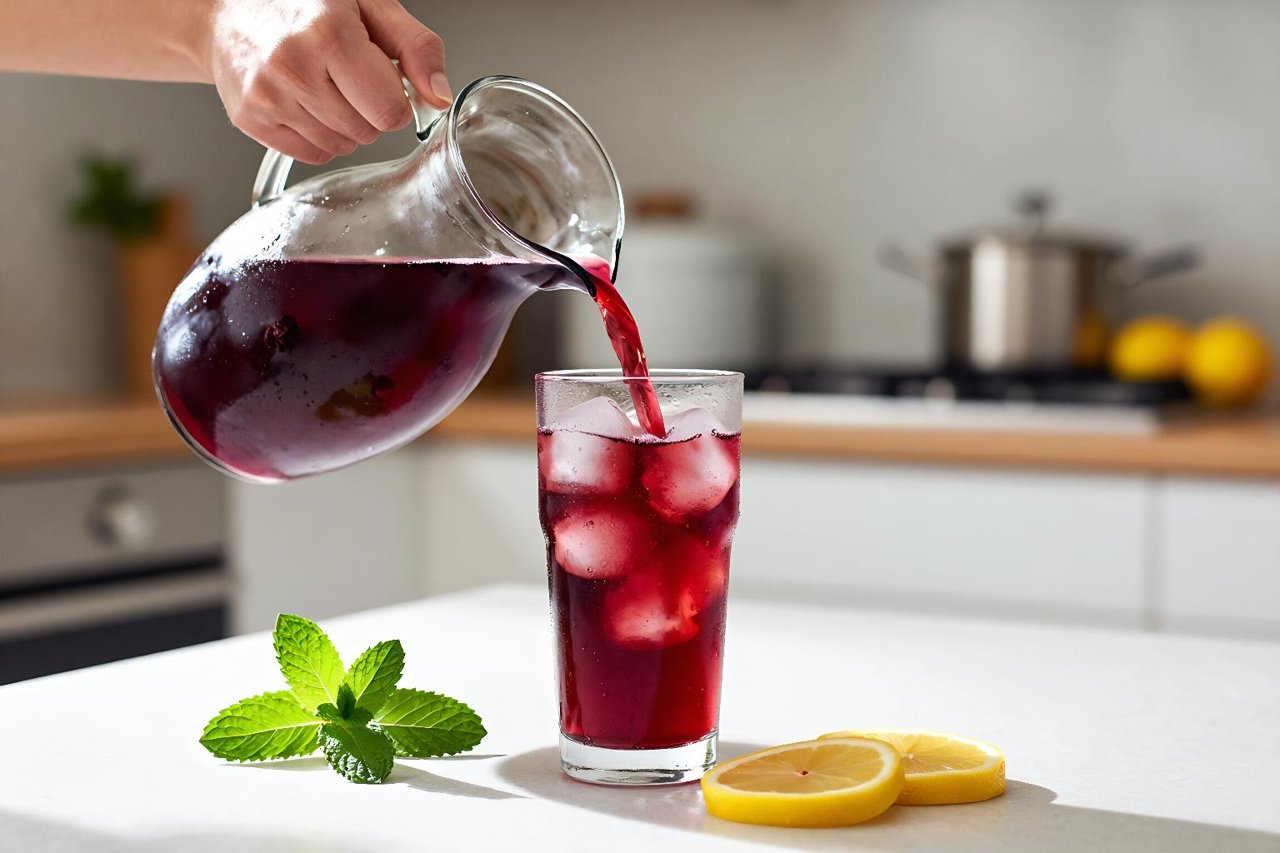
Hibiscus deserves its own note. A blend of 1 tablespoon hibiscus and 1 teaspoon rosehip per cup, cold brewed for twelve hours, gives you a deep ruby drink with a cranberry-like tartness that needs almost no sweetening. It’s the cheapest way to make iced herbal tea look like something from a café.
If you want more than one note in the glass, the same layering rules apply as for hot tea — these tips for making herbal tea blends at home that actually taste good translate directly to iced versions, you just scale the leaf up by half again. And if you’re brewing something calming for the evening, it’s worth knowing that a caffeine-free infusion isn’t the same thing as a sleep supplement; this guide to melatonin for sleep and its side effects explains where the two actually differ.
Getting fresh mint right
Mint is the workhorse of the iced tea pitcher, and it’s also the herb most often ruined. Bruise the leaves by clapping them between your palms or pressing them once with a muddler — don’t shred or blitz them, because torn leaf releases bitter chlorophyll. Steep fresh mint in cold water for four to six hours maximum. Past that it turns grassy and then hay-like.
Spearmint and peppermint are not interchangeable here; spearmint is softer and sweeter over ice, peppermint cuts through sugar and fruit. If you’re unsure which bunch you bought, this guide to mint varieties and using fresh leaves will sort it out in about a minute.
Sweetener, acid, and a pinch of salt
Cold tea will not dissolve sugar or honey. Make a 1:1 simple syrup — equal parts sugar and hot water, stirred until clear — and add 15–30 ml per litre of tea. Any more and you’ll bury the herb.
Acid is what makes an iced tea taste bright rather than flat. A squeeze of lemon per glass, or a quarter teaspoon of citric acid per litre, lifts hibiscus, rosehip and fruit blends considerably. Stir in a small pinch of salt per litre too; it doesn’t make the tea salty, it just rounds off the bitterness that cold infusions can carry.
Fruit, cucumber and citrus peel
Muddled raspberries or blackberries, thin cucumber ribbons, a few slices of peach — all good, with one rule: don’t leave fresh fruit in the pitcher for days. It softens, goes slimy and starts to ferment after about 48 hours. Add fruit to the glass, or strain it out of the brew after twelve hours.
Citrus peel is better than juice for flavour. Steep strips of lemon or grapefruit zest in the cold brew for four hours, no longer, then fish them out before the white pith turns the whole batch bitter.
Make a concentrate and stop diluting your tea
The most practical setup is a concentrate rather than a ready-to-drink pitcher. Cold brew 4 tablespoons of dried herb in 1 litre of water for twelve hours, strain, and keep it in a bottle for four to five days. Pour one part concentrate over one part water and ice. You get four litres of finished tea from one batch, and it never tastes watered down.
Freeze leftovers into ice cubes. Tea ice keeps the glass cold without turning the second half of the drink into pale water — the single biggest upgrade you can make to homemade iced herbal tea.
Quick fixes when it goes wrong
- Bitter: the leaf stayed in too long, or hot water hit a delicate flower. Strain sooner, or switch that herb to cold brewing.
- Thin and watery: not enough leaf. Add 50% more herb next time and a pinch of salt to the current batch.
- Cloudy: harmless tannin and mineral haze. A squeeze of lemon clears most of it within a minute.
- Sour or slippery: fruit left in the pitcher, or the tea sat out at room temperature. Start again; this one won’t come back.
- Grassy, hay-like taste: fresh leaves over-steeped. Four to six hours cold, then out.


