
Table of Contents
Most weight loss advice focuses on what to cut out. Skip the bread, avoid the sugar, put down the soda. That approach works for a while, but it ignores a bigger opportunity. What you add to your diet matters just as much as what you remove. Certain foods have a real, measurable effect on your appetite, your hormones, and the number of calories your body burns. Fill your plate with the right ingredients, and weight loss feels a lot less like a punishment. No single miracle ingredient exists, but a handful of scientifically supported foods for weight loss can tip the scale in your favour.
Why Some Foods Help You Lose Weight
Foods help with weight loss through a few distinct mechanisms. Protein and fiber slow down digestion, which keeps you full for hours. Water rich vegetables add volume to meals without many calories. Certain nutrients even influence the body’s metabolism directly. Together, these effects make you naturally eat less, without needing to measure every portion. The key is choosing foods that are low in energy density and high in satiety. For a broad look at how this plays out across different meals, our guide to the everyday foods that help you shed pounds and feel full covers the principles in more detail.
The Power of Protein (and How Much You Really Need)
Protein is the most satiating macronutrient. It reduces ghrelin, the hormone that makes you hungry, and increases peptide YY, which signals fullness. It also requires more energy to digest than carbohydrates or fat, so your body burns more calories processing it. For someone eating 1,800 calories a day, a protein intake of around 100 grams is a reasonable target. That could look like 100 grams of chicken breast, a few eggs, a Greek yogurt, and a scoop of lentils.
Not all protein sources are equal. A fast food fried chicken breast will not have the same effect as a grilled one, even if the gram count is similar. The best options are lean meats, poultry, fish, eggs, dairy, beans, and legumes. If you want a structured list of the top choices, our roundup of the best protein foods for weight loss breaks down the specific foods and their calorie profiles.

Simple High Protein Swaps for Everyday Meals
- Swap your morning cereal for Greek yogurt with a handful of almonds.
- Replace half the white rice in a stir fry with black beans.
- Choose grilled chicken or tofu over fatty cuts of pork.
- Add an egg to your lunchtime salad for an extra 6 grams of protein.
- Snack on edamame or roasted chickpeas instead of crackers.
These small changes may sound minor, but they add up to a noticeable difference in your daily calorie intake. Protein also has a higher thermic effect than carbohydrates, meaning your body burns about 20 to 30 percent of the calories from protein just through digestion. That is one reason high protein diets are so effective for weight management.
Fiber Rich Foods That Do the Heavy Lifting
Fiber is the indigestible carbohydrate that plants provide. It is the secret weapon of many weight loss diets because it passes through the stomach largely untouched, giving food physical bulk. Soluble fiber, found in oats, apples, and beans, absorbs water and turns into a gel that slows stomach emptying. Insoluble fiber, found in whole grains and vegetables, speeds up the movement of food through your gut. Both types help you feel full on fewer calories.
One of the easiest ways to increase fiber is to eat more whole plant foods. A bowl of oatmeal with berries, a lentil soup, and a big side of roasted vegetables will quickly push you past the recommended 25 to 30 grams per day. If you want a practical reference for which foods deliver the most bang, our article on the 10 healthy foods for weight loss that actually keep you full highlights the most effective options.
Fiber also feeds the beneficial bacteria in your gut. Some of those bacteria produce short chain fatty acids that have been shown to reduce appetite and improve insulin sensitivity. A healthy gut microbiome is increasingly recognized as an important part of any weight loss plan.
Volume Eating: Foods That Fill You Up for Very Few Calories
Volume eating is a strategy that focuses on the weight and water content of food. A 100 gram portion of broccoli contains about 35 calories, while 100 grams of cheddar cheese contains over 400. You could eat a kilogram of vegetables for the same calories as a small handful of cheese. This arithmetic is what makes vegetables such a powerful tool for weight loss. They stretch your stomach, activate stretch receptors, and send strong fullness signals to your brain.
Start with a broth based soup or a large salad at lunch and dinner. Studies show this simple habit leads to a significant reduction in total calorie intake at that meal. If you want concrete examples with exact serving sizes, the list of 22 low calorie foods for weight loss that actually fill you up is a great starting point.
Leafy greens, cucumbers, celery, zucchini, and cauliflower are all over 90 percent water. That means you can eat a huge volume for very few calories. Try roasting cauliflower with a little olive oil and paprika, or making zucchini noodles in place of pasta. These swaps do not feel like a sacrifice once you get used to them.
The Everyday Foods Worth Stocking Up On
Beyond the general principles, some foods deserve a permanent place in your kitchen. They are affordable, versatile, and naturally high in the nutrients that keep you satisfied.
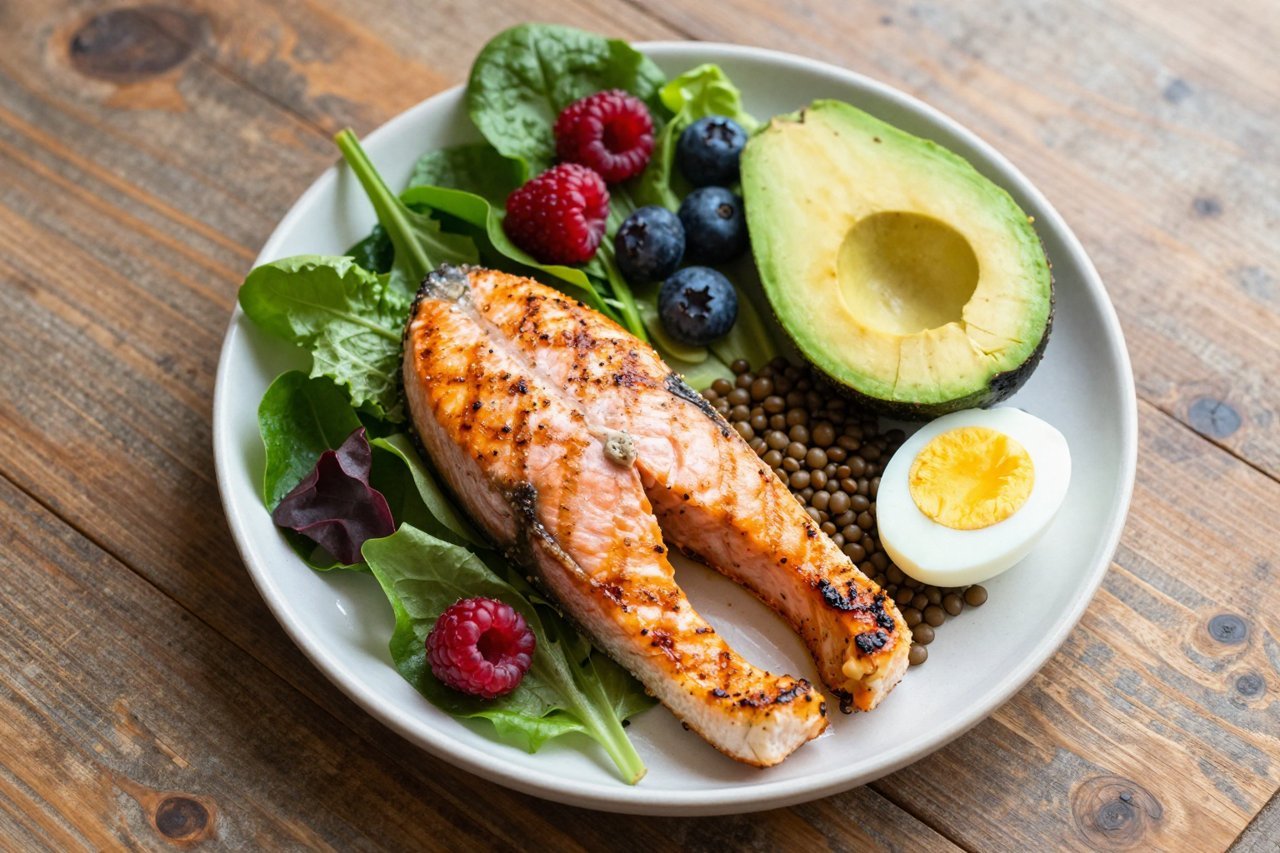
- Eggs: one large egg packs 6 grams of protein for about 70 calories. They also contain choline, which supports brain health.
- Spinach and kale: near zero calories and loaded with vitamin K, vitamin A, and antioxidants.
- Raspberries or strawberries: 8 grams of fiber per cup for just 60 calories. They are also lower in sugar than many other fruits.
- Lentils and chickpeas: 15 grams of fiber and 9 grams of protein per cooked cup. They are also an excellent source of iron and folate.
- Greek yogurt: a 150 gram tub delivers up to 20 grams of protein. Plain, unsweetened varieties are best.
- Salmon: rich in omega 3 fatty acids that support a healthy metabolism and reduce inflammation.
- Sweet potatoes: slow digesting carbohydrates that provide steady energy. They are also high in beta carotene.
These ingredients also tend to be naturally anti-inflammatory. Chronic inflammation has been linked to insulin resistance and difficulty losing weight, so eating more foods that calm inflammation is a solid long term strategy. Our guide to anti-inflammatory foods explains the research and gives you a simple list to follow.
What to Watch Out For: Diet Foods and Hidden Pitfalls
Not everything labeled low fat or sugar free is your friend. Many processed diet foods replace fat with extra sugar, starches, or artificial sweeteners that can disrupt your gut microbiome. Liquid calories are another trap. A fruit smoothie from the shop can contain 400 calories and no real fiber. The same goes for flavoured lattes, sports drinks, and even some bottled teas. When you are trying to lose weight, whole foods are always a safer bet. If it comes in a wrapper with a long ingredient list, put it down.
Practical Ways to Put These Foods to Work
Start with breakfast. A protein rich meal with eggs or Greek yogurt has been shown to reduce cravings for the rest of the day. Make lunch your biggest meal, because you are more likely to be active in the hours after. A big salad with legumes and grilled chicken or fish is a solid choice. Pre roast a pan of vegetables on Sunday so you have an easy side during the week. Keep a container of boiled eggs in the fridge for a quick snack.
Another useful habit is to have a broth based soup or a green salad before your main course. This simple trick naturally lowers the number of calories you eat at that meal, usually by around 20%. It is a subtle way to create a calorie deficit without obsessive measuring.
Remember that consistency beats perfection. You do not need to overhaul your entire diet overnight. Focus on adding one or two of these foods to each meal. Over time, those small changes become habits, and the habits lead to steady weight loss.


