
Table of Contents
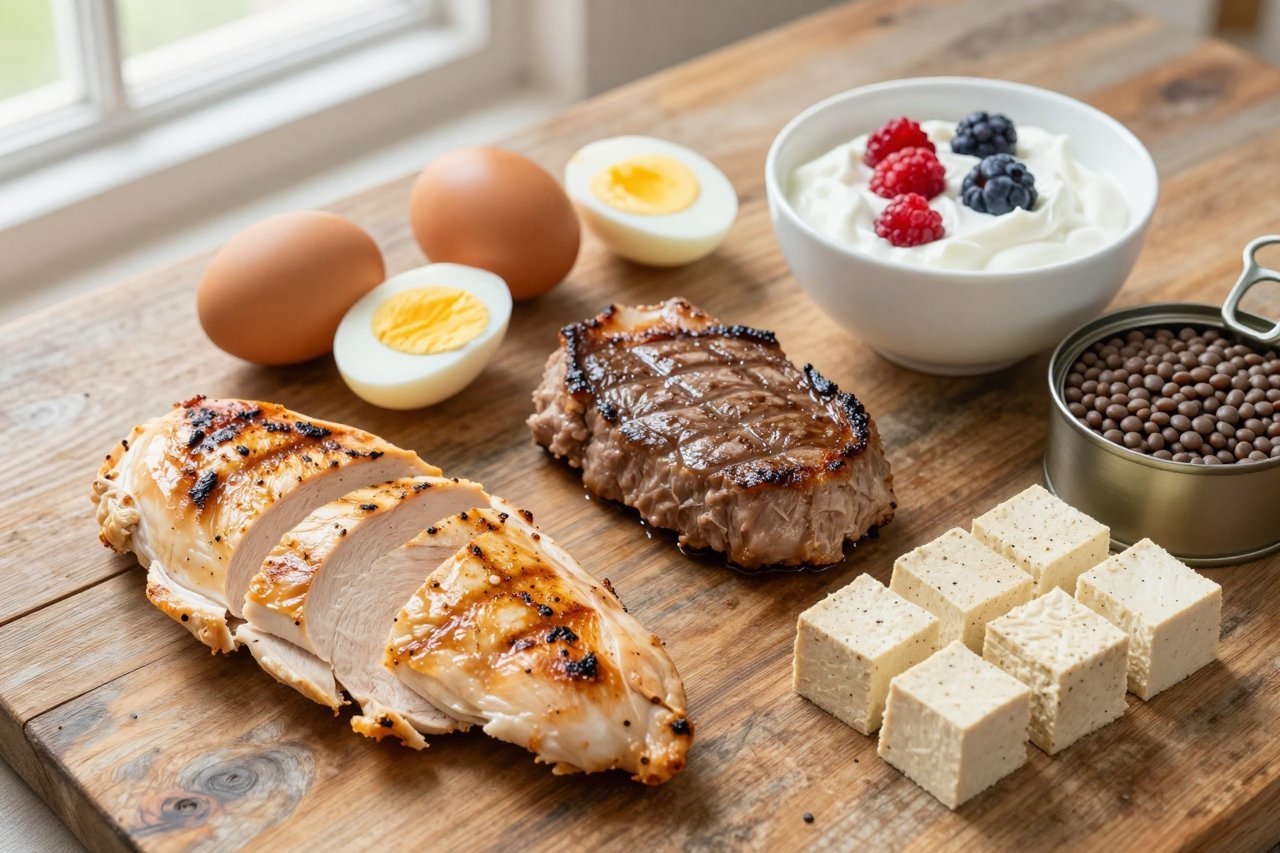
Search for the “7 highest protein foods” and you’ll likely land on the same shortlist: chicken breast, lean beef, eggs, tuna, Greek yogurt, tofu, and lentils. But knowing the names is just the starting point. Each of these options carries a unique set of trade-offs—cost, digestibility, saturated fat, environmental impact, and even how well it fits into a particular diet. That’s what this guide is about: not listing them again, but comparing them side by side so you can decide which ones deserve your money and your fork.
If you want the basic rundown first, see our piece on the 7 highest protein foods to add to your plate. Here we’re going beyond the list.
What Counts as a “High-Protein” Food?
Headline numbers like “31g of protein per 100g” only tell part of the story. The usefulness of that protein depends on its amino acid profile, how easily your body breaks it down, and what else you consume with it. You’ll also need to weigh practical factors like price per serving and prep time.
Here are the criteria we’re using for this comparison:

- Protein density: grams of protein per 100g of the ready-to-eat food
- Protein quality: whether it contains all nine essential amino acids in adequate amounts
- Extra nutrients or harmful components: iron, omega-3s, fibre, saturated fat, mercury, sodium
- Cost and availability: rough price per serving
- Environmental footprint: greenhouse gas emissions and water use
With those in mind, let’s break down the two main camps.
The Animal Options: Dense Protein with Strings Attached
Chicken Breast: The Lean Dominator
Skinless chicken breast is the benchmark for lean protein. A 100g cooked portion gives you about 31g of protein, with only about 3.6g of fat. It’s also one of the cheapest high-quality proteins you can buy. The downside? It’s low in iron and vitamin B12 compared to red meat, and it can taste dry if you overcook it.
If you’re cutting calories or just trying to hit a high daily protein target without wrecking your fat intake, chicken is the safest bet. It also takes on almost any seasoning or sauce. For a practical overview of how to actually use it, check out our step-by-step guide on using the 7 highest protein foods.
Lean Beef: Nutrient-Dense but Heavier on the Planet
A 100g grilled lean beef sirloin contains about 26g of protein, plus a serious dose of zinc, iron, and vitamin B12. That makes it especially valuable if you’re anemic or lifting heavy. But it also packs around 8-10g of saturated fat per serving, and beef production has the highest environmental impact of any food on this list.
From a cardiovascular perspective, the research is mixed, but trimming visible fat and keeping portion sizes moderate is the sensible move. Our science-backed grocery guide for heart health explains why lean beef can be part of a heart-friendly diet if you’re careful with the extras.
Eggs: Cheap, Complete, but Lower in Protein Density
One large egg delivers roughly 6g of protein, meaning 100g of whole eggs gives you about 13g. That’s much lower than chicken or beef. In exchange, you get a perfect amino acid profile, vitamin D, and choline. Eggs are also famously cheap and quick to cook.
The main criticism is the cholesterol in the yolk, though current science suggests dietary cholesterol has a modest effect on blood cholesterol for most people. If you need a high-protein breakfast that’s easy to scale, eggs win. Just don’t rely on them as your only protein source if you need 30g+ per meal.
Tuna: Lean Protein That Comes with a Catch
Canned light tuna sits at about 25g of protein per 100g, with almost no fat. It’s also a convenient pantry staple and relatively affordable. The trade-offs are mercury accumulation and overfishing concerns, which is why health agencies recommend limiting tuna to a few servings per week.
For a quick lunch or a post-workout meal, tuna on whole-grain crackers or mixed with Greek yogurt works well. Just choose skipjack or light tuna over albacore to lower the mercury load.
The Plant-Based and Dairy Challengers
Greek Yogurt: The Satiety Solution
Plain Greek yogurt provides about 10g of protein per 100g, and because it’s mostly casein, it digests slowly and keeps you full for hours. It also contains probiotics and calcium. The catch? Flavored versions are often loaded with sugar, and the protein density per calorie is lower than meat.
If satiety is your main goal, Greek yogurt is one of the highest protein foods to keep you full and fueled, along with nuts and seeds. Stick to plain and sweeten it with fruit.
Tofu: The Flexible Plant Option
Firm tofu offers around 8g of protein per 100g. That seems low compared to chicken, but tofu is also lower in calories, so the protein-to-calorie ratio is decent. It’s also a complete protein, though its digestibility is slightly lower than animal proteins unless it’s cooked or processed (like fermented tempeh).
Tofu’s real strength is versatility: it absorbs marinades, crisps up in a pan, and works in sweet or savory dishes. It’s also the most budget-friendly plant protein on this list. The main drawback is that it can be bland if you don’t season it well.
Lentils: The Fibre-Packed Budget Champion
Cooked lentils contain about 9g of protein per 100g, but that comes with 8g of fibre—a nutrient absent from all animal sources. Lentils are incredibly cheap, simple to cook, and far lighter on the environment than beef or chicken. They’re incomplete on their own, so pairing them with rice or bread finishes the amino acid picture.
The obvious downside is that the fibre can cause bloating if you’re not used to it. Soak them well and introduce them gradually. It’s no surprise that legumes are a staple in Blue Zone diets; we explore this in our guide to foods for longevity.
How to Choose Among the 7 Highest Protein Foods
Now that you’ve seen the trade-offs, here’s a quick cheat sheet based on your priorities:
- Best for pure protein density: chicken breast and tuna
- Best for micronutrients: beef and eggs
- Best for satiety and gut health: Greek yogurt
- Best for budget and plant-based flexibility: tofu and lentils
- Best for convenience: Greek yogurt, tuna, eggs
- Most sustainable: lentils and tofu
The smartest approach is to rotate through several of these foods across the week. That balances your amino acid intake, keeps meal variety high, and spreads out the environmental impact. If you’re chasing a specific goal like muscle gain or weight loss, lean toward chicken and Greek yogurt for higher volume, but don’t ban beef or lentils entirely—they bring nutrients to the table that chicken can’t offer.
The most effective high-protein diet is the one you can maintain. So try swapping your usual chicken breast for a tofu stir-fry, or replace your protein shake with a Greek yogurt bowl. Small switches you enjoy will do more than forcing down a food that ranks number one on someone else’s list.


