
Table of Contents
You know the drill: it’s mid-afternoon, you’re hungry, and the vending machine is calling. You could grab a protein bar, but after the fifth one this week, it feels like cardboard. A better move? Build yourself a protein snack board. It’s a no-cook, no-recipe way to turn simple grocery staples into a snack that actually feels like a meal. Here’s how to do it in five steps, with real foods you can pick up today.
Why a board beats a single snack
A single snack—like a boiled egg or a stick of cheese—works, but it often leaves you hungry an hour later. A board gives you variety, which means you’re more likely to hit your protein target while also getting the carbs and fats that keep you satisfied. Plus, it looks appealing, and when food looks good, you eat it slower and notice when you’re full. You don’t need a fancy board either; a dinner plate works fine.
Step 1: Pick your protein base
This is the main event. You want at least 15–20 grams of protein on the board. Mix and match from these categories, or just pick one or two:
- Eggs: 2 hard-boiled eggs (12 g protein)
- Dairy: a 3/4 cup of cottage cheese or a cheese string (14–18 g)
- Meat and fish: 6–8 slices of turkey or roast beef, or a small can of tuna
- Plant-based: 1/2 cup of edamame, a slice of firm tofu, or 3/4 cup of chickpeas (7–10 g)
If you need more ideas for interesting combinations, this roundup of easy high-protein snacks is a good place to start. You’ll notice that many of them work perfectly as board components.

Step 2: Add a carb with fiber
Protein alone won’t keep you full for long. You need some carbohydrates, preferably the kind that brings fiber along. Good choices:
- Whole-grain crackers (aim for 3–4)
- Apple slices, pear chunks, or grapes
- Baby carrots, cucumber sticks, or slices of bell pepper
- A small piece of whole-grain flatbread or rye bread
The goal is to get 15–25 grams of carbs on the board. This gives your body quick energy while the fiber slows down digestion, so you stay satisfied for those two hours until dinner.
Step 3: Bring in healthy fats
Fat is not the enemy—it’s what makes a snack feel luxurious. It also helps you absorb fat-soluble vitamins from the veggies you just added. Add one or two of these:
- A small handful of almonds or walnuts (about 10–12 nuts)
- A wedge of avocado (about 1/4 of a medium)
- A spoonful of sunflower seeds or pumpkin seeds
- A few olives, if you like briny things
Don’t overdo it; fats are calorie-dense. A single portion is enough.
Step 4: Don’t skip the crunch or the brine
The texture contrast is what sets a snack board apart. It keeps the eating experience interesting, so you’re less likely to go rummaging for chips afterwards. Ideas:
- Dill pickles or pickled cucumbers
- Roasted chickpeas (the ones from a can, drained and crisped)
- Popcorn (lightly salted)
- Crispy rice crackers
Interesting fact: many of these also add a little sodium, which can be helpful after a hard workout.
Step 5: Finish with a high-protein dip
A dip can tie everything together. Hummus is classic, but it’s not very protein-heavy. Instead, try one of these:
- Greek yogurt mixed with fresh herbs, garlic, and a squeeze of lemon (2/3 cup gives you about 14 g protein)
- Peanut butter thinned with a little water and soy sauce for a savoury dip (or keep it classic for a sweet board)
- Cottage cheese blended until smooth—it becomes creamy and mild
If you’re making a dip and want an extra boost, you can stir in half a scoop of vanilla or unflavoured protein powder. The key is to pick a powder that mixes well without turning chalky; you can find tips on that in this step-by-step guide to choosing a protein powder.
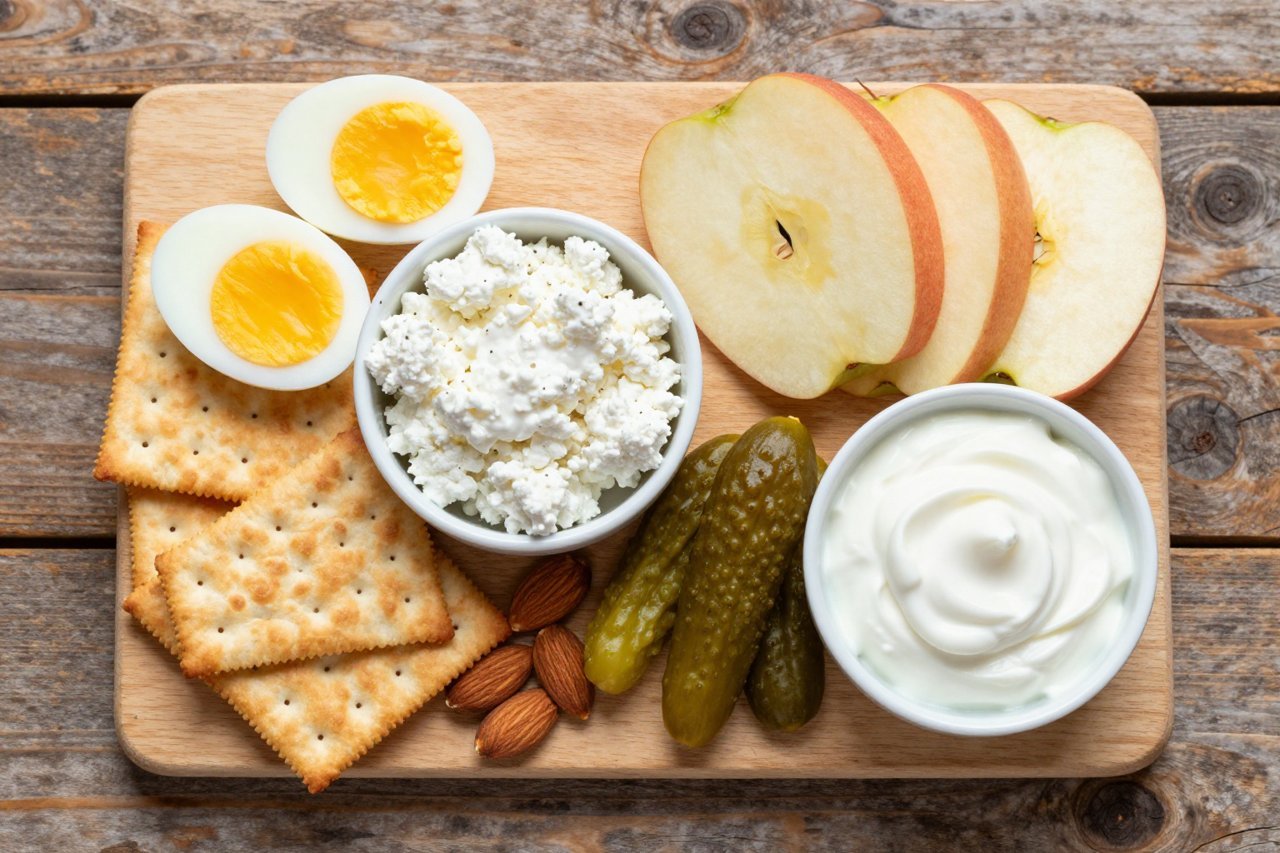
A sample board you can copy tonight
Here’s a concrete example that totals about 30 grams of protein, 35 grams of carbs, and 18 grams of fat—a solid afternoon snack that won’t wreck dinner.
- 2 hard-boiled eggs (12 g)
- 3/4 cup cottage cheese (14 g)
- 4 whole-grain crackers + 1/2 sliced apple
- A handful of almonds (about 1 oz)
- A couple of pickles
- 2 tablespoons of Greek yogurt dill dip
Lay it out on a plate. That’s it. No cooking, no recipe, just assembly.
Make it match your protein target
Everyone’s needs differ. If you’re aiming for 30 grams of protein per meal, this board is perfect. If you want more, add an extra slice of meat or a boiled egg. If you want less, skip the cottage cheese. The easiest way to know exactly what you need is to calculate your daily protein target. Once you know that number, you can work backwards and portion your snacks accordingly. A step-by-step protein intake calculator can help you do the math in minutes.
And if you’re after more snack inspiration that actually keeps you full—not just protein—this list of filling healthy snacks is worth a read. Combine the ideas with this board method and you’ll have a new snack rotation that never gets boring.


