
Table of Contents
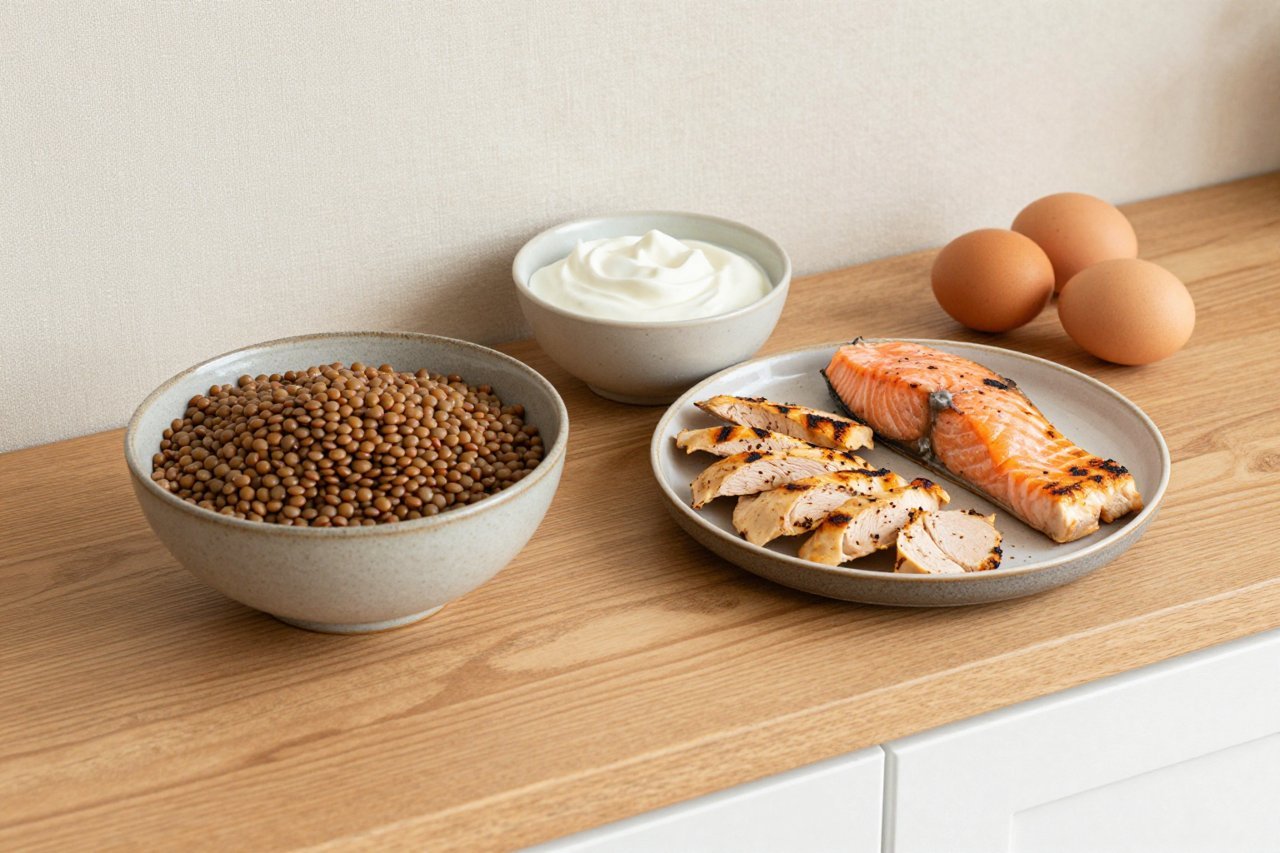
Protein-rich foods refuse to be summed up in a single grocery trip. Chicken, eggs, Greek yogurt, lentils, and salmon are all rich in protein, yet each one brings a different load of fat, fibre, micronutrients, and cost. If you swap one for another without thinking about the trade-offs, you may end up with more saturated fat than planned, or a protein source that digests poorly. The useful question is not which food merely lists the most grams, but which source fits the meal and your wider goals.
What quality means when comparing protein sources
Most people pick foods by the total grams on the label, but the body reads protein as an amino acid map. Nine essential amino acids must come from food, and a source is complete when it provides all nine in useful amounts. Meat, fish, eggs, and dairy pass that test easily. Soy and quinoa are the rare plants that do as well. Many legumes and grains are incomplete on their own, which is why traditional pairings like beans on toast and rice with dal are so effective.
Completeness alone doesn’t tell the whole story. Digestibility also matters. Modern scoring systems like DIAAS put whole egg at about 1.0, milk around 1.14, and pea protein at roughly 0.6. That means a bowl of cooked lentils gives you less usable protein than the food label suggests. Animal proteins are generally absorbed more efficiently, so if you rely on plants you need slightly larger portions or a considered combination across the day.
Meat and poultry: protein density with a fat caveat
For pure protein concentration, poultry still leads the store. A 100-gram serving of cooked chicken breast provides about 31 grams of protein at 165 calories and just 3.6 grams of fat. Turkey breast lands in the same range. Sirloin steak offers 26 to 29 grams of protein, but that protein is packaged with six to eight grams fat and more calories per bite. It also brings zinc and heme iron, both highly absorbable. The trade-off is that red meat often carries more saturated fat, and heavily processed cuts like bacon or sausages bring sodium and preservatives along for the ride.

Choose unprocessed cuts for daily meals, and keep red meat a deliberate weekly addition. If you want help making those rotations meal-prep friendly, the step-by-step plan for adding protein-rich foods lays out weekly templates that prevent protein boredom.
Fish and seafood: the omega-3 advantage
Fish shifts the trade-off in your favour. A 100-gram piece of Atlantic salmon holds about 25 grams of protein, not far behind chicken, while packing omega-3 fatty acids that support your heart and brain. White fish like cod or halibut gives 24 grams of protein in a 105-calorie fillet with almost no fat. Shellfish such as shrimp and scallops also deliver a lean 20 to 24 grams per 100 grams.
The flip side is cost and trace contaminants. Salmon, scallops, and wild fish are expensive, and large predatory fish can carry mercury, so most nutrition experts recommend two seafood servings per week rather than daily. If you’re using protein to support your cardiovascular system, few foods beat oily fish. That is why the heart-healthy eating plan on this site schedules those portions specifically.
Eggs and dairy: fast, complete, and underrated
Eggs are still the affordability champion of complete protein. A large egg provides 6 grams of protein plus choline and vitamin D, all for around 75 calories. The old worry about dietary cholesterol has softened, but the egg’s saturated fat still counts toward your daily allowance. Egg whites offer a protein-only alternative: 3.6 grams of protein and almost no fat.
Dairy follows closely. Plain Greek yogurt delivers 15 to 17 grams in a 170-gram cup, along with calcium and gut-supporting probiotics. Cottage cheese is similarly dense, with about 12 grams per half-cup. Milk is less efficient: you need a large glass to reach 8 grams, plus it brings lactose and more calories per gram. When you compare protein-rich foods, the smart eater’s guide to daily nutrition can show you sensible portion ceilings for cheese and other dairy.
Plant-based protein-rich foods: soy, legumes, nuts, and grains
Plants can meet your protein needs, but reading the labels requires a larger frame. Cooked lentils have about 9 grams of protein per 100 grams. Chicken has 31 grams for the same weight. Eat 200 grams of lentils and you get 18 grams, but you also gain 11 grams of appetite-calming fibre and a range of polyphenols. That kind of satiety is key for appetite control, which is why pulse-rich meals keep appearing in the roundup of weight-loss foods.
The catch is the amino acid profile. Beans run low on methionine, grains fall short on lysine, and rice has less leucine, the amino acid that stimulates muscle protein synthesis. Soy is the outstanding exception. Tofu and tempeh are complete proteins, absorb well, and contain isoflavones linked with a handful of health benefits. Pea protein, though not complete alone, complements rice neatly.
Nuts and seeds are occasionally put on a pedestal, but their calorie count keeps them from being protein staples. Peanuts have 26 grams of protein per 100 grams, yet a 30-gram serving delivers just 7 grams and almost 170 calories. They’re best as a fat source or flavouring, not as your main protein engine.
Trade-offs to weigh at the grocery store
When you look at protein-rich foods side by side, push beyond total grams. Consider these four factors:
- Protein grams per 100 calories: this tells you how efficiently a food moves you toward your daily target without surplus energy.
- Leucine content: higher doses, as found in chicken, eggs, and Greek yogurt, are particularly good at triggering muscle building.
- The micronutrient side effect: beef gives you absorbable iron and vitamin B12, dairy provides calcium, and soy contributes lysine.
- Fat and sodium quality: salmon’s omega-3s have positive effects, while fatty cuts or processed meats add substances you may want to limit.
Now, a food can be high in protein yet poor in those other dimensions. This is why a weekly target of 1.6 grams per kilogram bodyweight is easier to hit with a mix of foods than with a single source.
Putting the comparison to work in your kitchen
Your best strategy is not to elevate one protein-rich food above all others, but to rotate them: a chicken breast two or three nights, fish on one night, an egg-based dinner, a tempeh or lentil dish once a week. Combine that with Greek yogurt at breakfast and you get a complete amino acid profile, diverse micronutrients, and lower chances of eating the same saturated fat every day.
The other part is convenience. Frozen chicken breasts and white fish keep you ready for high-protein meals, while canned beans, Greek yogurt, and eggs make quick fallbacks. Nuts and nut butters will not hurt your intake, but don’t make them your go-to if you are chasing a number. If you’ve been tempted by powders, our whole foods versus powder and bars face-off shows how those products fit into the same comparison.


